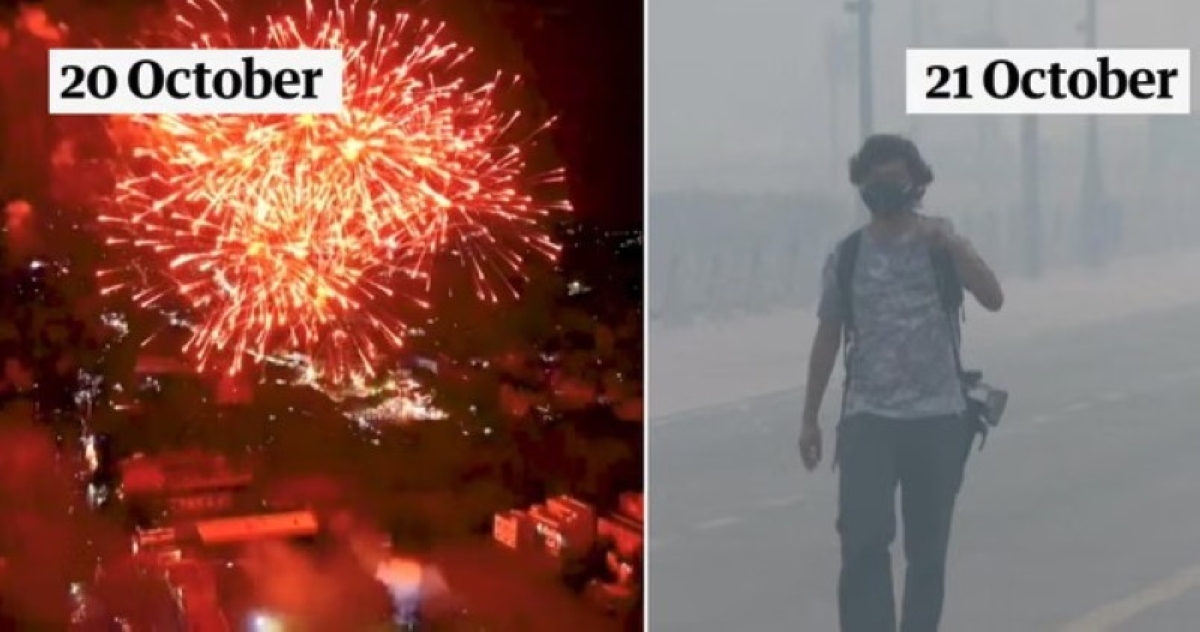
شهدت العاصمة الهندية دلهي، ضبابا كثيفا بعد ليلة من احتفالات مهرجان ديوالي، الذي شهد إطلاق ملايين الألعاب النارية، معلنة بداية موسم التلوث السنوي الذي يُعد كارثة بيئية في المدينة.
ووصل مؤشر جودة الهواء (AQI) في بعض مناطق دلهي إلى أكثر من 500، وهو ما يتجاوز بـ10 أضعاف المستوى الصحي وفقا لمنظمة الصحة العالمية، بينما سجلت مستويات الجسيمات السامة PM2.5 وPM10 ذروات وصلت إلى 1800، أي 15 إلى 20 ضعف الحدود الآمنة.
أشخاص يشعلون الألعاب النارية والمفرقعات خلال احتفالات ديوالي قرب دلهي.
رفع الحظر على الألعاب النارية
ومنذ 2020، كانت دلهي تحظر بيع واستخدام الألعاب النارية خلال ديوالي بسبب مساهمتها في الضباب الدخاني القاتل الذي يجتاح المدينة مع بداية الشتاء، لكن الحكومة الإقليمية الجديدة بقيادة حزب بهاراتيا جاناتا (BJP) القومي الهندوسي، الذي يحكم أيضا على المستوى الوطني، طالبت المحكمة العليا برفع الحظر جزئيا، مقترحة استخدام «الألعاب النارية الخضراء» التي تُعتبر أقل تلويثا بنسبة 30% فقط.
ووافقت المحكمة على السماح بإطلاق هذه الألعاب في أوقات محددة خلال ديوالي، ما أثار استياء النشطاء البيئيين والصحيين.
وفي ليلة الإثنين، تجاوزت الألعاب النارية القيود الزمنية في أنحاء العاصمة، مع غياب واضح للرقابة على نوعية الألعاب المستخدمة، ما أدى إلى تسجيل أسوأ مستويات التلوث خلال ديوالي منذ ثلاث سنوات على الأقل، خصوصا عند منتصف الليل.
مؤشر جودة الهواء (AQI) في العاصمة الهندية.
تبادل الاتهامات مع باكستان
وأثار التلوث الناتج عن الألعاب النارية جدلا عابرا للحدود، إذ ألقت ولاية البنجاب الباكستانية باللوم على الهند في تدهور جودة الهواء في مدينة لاهور، مشيرة إلى انتقال الملوثات من دلهي بعد الاحتفالات.
أسباب التلوث وتداعياته
ويعاني سكان دلهي، البالغ عددهم نحو 33 مليون نسمة، من تلوث هوائي خطير منذ أكثر من 15 عاما، يتفاقم مع حلول الشتاء، وينجم التلوث عن مزيج من انبعاثات المركبات، الغبار، أعمال البناء، حرق النفايات، ودخان حرائق الحقول الزراعية غير القانونية في ولايتي البنجاب وهاريانا المجاورتين.
ويحرق المزارعون بقايا المحاصيل لتطهير الأراضي بسرعة، كما يحاصر الضباب السام المدينة مع انخفاض درجات الحرارة، ما يفاقم الوضع.
ويؤدي هذا التلوث إلى ارتفاع معدلات الأمراض العصبية، القلبية، التنفسية، وحتى السرطان، ويُقدر أنه يتسبب في وفاة نحو 10 آلاف شخص مبكرا سنويا في دلهي، وفقا لدراسات متعددة.
وقد تجاوزت مستويات الجسيمات الضارة في المدينة نحو 70% من أسوأ مستويات التلوث المسجلة سابقا في بكين، التي كانت تُعتبر ذات يوم المدينة الأكثر تلوثا في العالم.
The Indian capital Delhi witnessed thick fog after a night of Diwali festival celebrations, which saw the launch of millions of fireworks, marking the beginning of the annual pollution season that is considered an environmental disaster in the city.
The Air Quality Index (AQI) in some areas of Delhi reached over 500, which is 10 times above the health level according to the World Health Organization, while levels of toxic particles PM2.5 and PM10 peaked at 1800, which is 15 to 20 times the safe limits.
أشخاص يشعلون الألعاب النارية والمفرقعات خلال احتفالات ديوالي قرب دلهي.
Lift on Fireworks Ban
Since 2020, Delhi has banned the sale and use of fireworks during Diwali due to their contribution to the deadly smog that engulfs the city at the onset of winter. However, the new regional government led by the Hindu nationalist Bharatiya Janata Party (BJP), which also governs at the national level, requested the Supreme Court to partially lift the ban, proposing the use of "green fireworks" that are considered 30% less polluting.
The court agreed to allow the launch of these fireworks at specific times during Diwali, which sparked discontent among environmental and health activists.
On Monday night, the fireworks exceeded the time restrictions across the capital, with a clear lack of oversight on the types of fireworks used, leading to the worst pollution levels during Diwali in at least three years, especially at midnight.
مؤشر جودة الهواء (AQI) في العاصمة الهندية.
Blame Exchange with Pakistan
The pollution caused by fireworks sparked cross-border controversy, as the Pakistani province of Punjab blamed India for the deteriorating air quality in Lahore, pointing to the transfer of pollutants from Delhi after the celebrations.
Causes and Consequences of Pollution
The residents of Delhi, numbering around 33 million, have been suffering from severe air pollution for over 15 years, which worsens with the arrival of winter. The pollution results from a mix of vehicle emissions, dust, construction activities, waste burning, and smoke from illegal agricultural field fires in the neighboring states of Punjab and Haryana.
Farmers burn crop residues to quickly clear land, while toxic fog traps the city as temperatures drop, exacerbating the situation.
This pollution leads to increased rates of neurological, cardiovascular, respiratory diseases, and even cancer, and it is estimated to cause the premature death of around 10,000 people annually in Delhi, according to multiple studies.
Levels of harmful particles in the city have surpassed about 70% of the worst pollution levels previously recorded in Beijing, which was once considered the most polluted city in the world.