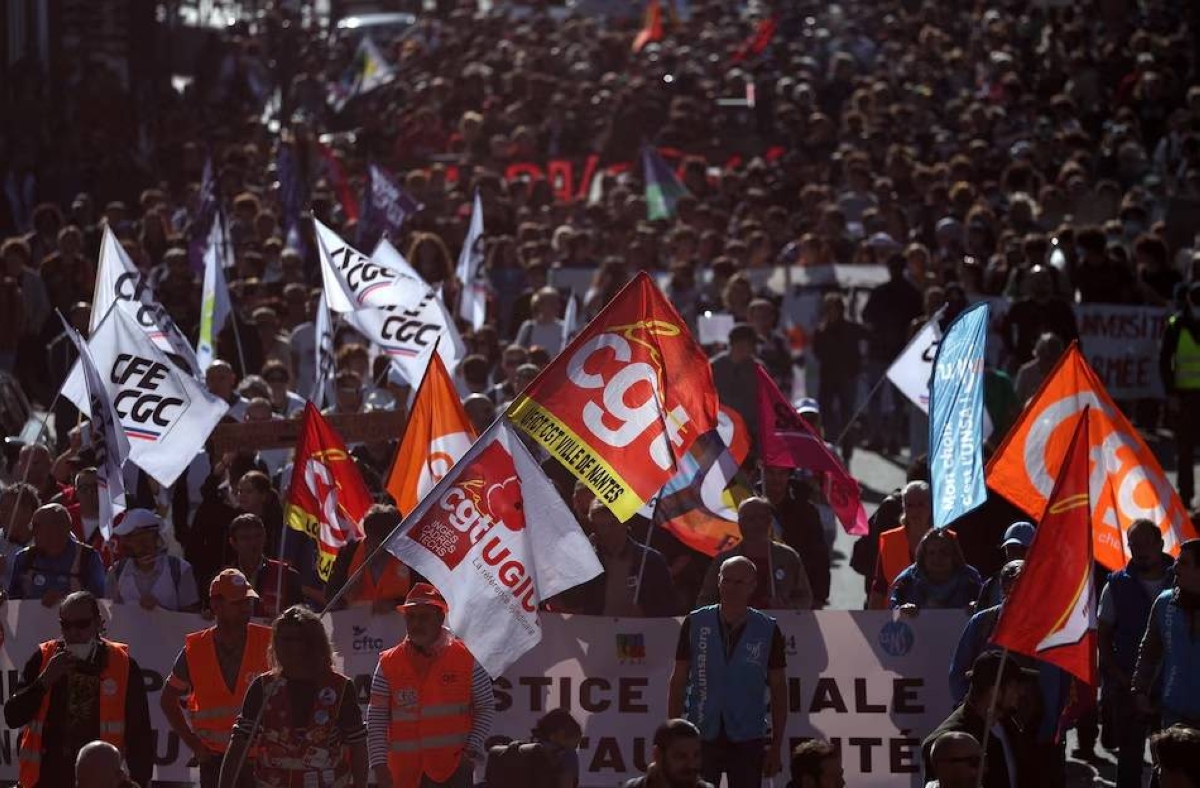
شهدت فرنسا، اليوم (الخميس)، موجة جديدة من الإضرابات التي تقودها النقابات العمالية للضغط على رئيس الوزراء الجديد، سيباستيان ليكورنو، لإعادة النظر في خطط خفض الميزانية ودراسة فرض ضريبة على الأثرياء.
ويأتي هذا الإضراب وسط أزمة سياسية مستمرة، حيث لم يتمكن ليكورنو، الذي عُيّن في 9 سبتمبر، من تشكيل حكومة جديدة بعد الإطاحة المثيرة لسلفه، فرانسوا بايرو، بسبب اقتراحاته لتخفيضات الميزانية.
ونظمت النقابات نحو 240 مسيرة في مدن وبلدات فرنسية، لكن من المتوقع أن يكون الإضراب أقل تأثيراً مقارنة بإضراب 18 سبتمبر الذي شارك فيه ما بين 1.5 مليون متظاهر، وفقاً لتقديرات الشرطة والنقابات.
70 ألف شرطي للتأمين
وتم تعبئة نحو 70 ألفاً من أفراد الشرطة والدرك لتأمين المظاهرات، وأثارت التأخيرات غير المسبوقة في إعلان الحكومة الجديدة غضب الأحزاب المعارضة والنقابات، التي عبرت عن قلقها إزاء التخفيضات المقترحة وحماية الخدمات العامة.
اضراب نقابات عمالية في فرنسا
أسباب احتجاجات فرنسا
وقالت الأمينة العامة المشاركة لنقابة التعليم FSU-SNUipp أوريلي غانييه، لإذاعة فرانس إنفو، إن «غياب الوضوح السياسي» قلل من مشاركة العاملين في التعليم في إضراب اليوم، لكنها أضافت: «العمال الذين نلتقيهم يدعمون الحاجة إلى المزيد من العدالة الضريبية والاجتماعية، ويدركون ضرورة ميزانية تلبي احتياجات المدارس».
تحديات سياسية واقتصادية
ليكورنو، الحليف المقرب من الرئيس الوسطي إيمانويل ماكرون، من المتوقع أن يلقي خطابه الأول أمام البرلمان الأسبوع القادم ويعلن الحكومة الجديدة في الأيام القادمة.
كما يواجه تحدياً فورياً في إعداد ميزانية 2026 وسط غموض حول شكلها النهائي وكيفية تمريرها في البرلمان، حيث لا يملك تحالف ماكرون الوسطي أغلبية ويحتاج إلى دعم من حزب الجمهوريين اليميني والاشتراكيين.
اضرابات في فرنسا
في مقابلته الأولى مع صحيفة «لو باريزيان» الأسبوع الماضي، رفض ليكورنو اقتراحاً من الاقتصادي غابرييل زوكمان، بدعم من الاشتراكيين، لفرض ضريبة ثروة بنسبة 2% على أغنى 0.01% في فرنسا ضمن ميزانية 2026.
كما استبعد تعليق رفع سن التقاعد، وهو إصلاح غير شعبي دفع به ماكرون دون تصويت برلماني في 2023، وهما مطلبان رئيسيان للاشتراكيين.
وقال ليكورنو: «هناك طلب سياسي ومجتمعي لمزيد من العدالة الضريبية لاستعادة ماليتنا العامة، ولا يمكننا رفض هذا النقاش، لكن هل ضريبة زوكمان هي الحل الصحيح؟ الحل الوحيد؟ شخصياً، لا أعتقد ذلك».
احتجاجات فرنسا
مطالب النقابات وتصاعد التوترات
ورداً على مطالب النقابات، وعد ليكورنو هذا الأسبوع بتحسين معاشات النساء التقاعدية، لكن النقابات طالبت بدلاً من ذلك بتعليق إصلاحات نظام التقاعد بالكامل وإعادة تقييم شاملة.
وتفاقم التوتر مع استخدام الشرطة للغاز المسيل للدموع ضد المتظاهرين في باريس، فيما شوهدت لافتة تسخر من ليكورنو تصورته كـ«كلب مطيع في الإليزيه».
ويستهدف ليكورنو عجزاً في الميزانية بنسبة 4.7% من الناتج المحلي الإجمالي في 2026، مقارنة بهدف بايرو السابق 4.6%، بانخفاض من توقعات 5.4% هذا العام، ومن المقرر أن يلتقي ليكورنو الاشتراكيين، غداً (الجمعة)، لمزيد من المحادثات، حيث يشترطون تقدماً في ضريبة الثروة مقابل دعمهم للميزانية.
احتجاجات في فرنسا ضد الميزانية
France witnessed a new wave of strikes today (Thursday), led by labor unions to pressure the new Prime Minister, Sébastien Lecornu, to reconsider budget-cutting plans and study the imposition of a tax on the wealthy.
This strike comes amid an ongoing political crisis, as Lecornu, who was appointed on September 9, has been unable to form a new government following the dramatic ousting of his predecessor, François Bayrou, due to his proposed budget cuts.
The unions organized around 240 marches in French cities and towns, but the strike is expected to have less impact compared to the September 18 strike, which saw participation from between 1.5 million demonstrators, according to police and union estimates.
70,000 Police for Security
About 70,000 police and gendarmerie personnel have been mobilized to secure the demonstrations, and the unprecedented delays in announcing the new government have sparked anger among opposition parties and unions, which have expressed concern over the proposed cuts and the protection of public services.
اضراب نقابات عمالية في فرنسا
Reasons for France's Protests
The co-general secretary of the FSU-SNUipp education union, Aurélie Gagné, told France Info radio that the "lack of political clarity" has reduced participation among education workers in today's strike, but she added: "The workers we meet support the need for more tax and social justice, and they recognize the necessity of a budget that meets the needs of schools."
Political and Economic Challenges
Lecornu, a close ally of centrist President Emmanuel Macron, is expected to deliver his first speech before Parliament next week and announce the new government in the coming days.
He also faces an immediate challenge in preparing the 2026 budget amid uncertainty about its final form and how to pass it in Parliament, as Macron's centrist coalition lacks a majority and needs support from the right-wing Republicans and the Socialists.
اضرابات في فرنسا
In his first interview with "Le Parisien" last week, Lecornu rejected a proposal from economist Gabriel Zucman, backed by the Socialists, to impose a 2% wealth tax on the richest 0.01% in France as part of the 2026 budget.
He also ruled out suspending the increase in the retirement age, an unpopular reform pushed by Macron without parliamentary vote in 2023, which are two main demands of the Socialists.
Lecornu said: "There is a political and societal demand for more tax justice to restore our public finances, and we cannot refuse this discussion, but is Zucman's tax the right solution? The only solution? Personally, I don't think so."
احتجاجات فرنسا
Union Demands and Rising Tensions
In response to the demands of the unions, Lecornu promised this week to improve women's pension benefits, but the unions instead called for a complete suspension of pension system reforms and a comprehensive reassessment.
Tensions escalated with the police's use of tear gas against protesters in Paris, where a banner mocking Lecornu depicted him as a "obedient dog in the Élysée."
Lecornu aims for a budget deficit of 4.7% of GDP in 2026, compared to Bayrou's previous target of 4.6%, down from forecasts of 5.4% this year, and is scheduled to meet with the Socialists tomorrow (Friday) for further talks, where they condition their support for the budget on progress regarding the wealth tax.