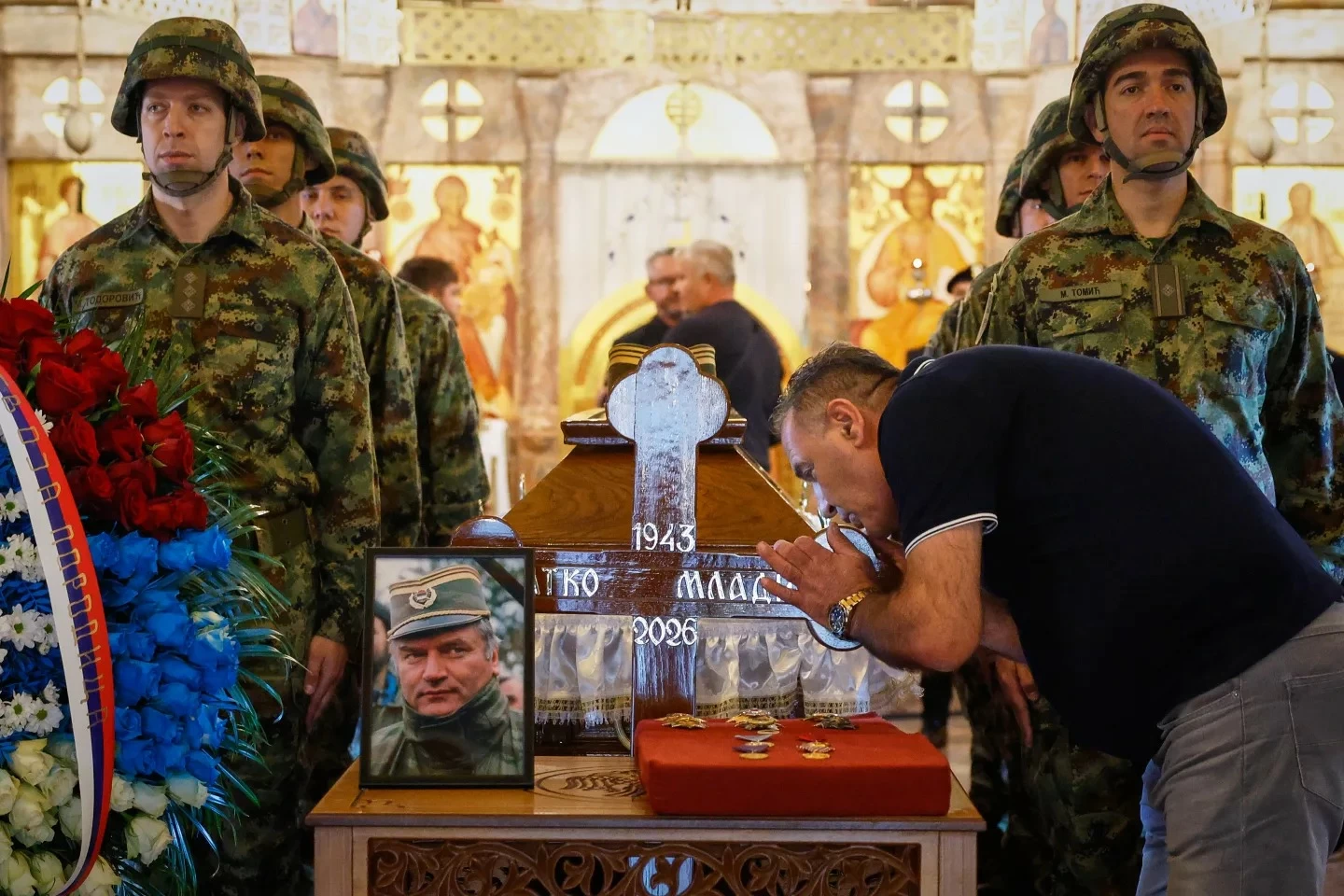
وُضع جثمان راتكو ملاديتش، القائد العسكري لصرب البوسنة الذي توفي أثناء قضائه حكماً بالسجن مدى الحياة بتهم الإبادة الجماعية وجرائم الحرب والجرائم ضد الإنسانية، الاثنين، في كنيسة بالعاصمة الصربية بلغراد، وسط حضور آلاف المشيعين وتكريم عسكري أثار انتقادات أوروبية واسعة.
وتحدّت صربيا تحذيرات الاتحاد الأوروبي من تمجيد ملاديتش، الذي لا يزال يحظى بشعبية لدى قطاعات من الصرب الذين يرونه بطلاً قومياً، رغم إدانته أمام القضاء الدولي لدوره في جرائم ارتكبت خلال حرب البوسنة بين عامي 1992 و1995.
وتوافد آلاف المشيعين منذ ساعات الصباح الأولى إلى كنيسة القديس لوقا الأرثوذكسية الصربية في بلغراد لإلقاء نظرة الوداع على ملاديتش. ووُضعت قبعته العسكرية وسيفه فوق التابوت، بينما وقف رجال يرتدون الزي العسكري إلى جانبيه.
وأفادت وسائل إعلام مؤيدة للحكومة الصربية بأن ملاديتش سيحظى بمراسم تشييع عسكرية كاملة، على أن يترأس بطريرك الكنيسة الأرثوذكسية الصربية بورفيريي مراسم الجنازة.
وقال ميلان دوبريتش، أحد المشيعين الذين قدموا من كوسوفو للمشاركة في الجنازة، إن ملاديتش «كان رجلاً قدّم كل شيء في حياته من أجل الشعب الصربي»، مضيفاً أنه يشعر بالسعادة لرؤية الناس يتوافدون لتكريمه.
ملاديتش.. إدانة بالإبادة الجماعية وجرائم الحرب
وتوفي ملاديتش عن 84 عاماً في 27 أغسطس الماضي، في لاهاي بهولندا، أثناء قضائه حكماً بالسجن مدى الحياة بعد إدانته بالإبادة الجماعية وجرائم الحرب والجرائم ضد الإنسانية التي ارتكبتها القوات التابعة له خلال حرب البوسنة.
وفي عام 2017، أُدين ملاديتش بالتخطيط لمجزرة سربرنيتسا عام 1995، التي قُتل فيها أكثر من 8 آلاف مسلم بوسني، إضافة إلى مسؤوليته عن حصار سراييفو الذي استمر سنوات، وجرائم حرب أخرى، من بينها إنشاء معسكرات اعتقال لمدنيين من غير الصرب وأسرى من القوات المعادية.
وكانت حرب البوسنة قد أسفرت عن مقتل أكثر من 100 ألف شخص وتشريد أكثر من مليون آخرين، قبل أن تنتهي عام 1995 باتفاق سلام توسطت فيه الولايات المتحدة.
الحكومة الصربية تدعم مراسم التشييع
ورغم أن ترتيبات الجنازة أُنجزت رسمياً من جانب عائلة ملاديتش، فإن الحكومة الصربية أرسلت طائرة الأسبوع الماضي لإعادة جثمانه إلى بلغراد، بينما حمل جنود التابوت الملفوف بالعلم الوطني الصربي.
كما أقيمت، السبت، مراسم تأبين عسكرية في أحد المواقع الرسمية للجيش الصربي.
وقال الرئيس الصربي ألكسندر فوتشيتش، الذي لا يشارك في الجنازة، إن مراسم التشييع تمثل «تدفقاً عاطفياً» من جانب المؤيدين لملاديتش، مشدداً على أنها لا تتعلق بما إذا كان قد سمح بإقامتها أم لا.
وفوتشيتش، الذي كان في السابق من القوميين المتشددين الداعمين للسياسات التوسعية الصربية خلال الحرب، دافع عن موقف بلاده، قائلاً إن الصرب تعرضوا للاضطهاد والمضايقة لعقود، وإنهم باتوا «لن يقبلوا الأمر بعد الآن».
بروكسل تنتقد بلغراد
وأثارت مراسم تكريم ملاديتش غضباً داخل الاتحاد الأوروبي، في وقت تسعى فيه صربيا إلى الانضمام إلى التكتل الأوروبي.
وألغت مفوضة الاتحاد الأوروبي لشؤون التوسع، مارتا كوس، زيارة كانت مقررة إلى صربيا، احتجاجاً على طريقة تعامل السلطات مع وفاة ملاديتش ومراسم تكريمه.
وقالت كوس إن مظاهر التمجيد المحيطة بوفاته «تتعارض مع القيم التي يقوم عليها مسار صربيا نحو الاتحاد الأوروبي».
وانضم مسؤولون أوروبيون آخرون وقادة إقليميون وأقارب ضحايا الحرب في البوسنة إلى الانتقادات الموجهة إلى بلغراد، معتبرين أن تكريم رجل أدين بارتكاب جرائم حرب يتعارض مع جهود المصالحة في منطقة البلقان.
جدل مستمر حول سربرنيتسا
ولا تزال صربيا ترفض الاعتراف رسمياً بأن ما حدث في سربرنيتسا كان إبادة جماعية، وتصف المجزرة بأنها «جريمة مروعة».
وكانت سربرنيتسا قد أعلنتها الأمم المتحدة ملاذاً آمناً للمسلمين البوسنيين خلال الحرب، قبل أن تسقط في أيدي القوات الصربية التي فصلت الرجال والصبية عن عائلاتهم، ثم قتلتهم ودفنت جثثهم في مقابر جماعية.
ومنذ وفاة ملاديتش، نظم أنصاره القوميون وقفات تأبين، كما ظهرت في بلغراد سلسلة من الجداريات التي تحمل صورته، وأُطلقت مشاعل تكريماً له.
وفي مساء الأحد، عرض مشجعو كرة القدم في إحدى مباريات العاصمة الصربية صورة ضخمة لملاديتش ورددوا اسمه.
وفي العام الماضي، شيعت صربيا أيضاً رئيس أركان الجيش السابق نيبويشا بافكوفيتش، الذي أدين بجرائم حرب، ومنحته مراسم عسكرية كاملة في مقبرة مخصصة للشخصيات البارزة.
مسار صربيا الأوروبي يواجه عقبات
ويأتي الجدل حول جنازة ملاديتش في وقت يواجه فيه مسار صربيا للانضمام إلى الاتحاد الأوروبي عراقيل متزايدة، على خلفية ما يعتبره الاتحاد تراجعاً ديمقراطياً في البلاد، إلى جانب رفض حكومة فوتشيتش الانضمام إلى العقوبات الدولية المفروضة على روسيا بسبب غزوها لأوكرانيا.
كما صعّد فوتشيتش في الآونة الأخيرة لهجته المناهضة للغرب، بالتزامن مع توقع إجراء انتخابات برلمانية مبكرة في البلاد خلال الشهر القادم.
وتكشف مراسم تشييع ملاديتش مجدداً عمق الانقسام داخل صربيا بشأن إرث حروب تفكك يوغوسلافيا، بين من يراه رمزاً قومياً وقائداً دافع عن الصرب، ومن يعتبره أحد أبرز المسؤولين عن الفظائع التي شهدتها البوسنة في تسعينيات القرن الماضي.
The body of Ratko Mladić, the military leader of the Bosnian Serbs who died while serving a life sentence for genocide, war crimes, and crimes against humanity, was laid to rest on Monday in a church in the Serbian capital, Belgrade, amid the presence of thousands of mourners and a military honor that sparked widespread European criticism.
Serbia defied European Union warnings against glorifying Mladić, who remains popular among segments of Serbs who see him as a national hero, despite his conviction by an international court for his role in crimes committed during the Bosnian War from 1992 to 1995.
Thousands of mourners flocked since the early hours of the morning to the Serbian Orthodox Church of St. Luke in Belgrade to pay their last respects to Mladić. His military cap and sword were placed on the coffin, while men in military uniforms stood beside him.
Pro-government media reported that Mladić would receive a full military funeral, to be presided over by the Patriarch of the Serbian Orthodox Church, Porfirije.
Milan Dobrić, one of the mourners who came from Kosovo to participate in the funeral, stated that Mladić "was a man who gave everything in his life for the Serbian people," adding that he felt happy to see people coming to honor him.
Mladić.. Conviction for Genocide and War Crimes
Mladić died at the age of 84 on August 27, last year, in The Hague, Netherlands, while serving a life sentence after being convicted of genocide and war crimes and crimes against humanity committed by his forces during the Bosnian War.
In 2017, Mladić was convicted of planning the Srebrenica massacre in 1995, in which more than 8,000 Bosniak Muslims were killed, in addition to his responsibility for the years-long siege of Sarajevo and other war crimes, including the establishment of detention camps for non-Serb civilians and prisoners from opposing forces.
The Bosnian War resulted in the deaths of more than 100,000 people and the displacement of over a million others, before ending in 1995 with a peace agreement brokered by the United States.
The Serbian Government Supports the Funeral Arrangements
Although the funeral arrangements were officially completed by Mladić's family, the Serbian government sent a plane last week to return his body to Belgrade, while soldiers carried the coffin wrapped in the Serbian national flag.
A military memorial service was also held on Saturday at an official site of the Serbian army.
Serbian President Aleksandar Vučić, who did not attend the funeral, stated that the funeral represents an "emotional outpouring" from Mladić's supporters, emphasizing that it does not concern whether he allowed it to take place or not.
Vučić, who was previously a hardline nationalist supporting Serbian expansionist policies during the war, defended his country's stance, saying that Serbs have faced persecution and harassment for decades, and that they will "not accept it any longer."
Brussels Criticizes Belgrade
The tribute to Mladić has sparked outrage within the European Union, at a time when Serbia seeks to join the European bloc.
The EU Commissioner for Enlargement, Olivér Várhelyi, canceled a planned visit to Serbia in protest against how the authorities handled Mladić's death and memorial service.
Várhelyi stated that the glorification surrounding his death "contradicts the values that underpin Serbia's path to the European Union."
Other European officials, regional leaders, and relatives of war victims in Bosnia joined the criticism directed at Belgrade, considering that honoring a man convicted of war crimes contradicts reconciliation efforts in the Balkans.
Ongoing Controversy Over Srebrenica
Serbia still refuses to officially acknowledge that what happened in Srebrenica was genocide, describing the massacre as a "horrific crime."
Srebrenica was declared a safe haven for Bosniak Muslims during the war by the United Nations, before falling into the hands of Serbian forces who separated men and boys from their families, then killed them and buried their bodies in mass graves.
Since Mladić's death, his nationalist supporters have organized memorial vigils, and a series of murals bearing his image have appeared in Belgrade, along with torches lit in his honor.
On Sunday evening, football fans at a match in the Serbian capital displayed a large image of Mladić and chanted his name.
Last year, Serbia also held a full military funeral for former army chief of staff Nebojša Pavković, who was convicted of war crimes, granting him full military honors at a cemetery designated for prominent figures.
Serbia's European Path Faces Obstacles
The controversy surrounding Mladić's funeral comes at a time when Serbia's path to joining the European Union faces increasing hurdles, amid what the EU considers a democratic backsliding in the country, along with Vučić's government's refusal to join international sanctions imposed on Russia due to its invasion of Ukraine.
Vučić has also recently escalated his anti-Western rhetoric, coinciding with expectations of early parliamentary elections in the country next month.
The funeral arrangements for Mladić once again reveal the deep division within Serbia regarding the legacy of the wars that dismantled Yugoslavia, between those who see him as a national symbol and leader who defended Serbs, and those who consider him one of the main perpetrators of the atrocities witnessed in Bosnia in the 1990s.