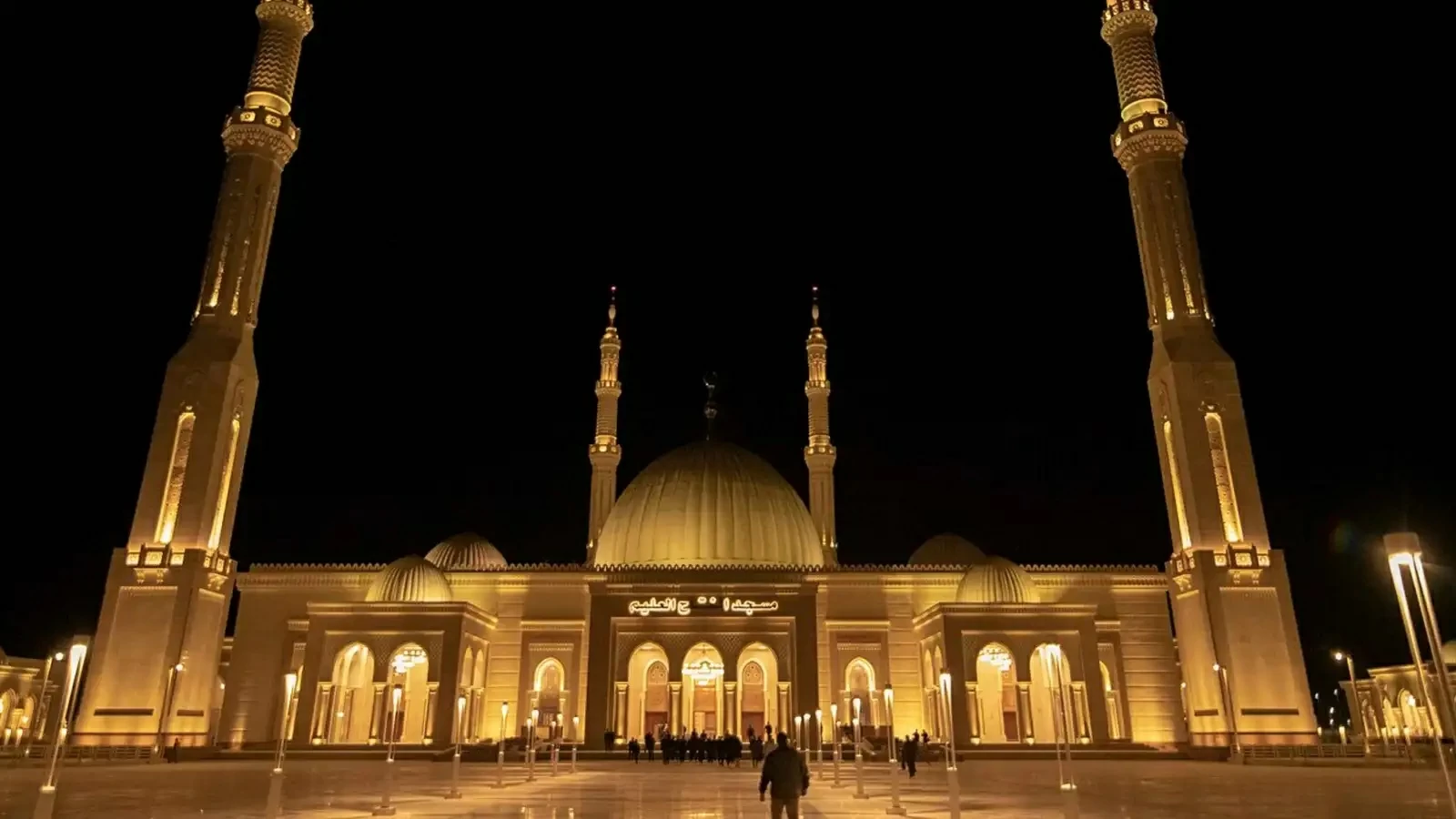
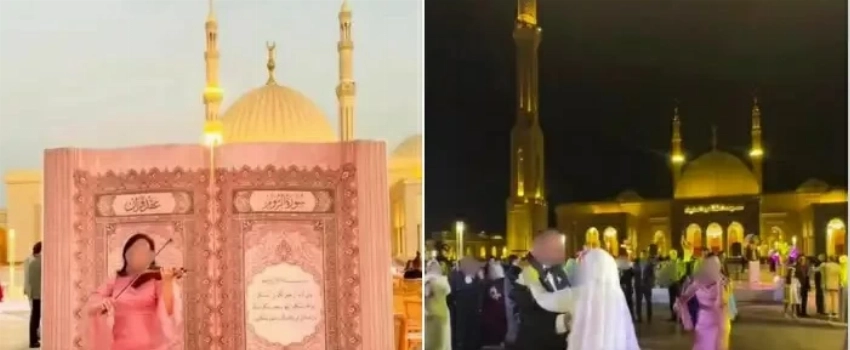
اجتاحت حالة من الاستياء العارم الشارع المصري ومواقع التواصل الاجتماعي، عقب تداول مقاطع فيديو توثق مشاهد غير مألوفة لحفل عقد قران أقيم في الساحة الخارجية لمسجد «الفتاح العليم» بالعاصمة الإدارية الجديدة في مصر. المشاهد التي وُصفت بالصادمة أظهرت عازفة تقدم مقطوعات موسيقية مباشرة أمام مجسم ضخم للمصحف الشريف، بينما تفاعل العروسان بالرقص أمام الحضور وسط تجهيزات احتفالية كاملة، في سلوك اعتبره المتابعون مساساً بحرمة الصرح الديني الكبير.
ولم تقف الأزمة عند حدود العزف والرقص في صحن المسجد، بل زاد من اشتعال الغضب الكشف عن تصميم بطاقات الدعوة الخاصة بالحفل، والتي جاءت مستوحاة بشكل كامل من هيئة المصحف الشريف، مما اعتبره رواد منصات التواصل ابتذالاً وتعدياً صارخاً على قدسية القرآن الكريم. هذه التفاصيل أطلقت موجة مطالبات واسعة لكشف هوية الجهة التي سمحت بتنظيم هذه المناسبة ومنحت التراخيص لإقامتها داخل نطاق أضخم مساجد العاصمة الإدارية.
وفي محاولة لمحاصرة الأزمة وتهدئة الشارع الغاضب، دخلت المؤسسة الدينية على الخط، حيث شدد الداعية محمد أبو بكر الخطيب بوزارة الأوقاف المصرية على أن عقد القران في المساجد أمر مبارك ومستحب، لكنه مشروط بالالتزام الكامل بالسكينة والوقار. وأكد أن ساحات العبادة لا يمكن أن تتحول إلى قاعات للرقص والعزف، رافضاً بصرامة الزج بمجسمات المصحف في ديكورات الاحتفال، ومطالباً بالفصل التام بين حرمة دور العبادة والأجواء الاحتفالية الصاخبة.
تترك هذه الواقعة الشارع المصري في حالة ترقب شديد لصدور بيان رسمي من الجهات المختصة يوضح الملابسات الكاملة للحفل، ويحدد مساحة المسؤوليات والعقوبات المتوقعة بحق المنظمين، لحسم الجدل المتصاعد حول واحدة من أكثر القضايا إثارة للحساسية الدينية والمجتمعية أخيراً.
A wave of widespread discontent has swept through the Egyptian streets and social media, following the circulation of video clips documenting unusual scenes from a wedding ceremony held in the outdoor courtyard of the "Al-Fattah Al-Alim" Mosque in the New Administrative Capital of Egypt. The shocking scenes showed a musician performing live music in front of a massive replica of the Holy Quran, while the bride and groom danced in front of the attendees amidst complete festive preparations, an act that many observers considered a violation of the sanctity of this significant religious edifice.
The crisis did not stop at the music and dancing in the mosque's courtyard; the anger was further fueled by the revelation of the design of the invitation cards for the event, which were entirely inspired by the appearance of the Holy Quran. This was regarded by social media users as a trivialization and a blatant infringement on the sanctity of the Holy Quran. These details sparked widespread calls to reveal the identity of the entity that allowed the organization of this event and granted the licenses for it to be held within the premises of one of the largest mosques in the New Administrative Capital.
In an attempt to contain the crisis and calm the angry public, the religious institution intervened, with preacher Mohamed Abu Bakr Al-Khatib from the Egyptian Ministry of Awqaf emphasizing that conducting marriage contracts in mosques is a blessed and commendable act, but it is conditional on complete adherence to tranquility and dignity. He affirmed that places of worship cannot be transformed into halls for dancing and music, firmly rejecting the inclusion of replicas of the Quran in the decorations of the celebration, and calling for a complete separation between the sanctity of places of worship and noisy festive atmospheres.
This incident leaves the Egyptian public in a state of keen anticipation for an official statement from the relevant authorities that clarifies the full circumstances of the event and defines the scope of responsibilities and potential penalties for the organizers, in order to resolve the escalating debate surrounding one of the most sensitive religious and societal issues recently.