أثار شعور عدد من سكان القاهرة، اليوم (الثلاثاء)، بهزة أرضية مخاوف وتساؤلات حول طبيعتها، قبل أن يؤكد المعهد القومي للبحوث الفلكية والجيوفيزيقية أن الهزة لم تكن زلزالاً طبيعياً، وإنما نتجت عن أعمال إنشائية شرق العاصمة، مشدداً على عدم تسجيل أي خسائر في الأرواح أو الممتلكات.
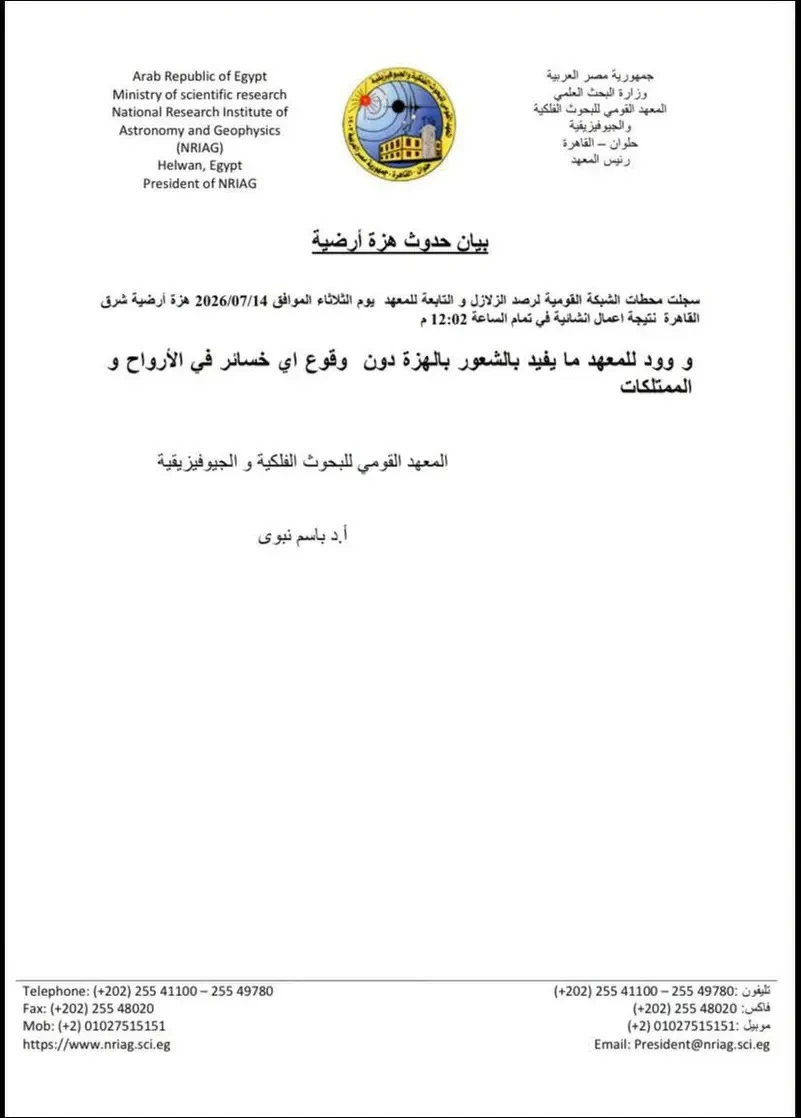
وأوضح المعهد، في بيان رسمي، أن محطات الشبكة القومية لرصد الزلازل سجلت الهزة في تمام الساعة 12:02 ظهراً بالتوقيت المحلي، وتبين بعد تحليل البيانات أنها ناتجة عن أعمال إنشائية جارية شرق القاهرة.
وأشار البيان إلى أن المعهد تلقى بلاغات من عدد من المواطنين أفادت بشعورهم بالهزة، مؤكداً في الوقت ذاته عدم وقوع أي أضرار أو خسائر جراء هذا الحدث.
ودعا المعهد المواطنين إلى عدم الانسياق وراء الشائعات أو المعلومات غير الدقيقة، وحثهم على الاعتماد على البيانات الرسمية الصادرة عن الجهات المختصة للحصول على المعلومات الصحيحة.
من جانبه، أكّد القائم بأعمال رئيس المعهد القومي للبحوث الفلكية والجيوفيزيقية، الدكتور باسم نبوي، أن الهزة التي شعر بها المواطنون شرق القاهرة جاءت نتيجة أعمال إنشائية، نافياً أن تكون ناجمة عن نشاط زلزالي طبيعي.
وأوضح أن الشبكة القومية لرصد الزلازل رصدت الهزة فور وقوعها، وتم التحقق من مصدرها وإصدار بيان تفصيلي لطمأنة المواطنين.
وشهدت مصر خلال الفترة الأخيرة عدداً من الهزات الأرضية التي وقعت في البحرين الأحمر والمتوسط، ما أثار تساؤلات بشأن النشاط الزلزالي في المنطقة.
وكان الدكتور باسم نبوي قد أوضح، في تصريحات سابقة، أن المعهد يسجل بشكل طبيعي ما بين أربعة وخمسة زلازل يومياً في المنطقة العربية وحوض البحر المتوسط، إلا أن معظمها لا يشعر به المواطنون في مصر.
وأضاف أن المعهد لا يعلن إلا عن الزلازل المحسوسة داخل البلاد بهدف طمأنة المواطنين، مشيراً إلى أن بعض الزلازل التي تقع في مناطق بعيدة، مثل قرب جزيرة كريت، لا يكون لها أي تأثير على الأراضي المصرية، ولذلك لا يتم التركيز عليها إعلامياً لتجنب إثارة القلق.
وجدد القائم بأعمال رئيس المعهد القومي للبحوث الفلكية والجيوفيزيقية التأكيد على أن مصر تقع خارج مناطق الخطر الزلزالي المباشر، رغم قربها من مناطق نشطة تكتونياً، مثل القوس الهيليني ومنطقة قبرص، اللتين تعدان المصدر الرئيسي لمعظم الزلازل التي قد يشعر بها سكان المحافظات الساحلية والقاهرة.
وأكد أن الدولة المصرية تمتلك منظومة متطورة لرصد النشاط الزلزالي، إلى جانب خطط وسيناريوهات يتم تحديثها بصورة مستمرة للتعامل مع أي طارئ، داعياً المواطنين إلى الاطمئنان والثقة في البيانات الرسمية الصادرة عن الجهات المختصة.
The feeling of an earthquake by a number of residents in Cairo today (Tuesday) raised concerns and questions about its nature, before the National Institute for Astronomical and Geophysical Research confirmed that the tremor was not a natural earthquake, but rather resulted from construction work east of the capital, emphasizing that no losses in lives or property were recorded.
The institute clarified in an official statement that the national seismic monitoring network recorded the tremor at exactly 12:02 PM local time, and after analyzing the data, it was determined that it was caused by ongoing construction activities east of Cairo.
The statement indicated that the institute received reports from several citizens who felt the tremor, while also confirming that no damages or losses occurred as a result of this event.
The institute urged citizens not to be swayed by rumors or inaccurate information, and encouraged them to rely on official data issued by the relevant authorities to obtain accurate information.
For his part, the acting head of the National Institute for Astronomical and Geophysical Research, Dr. Basem Nabawy, confirmed that the tremor felt by citizens east of Cairo was a result of construction work, denying that it was caused by natural seismic activity.
He explained that the national seismic monitoring network detected the tremor immediately upon its occurrence, verified its source, and issued a detailed statement to reassure citizens.
Recently, Egypt has experienced a number of tremors that occurred in the Red and Mediterranean Seas, raising questions about seismic activity in the region.
Dr. Basem Nabawy had previously explained that the institute normally records between four and five earthquakes daily in the Arab region and the Mediterranean basin, although most of them are not felt by citizens in Egypt.
He added that the institute only announces earthquakes that are felt within the country to reassure citizens, noting that some earthquakes occurring in distant areas, such as near the island of Crete, have no impact on Egyptian territories, and therefore are not focused on in the media to avoid causing anxiety.
The acting head of the National Institute for Astronomical and Geophysical Research reiterated that Egypt is outside direct seismic danger zones, despite its proximity to tectonically active areas, such as the Hellenic Arc and the Cyprus region, which are the main sources of most earthquakes that may be felt by residents of coastal governorates and Cairo.
He confirmed that the Egyptian state possesses an advanced system for monitoring seismic activity, along with plans and scenarios that are continuously updated to deal with any emergencies, urging citizens to feel reassured and trust the official data issued by the relevant authorities.