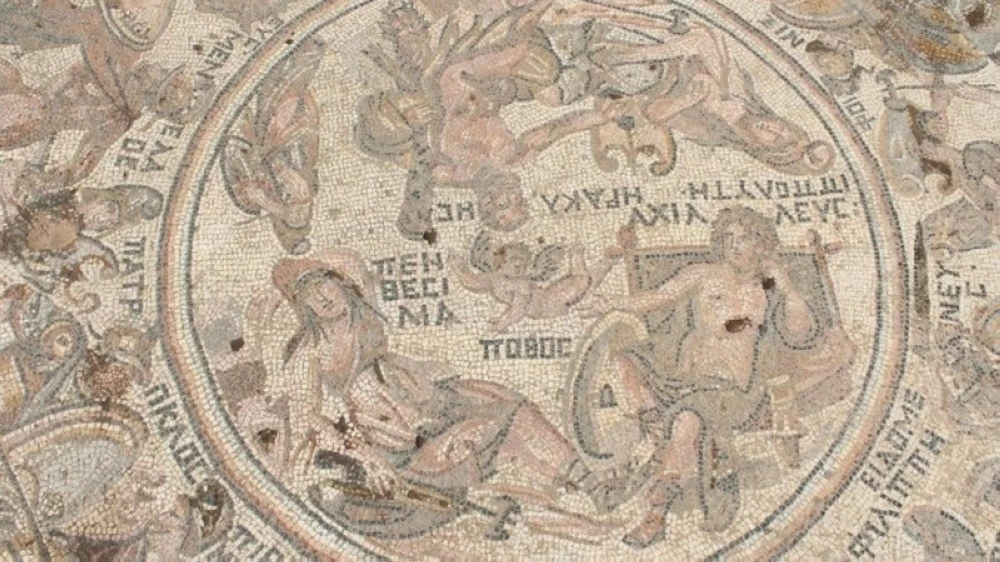
تحوّلت فلاحة أرض زراعية في ريف دمشق إلى اكتشاف أثري نادر، بعدما عثر فلاح في مدينة قارة على لوحة فسيفسائية ضخمة مدفونة تحت التربة، أثناء تحضير أرضه للزراعة.
وأوضحت المديرية العامة للآثار والمتاحف في سورية أنها تحركت فور تلقيها المعلومات، وشكلت فريقاً متخصصاً باشر أعمال التنقيب في الموقع، الذي يقع على بعد 15 كيلومتراً شمال غرب مدينة قارة، قرب الحدود اللبنانية، في منطقة تعرف باسم القبو.
وأظهرت أعمال الحفر جزءاً واسعاً من أرضية فسيفساء مزينة بزخارف هندسية دقيقة، تنوعت ألوانها بين الأبيض والأسود والقرميدي، إضافة إلى بقايا معمارية على الجدار الجنوبي، شملت آثاراً طينية كلسية ورسومات فريسكو قديمة، بحسب بيان رسمي للمديرية.
وأكدت المديرية أن المؤشرات الأولية ترجح عودة اللوحة وبقايا البناء المكتشفة إلى الحقبة البيزنطية، ما يضيف الموقع إلى خريطة الاكتشافات الأثرية المهمة في سورية خلال الفترة الأخيرة.
ويأتي هذا الاكتشاف بعد أشهر قليلة من إعلان المديرية، في شهر مايو الماضي، العثور على لوحة فسيفساء أخرى في قرية مريمين بريف حمص الشمالي الغربي، ظهرت أثناء حفر بئر، وجسدت نساء يعزفن على آلات موسيقية، وبلغت أبعادها أربعة أمتار و30 سنتيمتراً في مترين.
وفي هذا السياق، قال الباحث التاريخي الدكتور عبدالوهاب أبو صالح: إن فن الفسيفساء في سورية يمتد من العصر الهلنستي عام 312 قبل الميلاد، مروراً بالعصرين الروماني والبيزنطي، موضحاً أن فسيفساء الأرضيات تصنع من الحجر، بينما تعتمد فسيفساء الجدران على الزجاج.
وأشار أبو صالح إلى أن سورية تعد من أوائل الدول التي شهدت هذا الفن، مستشهداً بلوحات أفاميا في حماة، إضافة إلى اكتشافات في الجزيرة السورية تعود إلى المراحل التمهيدية لظهور الفسيفساء، إذ برزت آثارها على القبب الطينية.
The farming of agricultural land in the countryside of Damascus has turned into a rare archaeological discovery, after a farmer in the town of Qara found a massive mosaic panel buried under the soil while preparing his land for cultivation.
The General Directorate of Antiquities and Museums in Syria stated that it acted immediately upon receiving the information and formed a specialized team that began excavation work at the site, which is located 15 kilometers northwest of the town of Qara, near the Lebanese border, in an area known as Al-Qabou.
The excavation work revealed a wide section of a mosaic floor adorned with intricate geometric decorations, with colors ranging from white and black to terracotta, in addition to architectural remains on the southern wall, which included calcareous clay artifacts and ancient fresco paintings, according to an official statement from the directorate.
The directorate confirmed that initial indicators suggest that the panel and the discovered building remnants date back to the Byzantine era, adding the site to the map of significant archaeological discoveries in Syria in recent times.
This discovery comes just a few months after the directorate announced, in May, the finding of another mosaic panel in the village of Maryamin in the northwestern countryside of Homs, which appeared during the digging of a well, depicting women playing musical instruments, measuring four meters and 30 centimeters by two meters.
In this context, historical researcher Dr. Abdul Wahab Abu Saleh stated that the art of mosaic in Syria dates back to the Hellenistic period in 312 BC, passing through the Roman and Byzantine eras, explaining that floor mosaics are made from stone, while wall mosaics rely on glass.
Abu Saleh pointed out that Syria is one of the first countries to witness this art, citing the mosaics of Apamea in Hama, in addition to discoveries in the Syrian Jazira that date back to the preliminary stages of the emergence of mosaics, as their traces appeared on clay domes.