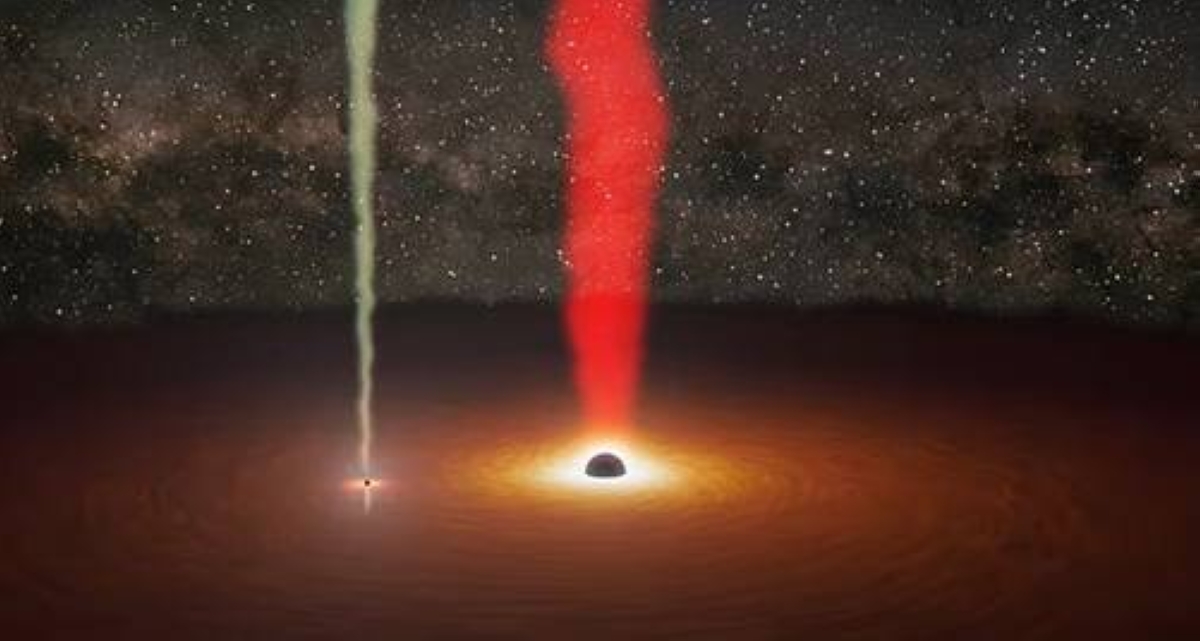
لأول مرة في التاريخ، تمكن علماء الفلك من التقاط صورة مذهلة تُظهر ثقبين أسودين يدوران حول بعضهما البعض في قلب مجرة OJ287، التي تبعد نحو 5 مليارات سنة ضوئية عن الأرض.
ثقبان أسودان يرقصان في الفضاء
هذا الإنجاز العلمي الرائد يُعد دليلاً مباشراً على وجود ثقوب سوداء ثنائية، وهي ظاهرة كانت تُعتبر نظرية لعقود، بحسب وسائل إعلام عالمية.
وفي السابق، اقتصرت الصور الفلكية على التقاط ثقوب سوداء فائقة الكتلة منفردة، مثل تلك الموجودة في مركز مجرتنا، لكن بفضل تقنية مبتكرة، نجح فريق من جامعة توركو في فنلندا في إثبات أن مجرة OJ287 تحتضن ثقبين أسودين.
صورة للثقبين الأسودين مرة واحدة حول المجموعة بشكل كامل.
تفاصيل اكتشاف الثقبين
وبحسب الدراسة المنشورة في مجلة Astrophysical Journal، استخدم العلماء تقنية «التداخل طويل الأمد»، التي جمعت بين هوائيات راديوية موزعة على الأرض وقمر صناعي يقع على بُعد نصف المسافة إلى القمر، لتكوين تلسكوب راديوي «افتراضي» هائل بحجم 15 ضعف قطر الأرض.
هذا التلسكوب قدم دقة تصوير فائقة، تتجاوز بـ100 ألف مرة أي تقنية سابقة استُخدمت لمراقبة هذه المجرة.
كشف لأول مرة في التاريح
ويقول قائد الدراسة البروفيسور ماوري فالتونن: «للمرة الأولى، تمكنا من التقاط صورة لثقبين أسودين يدوران حول بعضهما».
ويُعد OJ287 كوازاراً، وهو جرم سماوي شديد اللمعان يحتوي على ثقب أسود فائق الكتلة محاط بغاز وغبار يُنتجان إشعاعاً هائلاً بسبب الحرارة الناتجة عن سقوطهما في الثقب، وهذا الكوازار مشرق لدرجة أن بإمكان هواة الفلك رؤيته باستخدام تلسكوب جيد، رغم بعده الشاسع.
صورة بالتلسكوب لاكتشاف ثقبين أسودين في الفضاء.
ومنذ الثمانينات، لاحظ العلماء أن ضوء الكوازار يتذبذب بنمط منتظم كل 12 عاماً، ما أثار الشكوك حول وجود ثقبين أسودين يدوران حول بعضهما في مدار يمتد لـ12 عاماً.
ومع ذلك، لم تتمكن التلسكوبات التقليدية، حتى تلك التي تعتمد على الضوء مثل قمر TESS التابع لناسا، من فصل الإشارتين بسبب المسافة الهائلة، لكن باستخدام قمر RadioAstron وتقنية التداخل، تمكن الباحثون من التقاط صورة راديوية واضحة تُظهر الثقبين الأسودين.
حجم الثقبين مقارنة بالشمس
وفي الدراسة المنشورة في مجلة Astrophysical Journal، أكد البروفيسور فالتونن أن الصور تتطابق مع الحسابات النظرية، حيث تم تحديد الثقبين من خلال الجزيئات النفاثة التي يطلقانها أو الغاز المضيء المحيط بهما.
وكشفت الصور أن الثقب الأكبر تبلغ كتلته نحو 18.35 مليار مرة كتلة الشمس، بينما يبلغ الثقب الأصغر نحو 150 مليون كتلة شمسية.
وبحسب الاكتشاف، يدور الثقب الأصغر بسرعة هائلة حول الأكبر، مخترقاً قرص الغاز والغبار المحيط بالثقب الأكبر في كل دورة، ما يؤدي إلى سحب نحو 16 كتلة شمسية من المواد في كل مرة.
كما اكتشف الباحثون أن النفاثات الجزيئية الصادرة عن الثقب الأصغر تظهر «ملتوية»، مشابهة لتدفق المياه من خرطوم دوّار خارج عن السيطرة، بسبب السرعة العالية وحركته حول الثقب الأكبر.
ظاهرة الذيل المتمايل
ويُطلق الباحثون على هذه الظاهرة اسم «الذيل المتمايل»، ويتوقعون أن تتغير اتجاهات هذه النفاثات في السنوات القادمة مع تغير سرعة واتجاه الثقب الأصغر.
For the first time in history, astronomers have managed to capture a stunning image showing two black holes orbiting each other at the heart of the OJ287 galaxy, which is about 5 billion light-years away from Earth.
Two Black Holes Dancing in Space
This groundbreaking scientific achievement serves as direct evidence of the existence of binary black holes, a phenomenon that has been considered theoretical for decades, according to global media.
Previously, astronomical images were limited to capturing solitary supermassive black holes, like those found at the center of our galaxy, but thanks to innovative technology, a team from the University of Turku in Finland succeeded in proving that the OJ287 galaxy hosts two black holes.
صورة للثقبين الأسودين مرة واحدة حول المجموعة بشكل كامل.
Details of the Black Hole Discovery
According to the study published in the Astrophysical Journal, scientists used a technique called "long-baseline interferometry," which combined radio antennas distributed across the Earth and a satellite located halfway to the moon, to create a massive "virtual" radio telescope 15 times the diameter of Earth.
This telescope provided exceptional imaging accuracy, surpassing any previous technology used to observe this galaxy by 100,000 times.
First Discovery of Its Kind in History
Study leader Professor Mauri Valtonen states: "For the first time, we have been able to capture an image of two black holes orbiting each other."
OJ287 is classified as a quasar, a highly luminous celestial object containing a supermassive black hole surrounded by gas and dust that produce immense radiation due to the heat generated from falling into the black hole. This quasar is so bright that amateur astronomers can see it using a good telescope, despite its vast distance.
صورة بالتلسكوب لاكتشاف ثقبين أسودين في الفضاء.
Since the 1980s, scientists have noticed that the light from the quasar fluctuates in a regular pattern every 12 years, raising suspicions about the existence of two black holes orbiting each other in a 12-year orbit.
However, traditional telescopes, even those relying on light like NASA's TESS satellite, could not separate the two signals due to the immense distance. But by using the RadioAstron satellite and interferometry techniques, researchers were able to capture a clear radio image showing the two black holes.
Size of the Black Holes Compared to the Sun
In the study published in the Astrophysical Journal, Professor Valtonen confirmed that the images match theoretical calculations, as the two black holes were identified by the jet particles they emit or the glowing gas surrounding them.
The images revealed that the larger black hole has a mass of about 18.35 billion times that of the Sun, while the smaller black hole has a mass of about 150 million solar masses.
According to the discovery, the smaller black hole orbits the larger one at an incredible speed, penetrating the gas and dust disk surrounding the larger black hole with each orbit, resulting in the extraction of about 16 solar masses of material each time.
Researchers also discovered that the molecular jets emitted by the smaller black hole appear "twisted," similar to the flow of water from a runaway hose, due to the high speed and its movement around the larger black hole.
The Wobbling Tail Phenomenon
Researchers refer to this phenomenon as the "wobbling tail," and they expect the directions of these jets to change in the coming years as the speed and direction of the smaller black hole change.