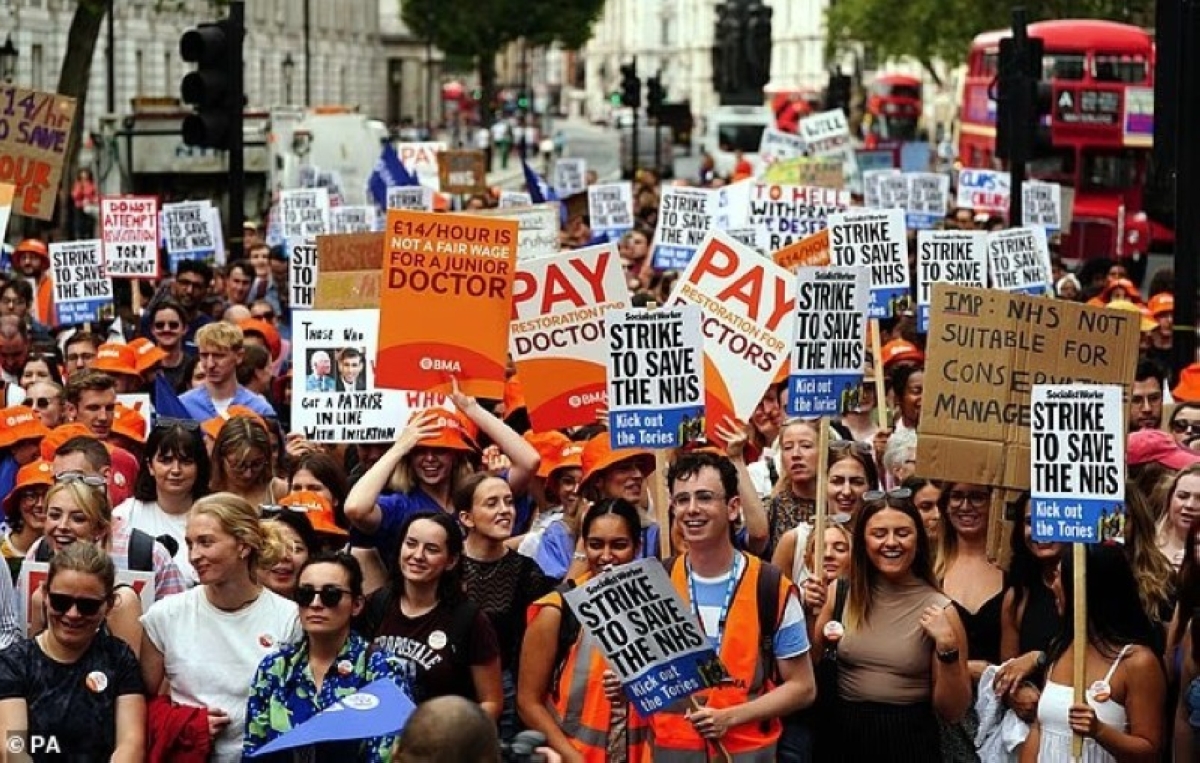
أعلنت النقابة الطبية البريطانية (BMA) أن آلاف الأطباء المقيمين، المعروفين سابقاً بالأطباء المبتدئين، سيضربون عن العمل لمدة 5 أيام من 14 إلى 19 نوفمبر 2025، في خطوة تهدف إلى شل عمل المستشفيات.
ويأتي هذا الإضراب، الثالث عشر منذ عام 2022، بعد فشل الحكومة في تقديم عرض «مقبول» لتحسين أجور الأطباء، ما تسبب بإلغاء نحو 1.5 مليون موعد طبي سابقاً.
مطالب بزيادة الأجور
وقالت النقابة إن عرض الحكومة بزيادة الأجور بنسبة 5.4% في مايو، الذي جاء بناءً على توصية هيئة مستقلة، لا يكفي لتعويض «تآكل الأجور» بنسبة 21% منذ 2008، وطالبت بزيادة 29.2% لاستعادة القيمة الحقيقية للأجور.
وأشار رئيس لجنة الأطباء المقيمين في النقابة الدكتور جاك فليتشر إلى أن نصف الأطباء في عامهم الثاني يواجهون صعوبات في إيجاد وظائف، ما يهدر مهاراتهم بينما ينتظر المرضى العلاج.
وأضاف أن الإضراب جاء بعد مفاوضات فاشلة مع الحكومة، التي رفضت تقديم عرض يتضمن زيادة تدريجية في الأجور وخطة لخلق وظائف جديدة.
رد وزير الصحة البريطاني
في المقابل، وصف وزير الصحة ويس ستريتينغ الإضراب بأنه «مبالغ فيه وغير ضروري»، محذراً من أن «النقابة تعرقل تعافي هيئة الخدمات الصحية الوطنية (NHS)».
وأكد أن الأطباء المقيمين حصلوا بالفعل على زيادة بنسبة 28.9%، وأن الحكومة لا تستطيع تقديم المزيد هذا العام. واتهم النقابة برفض عرض لتحسين ظروف العمل وخلق فرص تدريب تخصصية، مشدداً على أن الإضراب سيضر بالمرضى ويثقل كاهل الطواقم الطبية الأخرى.
قوة الأطباء المقيمين
ويشكل الأطباء المقيمون نصف الأطباء في NHS، برواتب تبدأ من 38,831 جنيهاً إسترلينياً في السنة الأولى، وتصل إلى نحو 70 ألف جنيه بعد 8 سنوات.
وتستند مطالب النقابة إلى مؤشر أسعار التجزئة (RPI) الذي يظهر تآكل الأجور، بينما تعتمد الحكومة على مؤشر أسعار المستهلك (CPI) الذي يشير إلى انخفاض الأجور بنسبة 5% فقط منذ 2008. وكشف استطلاع YouGov أن 48% من البريطانيين يعارضون الإضراب، مقابل 39% يدعمونه، في تحول عن دعم الأغلبية (52%) الصيف الماضي.
The British Medical Association (BMA) announced that thousands of junior doctors, formerly known as foundation doctors, will strike for 5 days from November 14 to 19, 2025, in a move aimed at crippling hospital operations.
This strike, the thirteenth since 2022, comes after the government's failure to provide an "acceptable" offer to improve doctors' pay, resulting in the cancellation of approximately 1.5 million medical appointments previously.
Demands for Pay Increase
The association stated that the government's offer of a 5.4% pay increase in May, which was based on a recommendation from an independent body, is insufficient to compensate for the "erosion of wages" by 21% since 2008, and called for a 29.2% increase to restore the real value of wages.
Dr. Jack Fletcher, chair of the junior doctors' committee at the association, pointed out that half of the doctors in their second year are struggling to find jobs, wasting their skills while patients wait for treatment.
He added that the strike came after failed negotiations with the government, which refused to present an offer that included a gradual pay increase and a plan to create new jobs.
Response from the British Health Minister
In contrast, Health Minister Wes Streeting described the strike as "exaggerated and unnecessary," warning that "the union is hindering the recovery of the National Health Service (NHS)."
He confirmed that junior doctors have already received a 28.9% pay increase, and that the government cannot offer more this year. He accused the union of rejecting an offer to improve working conditions and create specialized training opportunities, emphasizing that the strike will harm patients and burden other medical staff.
Strength of Junior Doctors
Junior doctors make up half of the doctors in the NHS, with salaries starting at £38,831 in the first year, reaching around £70,000 after 8 years.
The union's demands are based on the Retail Price Index (RPI), which shows wage erosion, while the government relies on the Consumer Price Index (CPI), which indicates a wage decrease of only 5% since 2008. A YouGov survey revealed that 48% of Britons oppose the strike, compared to 39% who support it, marking a shift from the majority support (52%) last summer.