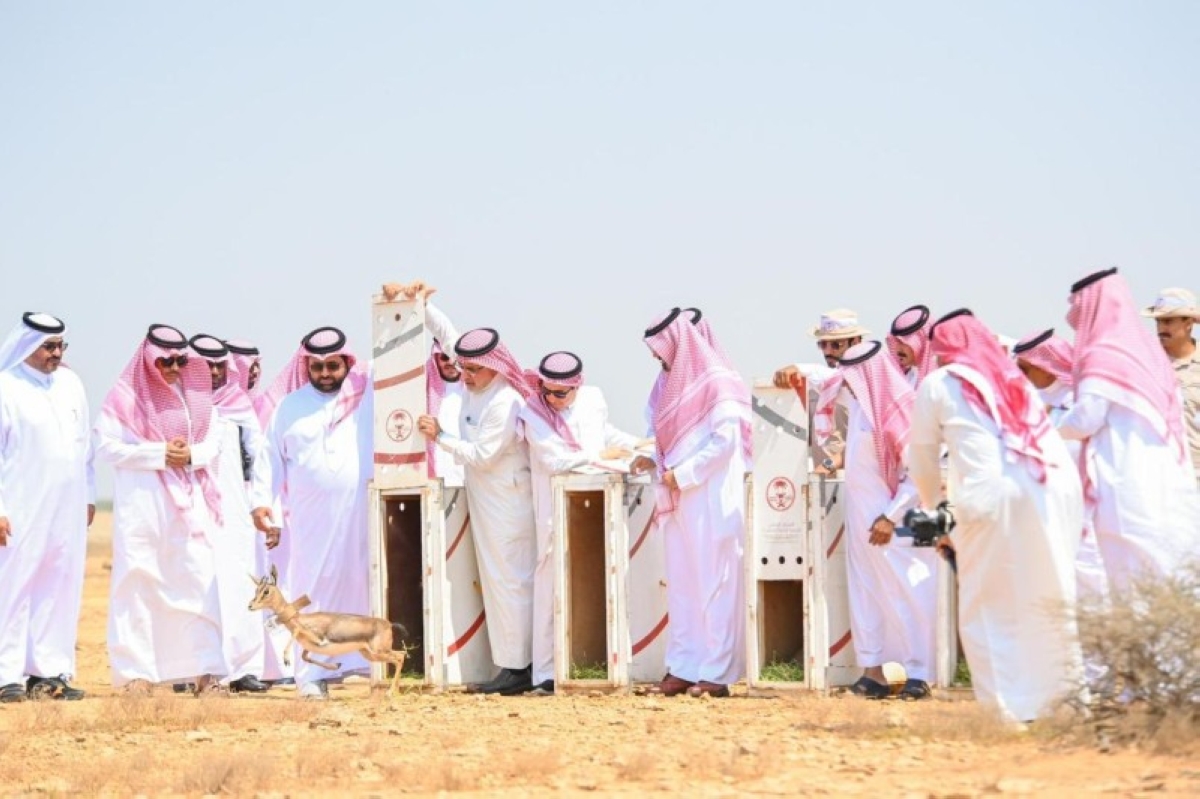
أطلق أمير منطقة جازان الأمير محمد بن عبدالعزيز، بحضور نائبه الأمير ناصر بن محمد بن عبدالله بن جلوي، والرئيس التنفيذي للمركز الوطني لتنمية الحياة الفطرية الدكتور محمد بن علي قربان، عدداً من ظباء الأدمي الفرساني في محمية جزر فرسان، وذلك أثناء زيارته للمحمية واطلاعه على أهم برامج تنمية الحياة الفطرية في المحمية والمحافظة على النظم البيئية والتنوع الأحيائي.
وتضمنت زيارة أمير جازان جولة في المحمية والاطلاع على مكوناتها الطبيعية والبحرية، وما تزخر به من تنوّع أحيائي، مستمعاً إلى شرح من المختصين في المركز حول الجهود المبذولة في المحافظة على التنوع الأحيائي بجزر فرسان وتنمية موائلها الطبيعية.
وأشاد بدعم القيادة للقطاع البيئي وحماية الحياة الفطرية، منوهاً بدور المركز الوطني لتنمية الحياة الفطرية لتحقيق تكامل الجهود الوطنية وفق مستهدفات رؤية المملكة 2030، لحماية التنوع الأحيائي بمحمية جزر فرسان التي تعد من أغنى مناطق المملكة تنوعاً أحيائياً بحرياً وبرّياً.
The Emir of Jazan Region, Prince Mohammed bin Abdulaziz, launched a number of Arabian Oryx in the Farasan Islands Reserve, in the presence of his deputy, Prince Nasser bin Mohammed bin Abdullah bin Jiluwi, and the CEO of the National Center for Wildlife Development, Dr. Mohammed bin Ali Qurban, during his visit to the reserve to review the most important wildlife development programs in the reserve and the preservation of ecosystems and biodiversity.
The visit of the Emir of Jazan included a tour of the reserve to observe its natural and marine components, and the rich biodiversity it boasts, while listening to explanations from specialists at the center about the efforts made to preserve biodiversity in the Farasan Islands and develop its natural habitats.
He praised the leadership's support for the environmental sector and the protection of wildlife, highlighting the role of the National Center for Wildlife Development in achieving the integration of national efforts in line with the objectives of the Kingdom's Vision 2030, to protect biodiversity in the Farasan Islands Reserve, which is considered one of the richest areas in the Kingdom in terms of marine and terrestrial biodiversity.