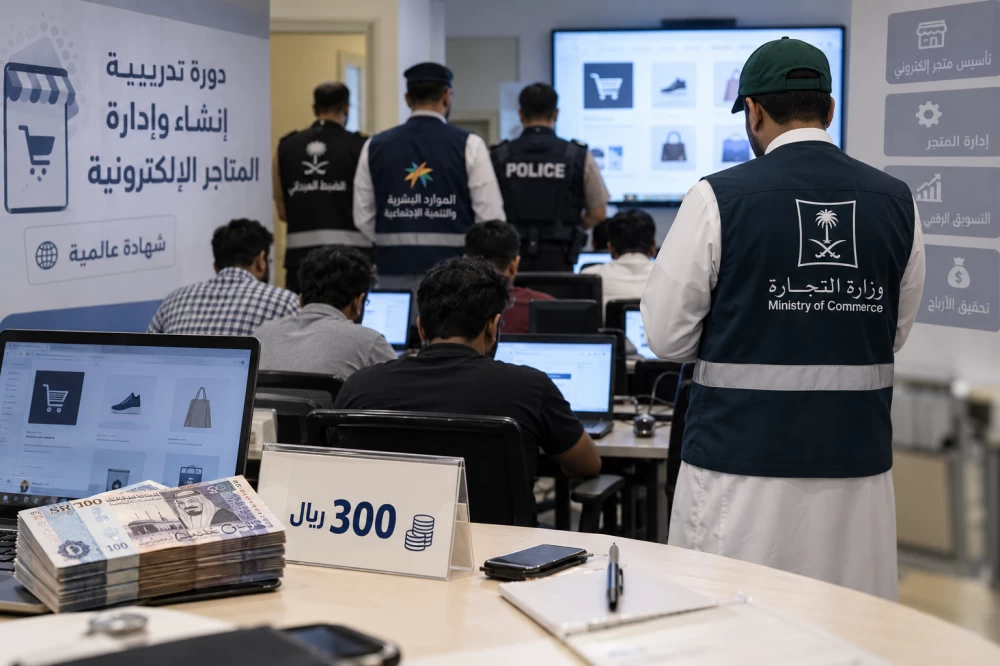
كشفت حملة نفذتها وزارتا التجارة والموارد والتنمية الاجتماعية وقوة من الضبط الميداني في شرطة الرياض عن مقر مخالف في حي البطحاء بالعاصمة الرياض، اتخذه عمال من جنسية آسيوية لتدريب العمالة الهاربة من كفلائهم في تأسيس متاجر إلكترونية وإدارتها لحسابهم الخاص. وتبين أن الموقع يديره مستثمر أجنبي واثنان من المقيمين المخالفين.
وكشفت التحقيقات المبدئية أن المخالفين كانوا يتقاضون مبلغ 300 ريال مقابل إصدار «شهادة عالمية مزعومة» في التجارة الإلكترونية.
وطبقاً لوزارة التجارة في موقعها على منصة (x) تم ضبط العمال المخالفين، فيما أحيل المقيمان إلى الجهات المختصة وإحالة المستثمر الأجنبي إلى وزارة الاستثمار. يشار إلى أن الأنظمة السعودية تضع شروطاً لممارسة التجارة الإلكترونية وتنقسم إلى متطلبات نظامية للمتجر وشروط عرض وامتثال منها السجل التجاري ووثيقة العمل إلى جانب توثيق المتجر عبر الجهات المختصة بغرض تعزيز المصداقية أمام المستهلك، إلى جانب التسجيل في الهيئة العامة للزكاة والضريبة والجمارك والحصول على الرقم الضريبي. ومن الشروط كذلك إلزام المتجر الإلكتروني بالإفصاح عن البيانات ورقم السجل واسم موفر الخدمة وعنوانه وتوفير بريد إلكتروني، أو رقم هاتف، أو قنوات محادثة فورية فعالة لخدمة العملاء والشكاوى، والإفصاح عن السعر الإجمالي للمنتج أو الخدمة شاملاً رسوم الشحن والتوصيل والضرائب قبل إتمام عملية الدفع، إلى جانب الالتزام بتحديد وقت دقيق ومحدد لتسليم المنتجات أو تقديم الخدمات وعدم الإطالة أو التضليل.
A campaign carried out by the Ministries of Commerce and Human Resources and Social Development, along with a field control force from the Riyadh Police, revealed an illegal establishment in the Al-Batha neighborhood of the capital, Riyadh. Workers of Asian nationality had taken it as a training center for workers fleeing from their sponsors to establish and manage online stores for their own benefit. It was found that the site was managed by a foreign investor and two violators residing in the country.
Initial investigations revealed that the violators were charging an amount of 300 riyals for issuing a "fake global certificate" in e-commerce.
According to the Ministry of Commerce on its platform (x), the violating workers were apprehended, while the two residents were referred to the relevant authorities and the foreign investor was referred to the Ministry of Investment. It is noted that Saudi regulations set conditions for practicing e-commerce, which include regulatory requirements for the store and compliance conditions, such as a commercial registration and a work document, in addition to documenting the store through the relevant authorities to enhance credibility before consumers. This also includes registration with the General Authority for Zakat, Tax, and Customs and obtaining a tax number. Additionally, conditions require the online store to disclose data, the registration number, the name of the service provider, its address, and to provide an email address, a phone number, or effective instant messaging channels for customer service and complaints, as well as disclosing the total price of the product or service, including shipping and delivery fees and taxes, before completing the payment process, along with a commitment to specify an accurate and defined time for delivering products or providing services without delays or misleading information.