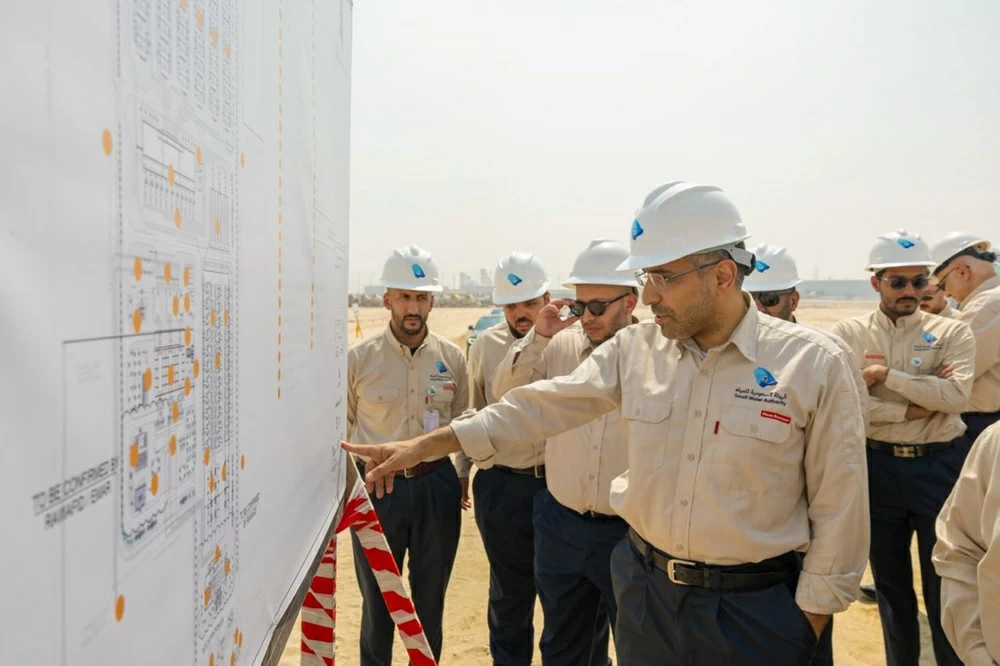
وقف رئيس الهيئة السعودية للمياه المهندس عبدالله بن إبراهيم العبدالكريم على تقدم العمل في 4 مشاريع جديدة لإنتاج المياه المحلاة في الجبيل ورأس الخير، لمتابعة الجاهزية التشغيلية لسلاسل الإمداد المرتبطة بها، ضمن خطط دعم أمن الإمداد المائي ومواكبة تنامي الطلب.
وتُعد المشاريع الأربعة بإجمالي قدراتها التصميمية البالغة 2.5 مليون متر مكعب يوميًا من أكبر مشاريع تحلية المياه عالميًا من حيث القدرة الإنتاجية، وتتكامل تشغيليًا مع منظومة الإمداد وشبكات النقل والتوزيع، كما تعتمد تقنيات لا تنتج عنها انبعاثات كربونية، وحلولًا تخفض استهلاك الطاقة الكهربائية اللازمة لإنتاج المتر المكعب، بما يرفع كفاءة التشغيل ويحد من الأثر البيئي.
وشملت مشروعي المرحلتين الخامسة والسابعة من منظومة إنتاج المياه المحلاة بالجبيل، بطاقة تصميمية إجمالية تبلغ 1.6 مليون متر مكعب يوميًا، ومشروعي المرحلتين الرابعة والخامسة لتوسعة منظومة إنتاج رأس الخير، بطاقة إجمالية تبلغ 900 ألف متر مكعب يوميًا.
وتُنفذ المشاريع بإشراف كوادر فنية وهندسية وطنية، وبمشاركة استشاريين وطنيين متخصصين، فيما تتولى أعمال التنفيذ شركات ومقاولون سعوديون، بما يؤكد كفاءة القدرات الوطنية في إدارة المشاريع الكبرى وتنفيذها، ويسهم في توطين الصناعات الأساسية المرتبطة بقطاع المياه، وزيادة المحتوى المحلي، وبناء قاعدة صناعية مستدامة للقطاع.
وأكد رئيس الهيئة السعودية للمياه أن مشاريع التوسع في إنتاج المياه تمضي وفق تخطيط متكامل يوازن بين القدرات المتاحة والاحتياجات المستقبلية، وأن دخولها الخدمة سيرفع مرونة المنظومة وقدرتها على استمرار الإمداد في مواجهة المتغيرات التشغيلية والحالات الاستثنائية.
وأن أثر هذه الطاقات الجديدة سوف يلمسه المستفيدون في استقرار خدمة المياه وموثوقية إمدادها في المناطق المستفيدة من منظومتي الجبيل ورأس الخير، بما يواكب النمو السكاني والاقتصادي، ويسهم في تحقيق أهداف الاستراتيجية الوطنية للمياه 2030.
The President of the Saudi Water Authority, Engineer Abdullah bin Ibrahim Al-Abdulkarim, reviewed the progress of work on 4 new projects for the production of desalinated water in Jubail and Ras Al-Khair, to monitor the operational readiness of the supply chains associated with them, as part of plans to support water supply security and keep pace with the growing demand.
The four projects, with a total design capacity of 2.5 million cubic meters per day, are among the largest desalination projects globally in terms of production capacity. They are operationally integrated with the supply system and transportation and distribution networks, and they utilize technologies that do not produce carbon emissions, along with solutions that reduce the electrical energy consumption required to produce one cubic meter, thereby enhancing operational efficiency and minimizing environmental impact.
The projects include the fifth and seventh phases of the desalinated water production system in Jubail, with a total design capacity of 1.6 million cubic meters per day, and the fourth and fifth phases of the expansion of the Ras Al-Khair production system, with a total capacity of 900,000 cubic meters per day.
The projects are being implemented under the supervision of national technical and engineering teams, with the participation of specialized national consultants, while the execution works are carried out by Saudi companies and contractors, which confirms the efficiency of national capabilities in managing and executing major projects, contributes to localizing the essential industries related to the water sector, increases local content, and builds a sustainable industrial base for the sector.
The President of the Saudi Water Authority confirmed that the expansion projects in water production are progressing according to an integrated plan that balances available capacities and future needs, and that their entry into service will enhance the system's flexibility and its ability to maintain supply in the face of operational changes and exceptional circumstances.
The impact of these new capacities will be felt by beneficiaries in the stability of water service and the reliability of its supply in the areas benefiting from the Jubail and Ras Al-Khair systems, in line with population and economic growth, and will contribute to achieving the goals of the National Water Strategy 2030.