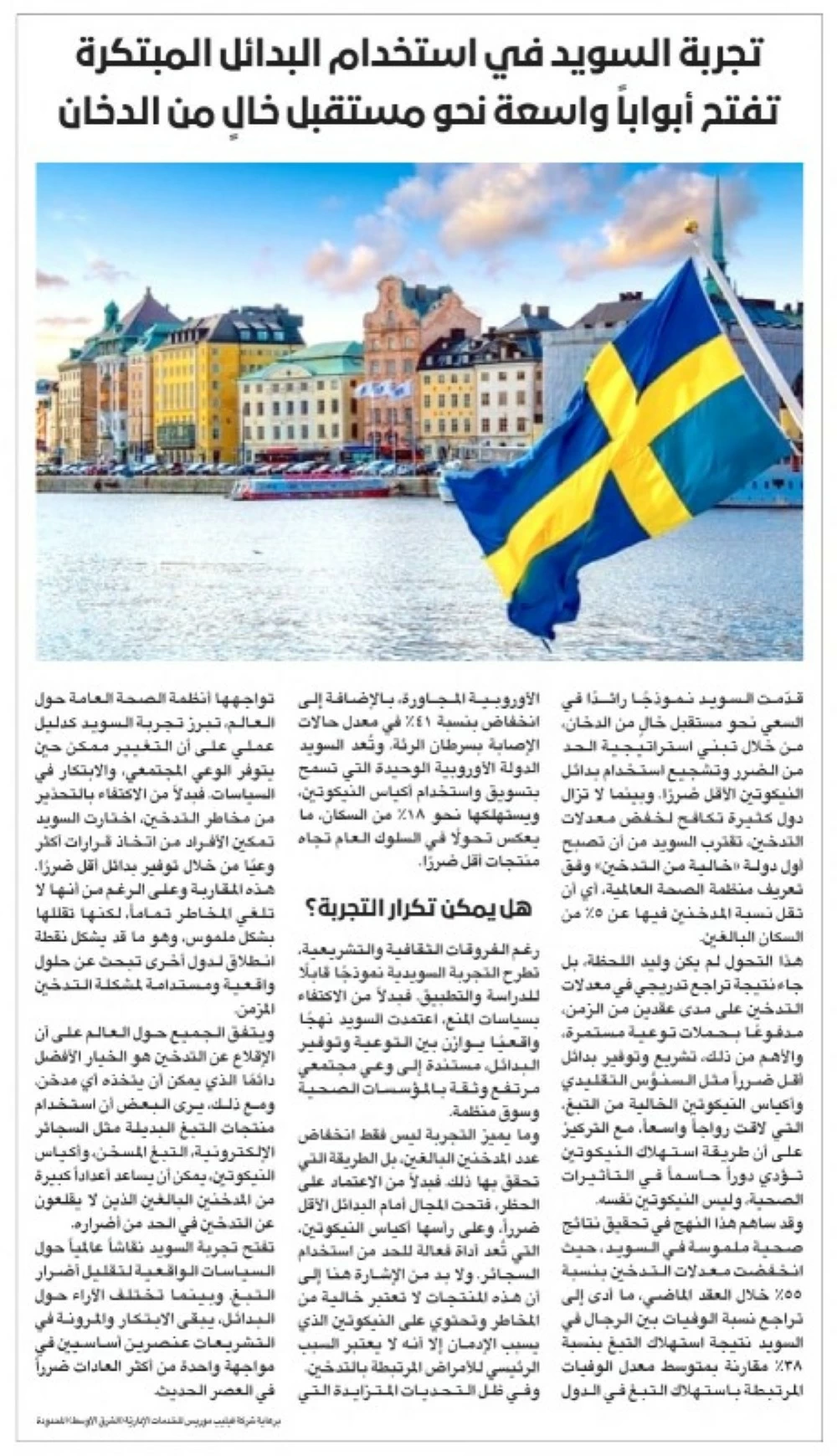
قدّمت السويد نموذجاً رائداً في السعي نحو مستقبل خالٍ من الدخان، من خلال تبني إستراتيجية الحد من الضرر وتشجيع استخدام بدائل النيكوتين الأقل ضرراً. وبينما لا تزال دول كثيرة تكافح لخفض معدلات التدخين، تقترب السويد من أن تصبح أول دولة «خالية من التدخين» وفق تعريف منظمة الصحة العالمية، أي أن تقل نسبة المدخنين فيها عن 5% من السكان البالغين.
هذا التحول لم يكن وليد اللحظة، بل جاء نتيجة تراجع تدريجي في معدلات التدخين على مدى عقدين من الزمن، مدفوعاً بحملات توعية مستمرة، والأهم من ذلك تشريع وتوفير بدائل أقل ضرراً مثل السنوُس التقليدي وأكياس النيكوتين الخالية من التبغ، التي لاقت رواجاً واسعاً، مع التركيز على أن طريقة استهلاك النيكوتين تؤدي دوراً حاسماً في التأثيرات الصحية، وليس النيكوتين نفسه.
وقد ساهم هذا النهج في تحقيق نتائج صحية ملموسة في السويد، حيث انخفضت معدلات التدخين بنسبة 55% خلال العقد الماضي، ما أدى إلى تراجع نسبة الوفيات بين الرجال في السويد نتيجة استهلاك التبغ بنسبة 38% مقارنة بمتوسط معدل الوفيات المرتبطة باستهلاك التبغ في الدول الأوروبية المجاورة، إضافة إلى انخفاض بنسبة 41% في معدل حالات الإصابة بسرطان الرئة. وتُعد السويد الدولة الأوروبية الوحيدة التي تسمح بتسويق واستخدام أكياس النيكوتين، ويستهلكها نحو 18% من السكان، ما يعكس تحولاً في السلوك العام تجاه منتجات أقل ضرراً.
هل يمكن تكرار التجربة؟
رغم الفروقات الثقافية والتشريعية، تطرح التجربة السويدية نموذجاً قابلاً للدراسة والتطبيق. فبدلاً من الاكتفاء بسياسات المنع، اعتمدت السويد نهجاً واقعياً يوازن بين التوعية وتوفير البدائل، مستندة إلى وعي مجتمعي مرتفع وثقة بالمؤسسات الصحية وسوق منظمة.
وما يميز التجربة ليس فقط انخفاض عدد المدخنين البالغين، بل الطريقة التي تحقق بها ذلك. فبدلاً من الاعتماد على الحظر، فتحت المجال أمام البدائل الأقل ضرراً، وعلى رأسها أكياس النيكوتين، التي تُعد أداة فعالة للحد من استخدام السجائر. ولا بد من الإشارة هنا إلى أن هذه المنتجات لا تعتبر خالية من المخاطر وتحتوي على النيكوتين الذي يسبب الإدمان إلا أنه لا يعتبر السبب الرئيسي للأمراض المرتبطة بالتدخين.
وفي ظل التحديات المتزايدة التي تواجهها أنظمة الصحة العامة حول العالم، تبرز تجربة السويد كدليل عملي على أن التغيير ممكن حين يتوفر الوعي المجتمعي، والابتكار في السياسات. فبدلاً من الاكتفاء بالتحذير من مخاطر التدخين، اختارت السويد تمكين الأفراد من اتخاذ قرارات أكثر وعياً من خلال توفير بدائل أقل ضرراً. هذه المقاربة وعلى الرغم من أنها لا تلغي المخاطر تماماً، لكنها تقللها بشكل ملموس، وهو ما قد يشكل نقطة انطلاق لدول أخرى تبحث عن حلول واقعية ومستدامة لمشكلة التدخين المزمن.
ويتفق الجميع حول العالم على أن الإقلاع عن التدخين هو الخيار الأفضل دائماً الذي يمكن أن يتخذه أي مدخن. ومع ذلك، يرى البعض أن استخدام منتجات التبغ البديلة، مثل السجائر الإلكترونية، التبغ المسخن، وأكياس النيكوتين، يمكن أن يساعد أعداداً كبيرة من المدخنين البالغين الذين لا يقلعون عن التدخين في الحد من أضراره.
تفتح تجربة السويد نقاشاً عالمياً حول السياسات الواقعية لتقليل أضرار التبغ. وبينما تختلف الآراء حول البدائل، يبقى الابتكار والمرونة في التشريعات عنصرين أساسيين في مواجهة واحدة من أكثر العادات ضرراً في العصر الحديث.
برعاية شركة فيليب موريس للخدمات الإداريّة (الشرق الأوسط) المحدودة
Sweden has presented a pioneering model in the pursuit of a smoke-free future by adopting a harm reduction strategy and encouraging the use of less harmful nicotine alternatives. While many countries still struggle to reduce smoking rates, Sweden is nearing the status of being the first "smoke-free" country, as defined by the World Health Organization, meaning that the percentage of smokers among its adult population is less than 5%.
This transformation was not instantaneous; it resulted from a gradual decline in smoking rates over two decades, driven by ongoing awareness campaigns and, most importantly, the legislation and provision of less harmful alternatives such as traditional snus and tobacco-free nicotine pouches, which have gained widespread popularity, emphasizing that the method of nicotine consumption plays a crucial role in health effects, rather than nicotine itself.
This approach has contributed to tangible health outcomes in Sweden, where smoking rates have dropped by 55% over the past decade, leading to a 38% reduction in tobacco-related mortality among men in Sweden compared to the average tobacco-related mortality rate in neighboring European countries, along with a 41% decrease in lung cancer incidence. Sweden is the only European country that allows the marketing and use of nicotine pouches, which are consumed by about 18% of the population, reflecting a shift in public behavior towards less harmful products.
Can the experience be replicated?
Despite cultural and legislative differences, the Swedish experience presents a model worthy of study and application. Instead of relying solely on prohibition policies, Sweden adopted a pragmatic approach that balances awareness and the provision of alternatives, based on high community awareness and trust in health institutions and a regulated market.
What distinguishes this experience is not just the reduction in the number of adult smokers, but the manner in which this was achieved. Instead of relying on bans, it opened the door to less harmful alternatives, foremost among them nicotine pouches, which are considered an effective tool for reducing cigarette use. It is important to note here that these products are not risk-free and contain nicotine, which is addictive, but it is not considered the primary cause of smoking-related diseases.
In light of the increasing challenges faced by public health systems worldwide, the Swedish experience stands out as practical evidence that change is possible when community awareness and policy innovation are present. Instead of merely warning about the dangers of smoking, Sweden chose to empower individuals to make more informed decisions by providing less harmful alternatives. This approach, while it does not eliminate risks entirely, significantly reduces them, which could serve as a starting point for other countries seeking realistic and sustainable solutions to the problem of chronic smoking.
There is a global consensus that quitting smoking is always the best choice any smoker can make. However, some believe that the use of alternative tobacco products, such as e-cigarettes, heated tobacco, and nicotine pouches, can help a large number of adult smokers who do not quit smoking to reduce its harms.
The Swedish experience opens a global discussion about realistic policies to reduce tobacco harm. While opinions differ on alternatives, innovation and flexibility in legislation remain essential elements in addressing one of the most harmful habits of modern times.
Sponsored by Philip Morris Management Services (Middle East) Limited