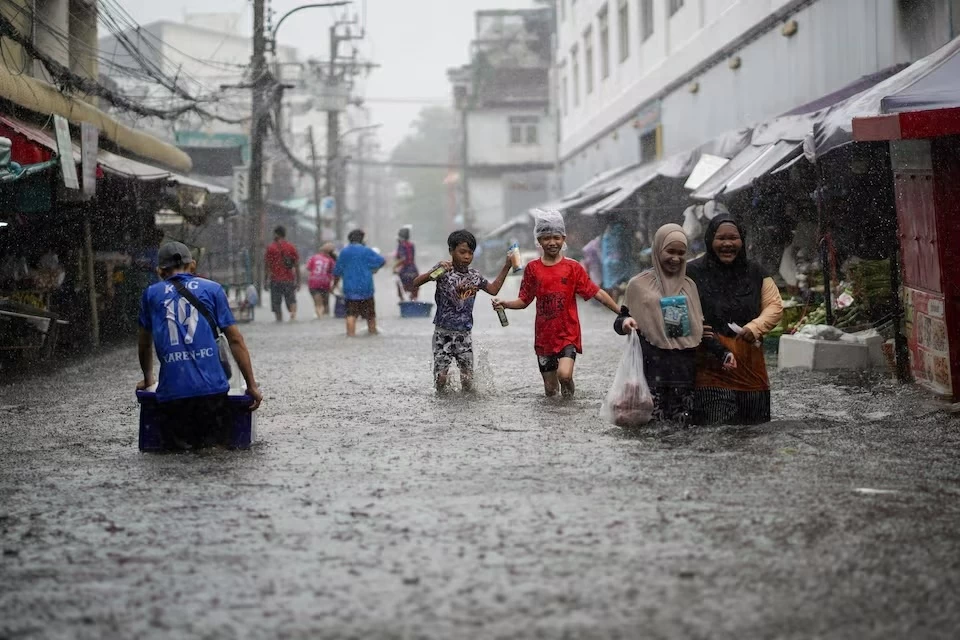
غمرت مياه الفيضانات أجزاء واسعة من العاصمة التايلندية بانكوك، (الإثنين)، بعدما اضطر سكان في بعض المناطق إلى خوض مياه وصلت إلى مستوى الخصر، فيما لجأ آلاف الأشخاص إلى مراكز الإيواء، بالتزامن مع عمليات إجلاء في إقليم شرقي بسبب ارتفاع منسوب المياه في خزانات رئيسية.
وتسببت أمطار غزيرة هطلت خلال عطلة نهاية الأسبوع والأيام السابقة في إغراق أحياء بأكملها وتعطيل شبكة تصريف المياه في العاصمة، حسبما أفادت وكالة (رويترز).
وسجلت بانكوك نحو 320 مليمترًا من الأمطار خلال يومين أو ثلاثة أيام الأسبوع الماضي، وهي كمية تقترب من إجمالي الأمطار التي تستقبلها المدينة المنخفضة عادة طوال شهر سبتمبر/أيلول بأكمله.
وتأتي بانكوك ضمن 41 إقليمًا تايلنديًا تعرضت للفيضانات منذ 16 سبتمبر، بحسب وزارة الداخلية، التي أفادت بمقتل ثمانية أشخاص على الأقل وتضرر أكثر من 580 ألف منزل جراء الأحوال الجوية والفيضانات.
وقال أونسيت سامبونثارات، الأمين الدائم لوزارة الداخلية: إن أكثر من 80 ألف شخص يعيشون في المناطق المتضررة من الفيضانات غير قادرين على مغادرة منازلهم.
وأضاف أن السلطات دفعت بمطابخ متنقلة وقوارب إلى مناطق الفيضانات للمساعدة في عمليات الإغاثة، موضحًا أن الهدف يتمثل في توفير ثلاث وجبات يوميًا لجميع السكان المتضررين طوال فترة الفيضانات، ولمدة أسبوع إضافي على الأقل بعد انحسار المياه.
خسائر اقتصادية بمليارات الدولارات
ولا تقتصر تداعيات الفيضانات على الخسائر البشرية والأضرار التي لحقت بالمنازل والبنية التحتية، إذ بدأت آثارها الاقتصادية تظهر أيضًا.
وقال آت بيسانوانيتش، من قسم الاقتصاد بجامعة رانغسيت: إن الأضرار الاقتصادية الناجمة عن الفيضانات في أنحاء تايلند قد تصل إلى 11 مليار بات؛ أي نحو 327 مليون دولار، مع احتمال ارتفاع حجم الخسائر إذا لم تتحسن الأوضاع.
وأضاف أن الفيضانات قد تؤدي إلى خفض معدل نمو الناتج المحلي الإجمالي للبلاد خلال العام الحالي بنحو 0.3 نقطة مئوية، ليصل إلى 2.1%، كما قد تقلص نمو الربع الثالث بنحو 0.5 نقطة مئوية، إلى 1.7%.
وكان الاقتصاد التايلندي، ثاني أكبر اقتصاد في جنوب شرق آسيا، قد سجل نموًا سنويًا بنسبة 1.9% خلال الربع الثاني، مقارنة بنمو بلغ 2.8% في الربع السابق.
من جهتها، قدرت جامعة غرفة التجارة التايلندية الخسائر الاقتصادية في بانكوك وحدها بنحو سبعة مليارات بات، فيما قدرت إجمالي الأضرار على مستوى البلاد بنحو 12.3 مليار بات.
الأسواق تتحول إلى نقاط بيع وسط المياه
وفي حي بانغ كابي، أحد أكثر المناطق تضررًا في بانكوك، واصل السكان التحرك وسط مياه الفيضانات لشراء الاحتياجات الأساسية.
واضطر بعض أصحاب المتاجر إلى نقل بضائعهم إلى أطراف الأسواق، بينما لجأ آخرون إلى استخدام صناديق بلاستيكية وبراميل عائمة لعرض المنتجات فوق المياه.
وبحسب مسؤول في إدارة مدينة بانكوك، انتقل ما لا يقل عن 5901 شخص إلى 234 مركز إيواء داخل العاصمة.
طبيعة بانكوك تزيد مخاطر الفيضانات
وتقع بانكوك على دلتا نهرية ذات تربة طينية رخوة، ولا يزيد ارتفاع أجزاء كبيرة منها على نحو 1.5 متر فوق مستوى سطح البحر.
كما تشهد المدينة، التي يزيد عدد سكانها على 8.4 مليون نسمة، هبوطًا تدريجيًا بمعدل عدة مليمترات سنويًا، ما يزيد من حساسيتها لمخاطر الفيضانات، خصوصًا خلال موسم الأمطار الذي يمتد لنحو ستة أشهر.
وفي إقليم رايونغ الساحلي الواقع شرق العاصمة، أمرت السلطات بإجلاء السكان الإثنين، بعدما تجاوز منسوب المياه في خزانين قدرتهما الاستيعابية.
ويكتسب الوضع في المنطقة أهمية خاصة بسبب قربها من حزام صناعي رئيسي في البلاد، فيما يُتوقع أن تتحمل بانكوك والمناطق الشرقية جزءًا كبيرًا من التداعيات الاقتصادية، خصوصًا في قطاعات تجارة الجملة والتجزئة، بينما قد تتضرر قطاعات الصناعة والزراعة في مناطق أخرى.
تحذير من تكرار كارثة العام الماضي
وتعيد الفيضانات الحالية إلى الأذهان الكارثة التي شهدتها مناطق جنوب تايلند العام الماضي، عندما تسببت أمطار بلغ مجموعها 630 مليمترًا خلال ثلاثة أيام في فيضانات واسعة النطاق.
وأسفرت تلك الفيضانات عن مقتل 145 شخصًا على الأقل، وغمرتجلاء السكان المحاصرين، وتأمين الغذاء والإمدادات الأساسية، ومراقبة الخزانات والممرات الم أكثر من 33 ألف منزل، كما ألحقت أضرارًا بمنشآت حيوية شملت المدارس والمستشفيات والطرق السريعة.
ومع استمرار هطول الأمطار وارتفاع منسوب المياه في بعض المناطق، تركز السلطات التايلندية حاليًا على إجلاء السكان المحاصرين، وتأمين الغذاء والإمدادات الأساسية، ومراقبة الخزانات والممرات المائية لتقليل مخاطر تفاقم الأزمة.
Floodwaters have inundated large parts of the Thai capital, Bangkok, on Monday, forcing residents in some areas to wade through water that reached waist level, while thousands of people sought refuge in shelters, coinciding with evacuation operations in the eastern region due to rising water levels in main reservoirs.
Heavy rains that fell over the weekend and the preceding days have submerged entire neighborhoods and disrupted the drainage network in the capital, according to the (Reuters) agency.
Bangkok recorded about 320 millimeters of rain over two to three days last week, a volume close to the total rainfall the low-lying city typically receives throughout the entire month of September.
Bangkok is among 41 Thai provinces that have been affected by floods since September 16, according to the Ministry of Interior, which reported at least eight fatalities and damage to more than 580,000 homes due to the weather conditions and flooding.
Onset Sombontharat, the permanent secretary of the Ministry of Interior, stated that more than 80,000 people living in flood-affected areas are unable to leave their homes.
He added that authorities have deployed mobile kitchens and boats to flood areas to assist in relief operations, explaining that the goal is to provide three meals a day to all affected residents throughout the flooding period, and for at least an additional week after the waters recede.
Economic losses in the billions of dollars
The repercussions of the floods are not limited to human losses and damage to homes and infrastructure, as their economic effects are also beginning to emerge.
At Pisanwanit, from the economics department at Rangsit University, stated that the economic damage caused by the floods across Thailand could reach 11 billion baht, approximately 327 million dollars, with the potential for losses to increase if conditions do not improve.
He added that the floods could reduce the country's GDP growth rate this year by about 0.3 percentage points, bringing it down to 2.1%, and may shrink third-quarter growth by about 0.5 percentage points, to 1.7%.
The Thai economy, the second-largest in Southeast Asia, recorded an annual growth rate of 1.9% during the second quarter, compared to a growth of 2.8% in the previous quarter.
For its part, the Thai Chamber of Commerce University estimated the economic losses in Bangkok alone at about seven billion baht, while the total damage nationwide was estimated at around 12.3 billion baht.
Markets turn into sales points amid the water
In the Bang Kapi district, one of the most affected areas in Bangkok, residents continued to navigate through floodwaters to purchase essential goods.
Some shop owners were forced to move their merchandise to the edges of the markets, while others resorted to using plastic boxes and floating barrels to display products above the water.
According to an official from the Bangkok Metropolitan Administration, at least 5,901 people have moved to 234 shelters within the capital.
Bangkok's geography increases flood risks
Bangkok is located on a river delta with soft clay soil, and large parts of it are no more than about 1.5 meters above sea level.
The city, which has a population of over 8.4 million, is also experiencing a gradual subsidence of several millimeters annually, which increases its vulnerability to flood risks, especially during the rainy season that lasts for about six months.
In the coastal Rayong province located east of the capital, authorities ordered the evacuation of residents on Monday after water levels exceeded the capacity of two reservoirs.
The situation in the area is particularly significant due to its proximity to a major industrial belt in the country, with Bangkok and the eastern regions expected to bear a large part of the economic repercussions, especially in the wholesale and retail sectors, while industrial and agricultural sectors in other areas may be affected.
Warning of a repeat of last year's disaster
The current floods bring to mind the disaster that struck southern Thailand last year when rains totaling 630 millimeters over three days caused widespread flooding.
Those floods resulted in at least 145 fatalities, submerged more than 33,000 homes, and damaged vital facilities including schools, hospitals, and highways.
As the rains continue and water levels rise in some areas, Thai authorities are currently focusing on evacuating trapped residents, securing food and essential supplies, and monitoring reservoirs and waterways to mitigate the risks of worsening the crisis.