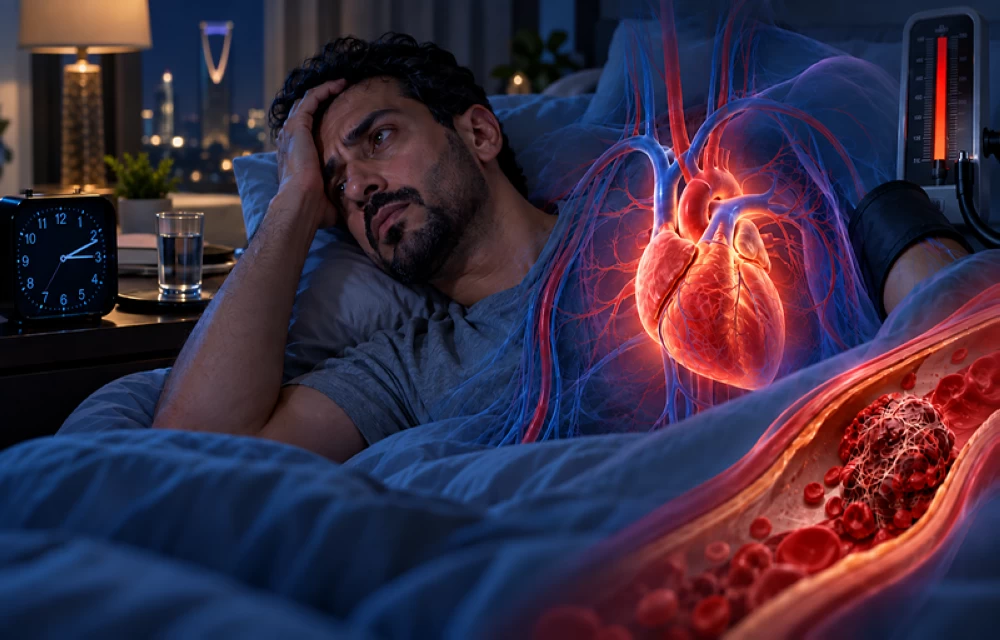
قد يبدو السهر وتقليص ساعات النوم حلاً سريعًا لإنجاز المزيد من العمل أو إنهاء المهام المتراكمة، لكن تحويل قلة النوم إلى عادة يومية قد تكون له آثار تتجاوز الشعور بالإرهاق في صباح اليوم التالي، لتصل إلى صحة القلب والأوعية الدموية.
ويؤكد أطباء أن النوم ليس مجرد فترة يحصل خلالها الجسم على الراحة، بل يمثل مرحلة مهمة لإتمام عمليات الإصلاح والتعافي وتنظيم عدد من الوظائف الحيوية، بما فيها وظائف القلب والأوعية الدموية والتمثيل الغذائي.
ماذا يحدث للقلب عند قلة النوم؟
قال الدكتور مريدول شارما، اختصاصي أمراض القلب التداخلية في مستشفى «ستيرلنغ» بمدينة راجكوت الهندية، إن الجسم يجري خلال النوم مجموعة من عمليات الإصلاح والتعافي الضرورية للحفاظ على صحة القلب والأوعية الدموية والتمثيل الغذائي.
وأوضح أن تكرار عدم الحصول على ساعات كافية من النوم قد يؤثر في هذه العمليات، ويرتبط بزيادة مخاطر الإصابة بعدد من المشكلات الصحية المتعلقة بالقلب.
وأشار الطبيب إلى أن ضغط الدم من أبرز الوظائف التي يمكن أن تتأثر بقلة النوم. ففي الوضع الطبيعي، ينخفض ضغط الدم خلال ساعات النوم، لكن النوم غير الكافي قد يؤدي إلى استمرار ارتفاعه لفترة أطول.
كما يمكن أن يرتبط النوم السيئ بارتفاع مستويات هرمون الكورتيزول، الذي يلعب دورًا رئيسيًا في استجابة الجسم للتوتر. وقد يؤدي استمرار ارتفاع ضغط الدم ومستويات هرمونات التوتر إلى زيادة الضغط على القلب والأوعية الدموية.
قلة النوم وأمراض القلب
وبحسب الدكتور شارما، ربطت أبحاث ودراسات بين عدم الحصول على نوم كافٍ وزيادة مخاطر الإصابة ببعض مشكلات القلب والأوعية الدموية، من بينها ارتفاع ضغط الدم والنوبات القلبية والسكتة الدماغية.
كما تشير بعض الدراسات إلى أن النوم لأقل من 6 ساعات يوميًا قد يرتبط بزيادة احتمالية الإصابة بتصلب الشرايين، وهي حالة تتراكم فيها الترسبات داخل جدران الشرايين، ما قد يؤثر في تدفق الدم.
ومع ذلك، لا تعني هذه النتائج أن قلة النوم وحدها تؤدي حتمًا إلى الإصابة بأمراض القلب، إذ تتداخل صحة القلب مع مجموعة واسعة من العوامل، مثل النظام الغذائي والنشاط البدني والوزن والتدخين والأمراض المزمنة.
كم ساعة يحتاجها القلب؟
يوصي الدكتور شارما بأن يحصل البالغون على نحو 7 إلى 9 ساعات من النوم كل ليلة، موضحًا أن الحفاظ على صحة النوم لا يرتبط بعدد الساعات فقط، وإنما يشمل أيضًا انتظام مواعيد النوم والاستيقاظ وجودة النوم والتوقيت المناسب.
وللمساعدة في تحسين عادات النوم ودعم صحة القلب، يمكن اتباع عدد من الخطوات اليومية، أبرزها تثبيت موعد للنوم والاستيقاظ والالتزام به قدر الإمكان، إلى جانب تجنب تناول الكافيين في وقت متأخر من اليوم إذا كان يؤثر في النوم.
كما يُنصح بتقليل استخدام الهواتف والشاشات قبل النوم، وتهيئة غرفة النوم لتكون هادئة ومظلمة وباردة نسبيًا، فضلًا عن ممارسة النشاط البدني بانتظام مع تجنب التمارين شديدة الكثافة قبل موعد النوم مباشرة.
النوم جزء من صحة القلب
ولا ينبغي التعامل مع النوم باعتباره وقتًا للراحة فقط بعد يوم طويل، إذ يمثل جزءًا مهمًا من نمط الحياة الصحي الذي يساعد الجسم على التعافي وتنظيم العديد من الوظائف الحيوية.
ومن ثم، فإن الحفاظ على مواعيد نوم منتظمة والحصول على عدد كافٍ من الساعات يمكن أن يكونا ضمن العادات اليومية الداعمة لصحة القلب، إلى جانب اتباع نظام غذائي متوازن وممارسة النشاط البدني والحصول على الرعاية الطبية عند الحاجة.
Staying up late and reducing sleep hours may seem like a quick solution to get more work done or finish accumulated tasks, but making lack of sleep a daily habit can have effects that go beyond just feeling tired the next morning, reaching into cardiovascular health.
Doctors confirm that sleep is not just a period during which the body rests, but represents an important phase for completing repair and recovery processes and regulating several vital functions, including those of the heart, blood vessels, and metabolism.
What happens to the heart with lack of sleep?
Dr. Muridul Sharma, an interventional cardiologist at Sterling Hospital in Rajkot, India, stated that the body undergoes a series of necessary repair and recovery processes during sleep to maintain heart and vascular health and metabolism.
He explained that repeatedly not getting enough hours of sleep can affect these processes and is associated with an increased risk of several heart-related health issues.
The doctor pointed out that blood pressure is one of the most prominent functions that can be affected by lack of sleep. Normally, blood pressure decreases during sleep hours, but insufficient sleep may lead to prolonged elevated levels.
Poor sleep can also be associated with increased levels of the hormone cortisol, which plays a key role in the body's response to stress. Continuous high blood pressure and elevated stress hormone levels can increase pressure on the heart and blood vessels.
Lack of sleep and heart diseases
According to Dr. Sharma, research and studies have linked insufficient sleep to an increased risk of certain cardiovascular issues, including high blood pressure, heart attacks, and strokes.
Some studies also indicate that sleeping less than 6 hours a day may be associated with a higher likelihood of developing atherosclerosis, a condition where deposits accumulate within the walls of the arteries, potentially affecting blood flow.
However, these results do not mean that lack of sleep alone inevitably leads to heart diseases, as heart health intertwines with a wide range of factors, such as diet, physical activity, weight, smoking, and chronic diseases.
How many hours does the heart need?
Dr. Sharma recommends that adults get about 7 to 9 hours of sleep each night, explaining that maintaining sleep health is not only about the number of hours but also includes regular sleep and wake times, sleep quality, and appropriate timing.
To help improve sleep habits and support heart health, several daily steps can be followed, the most important of which is to set a consistent sleep and wake time and stick to it as much as possible, along with avoiding caffeine late in the day if it affects sleep.
It is also advised to reduce the use of phones and screens before bedtime and to prepare the bedroom to be quiet, dark, and relatively cool, as well as to engage in regular physical activity while avoiding intense exercise right before bedtime.
Sleep is part of heart health
Sleep should not be regarded merely as a time for rest after a long day, as it represents an important part of a healthy lifestyle that helps the body recover and regulate many vital functions.
Therefore, maintaining regular sleep schedules and getting enough hours can be part of daily habits that support heart health, alongside following a balanced diet, engaging in physical activity, and seeking medical care when needed.