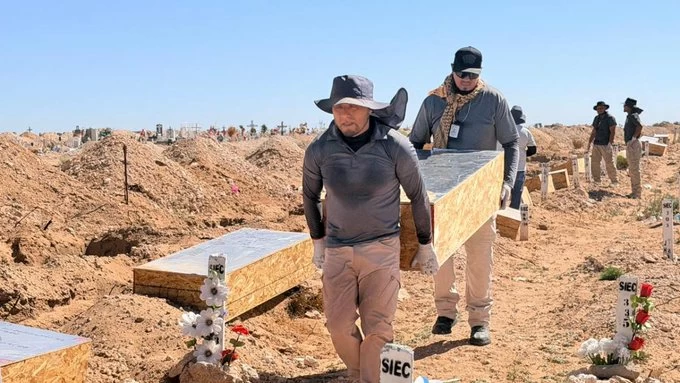
دفنت السلطات المكسيكية 117 جثماناً مجهول الهوية في مدينة سيوداد خواريز الحدودية، بعد أن ظلت لسنوات دون أن تصل إليها عائلاتها، في مشهد يعكس جانباً من أزمة المفقودين وضحايا العنف التي تواجهها البلاد.
وتعود الجثامين، التي تضم 109 رجال و8 نساء، إلى أشخاص بالغين توفوا بين عامي 2019 و2025، فيما تشير السلطات إلى أن 41 منهم لقوا حتفهم في ظروف عنيفة.
ورغم وصف العملية بأنها دفن في مقبرة جماعية، أوضحت السلطات أن كل جثمان دُفن في قبر فردي، مع الاحتفاظ بالبيانات والعينات والأدلة التي يمكن أن تساعد مستقبلاً في تحديد هويات أصحابها والوصول إلى ذويهم.
وقال هيكتور مانويل ياكوب هيرنانديز، منسق خبراء الطب الشرعي في المنطقة الشمالية، إن السلطات أجرت الدراسات والإجراءات اللازمة قبل الدفن، لضمان عدم فقدان أي معلومات قد تسهم لاحقاً في التعرف على الجثامين.
ولا يعني الدفن إغلاق ملفات الضحايا، إذ تظل عملية تحديد الهوية قائمة، في وقت تواجه فيه المكسيك واحدة من أكثر أزمات المفقودين تعقيداً في تاريخها الحديث، مع وجود آلاف الأشخاص الذين لا تزال عائلاتهم تبحث عن مصيرهم.
وتكتسب القضية أهمية خاصة في مدينة خواريز، الواقعة على الحدود مع الولايات المتحدة، والتي تشهد حركة كبيرة للسكان والمهاجرين، ما يزيد من صعوبة تحديد هوية بعض الضحايا، خصوصاً من قد يكونون قدموا من ولايات مكسيكية أخرى أو من دول أجنبية.
كما ترتبط خواريز بتاريخ طويل من العنف والجريمة المنظمة، في ظل الصراع بين الجماعات الإجرامية وشبكات تهريب المخدرات، وهو ما جعل المدينة على مدى سنوات إحدى أبرز المناطق التي تواجه تداعيات العنف في المكسيك.
وبحسب السلطات المحلية، دُفن نحو 560 شخصاً في مقابر جماعية خلال فترة الحكومة الحالية في ولاية تشيهواهوا، في مؤشر على حجم التحديات التي تواجهها أجهزة الطب الشرعي في التعامل مع الجثامين التي يتعذر تحديد هويات أصحابها.
وتأتي عملية الدفن الجديدة بعد توقف عمليات مماثلة خلال عام 2025، عندما ركزت فرق الطب الشرعي على التحقيق في قضية «محرقة بلينيتود»، ما أدى إلى تراكم أعداد من الجثامين والرفات التي لم يتم التعرف عليها أو المطالبة بها.
كما يفرض تراكم الجثامين ضغوطاً متزايدة على مرافق الطب الشرعي، وهو ما دفع السلطات إلى المضي في إجراءات الدفن بعد استكمال عمليات الفحص والتوثيق، مع الحفاظ على المواد التي يمكن استخدامها في عمليات تحديد الهوية مستقبلاً.
وتتجاوز أزمة المفقودين في المكسيك مسألة العثور على الأشخاص، لتصل إلى مرحلة ما بعد الوفاة، حيث تواجه السلطات تحدياً آخر يتمثل في تحديد هوية الجثامين المجهولة وربطها ببلاغات المفقودين، بما يسمح للعائلات بمعرفة مصير ذويها.
وفي حالة الجثامين الـ117، لا يمثل الدفن نهاية البحث، بل خطوة تنظيمية لتخفيف الضغط على مرافق الطب الشرعي، بينما يبقى الهدف النهائي هو تحديد هوية كل ضحية وإعادتها إلى أسرتها إذا أمكن.
The Mexican authorities buried 117 unidentified bodies in the border city of Ciudad Juárez, after remaining for years without their families coming forward, in a scene that reflects a facet of the crisis of the missing and victims of violence facing the country.
The bodies, which include 109 men and 8 women, belong to adults who died between 2019 and 2025, while authorities indicate that 41 of them died under violent circumstances.
Although the operation is described as a burial in a mass grave, authorities clarified that each body was buried in an individual grave, while retaining data, samples, and evidence that could help in the future to identify their owners and reach their relatives.
Hector Manuel Jacob Hernandez, the coordinator of forensic experts in the northern region, stated that authorities conducted the necessary studies and procedures before the burial to ensure that no information that could later contribute to identifying the bodies was lost.
The burial does not mean the closure of the victims' cases, as the identification process remains ongoing, at a time when Mexico faces one of the most complex missing persons crises in its modern history, with thousands of people whose families are still searching for their fate.
The issue is of particular importance in Juárez, located on the border with the United States, which witnesses significant movement of residents and migrants, making it more difficult to identify some victims, especially those who may have come from other Mexican states or foreign countries.
Juárez is also linked to a long history of violence and organized crime, amid the conflict between criminal groups and drug trafficking networks, which has made the city one of the most prominent areas facing the repercussions of violence in Mexico for years.
According to local authorities, about 560 people have been buried in mass graves during the current administration in the state of Chihuahua, indicating the scale of the challenges faced by forensic agencies in dealing with bodies whose identities cannot be determined.
This new burial operation comes after a halt to similar operations in 2025, when forensic teams focused on investigating the "Pleinitud Incineration" case, leading to a backlog of unidentified or unclaimed bodies and remains.
The accumulation of bodies also places increasing pressure on forensic facilities, prompting authorities to proceed with burial procedures after completing examination and documentation processes, while preserving materials that can be used in future identification efforts.
The missing persons crisis in Mexico goes beyond the issue of finding individuals, reaching a post-mortem stage where authorities face another challenge in identifying unidentified bodies and linking them to missing persons reports, allowing families to know the fate of their loved ones.
In the case of the 117 bodies, the burial does not represent the end of the search, but rather an organizational step to alleviate pressure on forensic facilities, while the ultimate goal remains to identify each victim and return them to their families if possible.