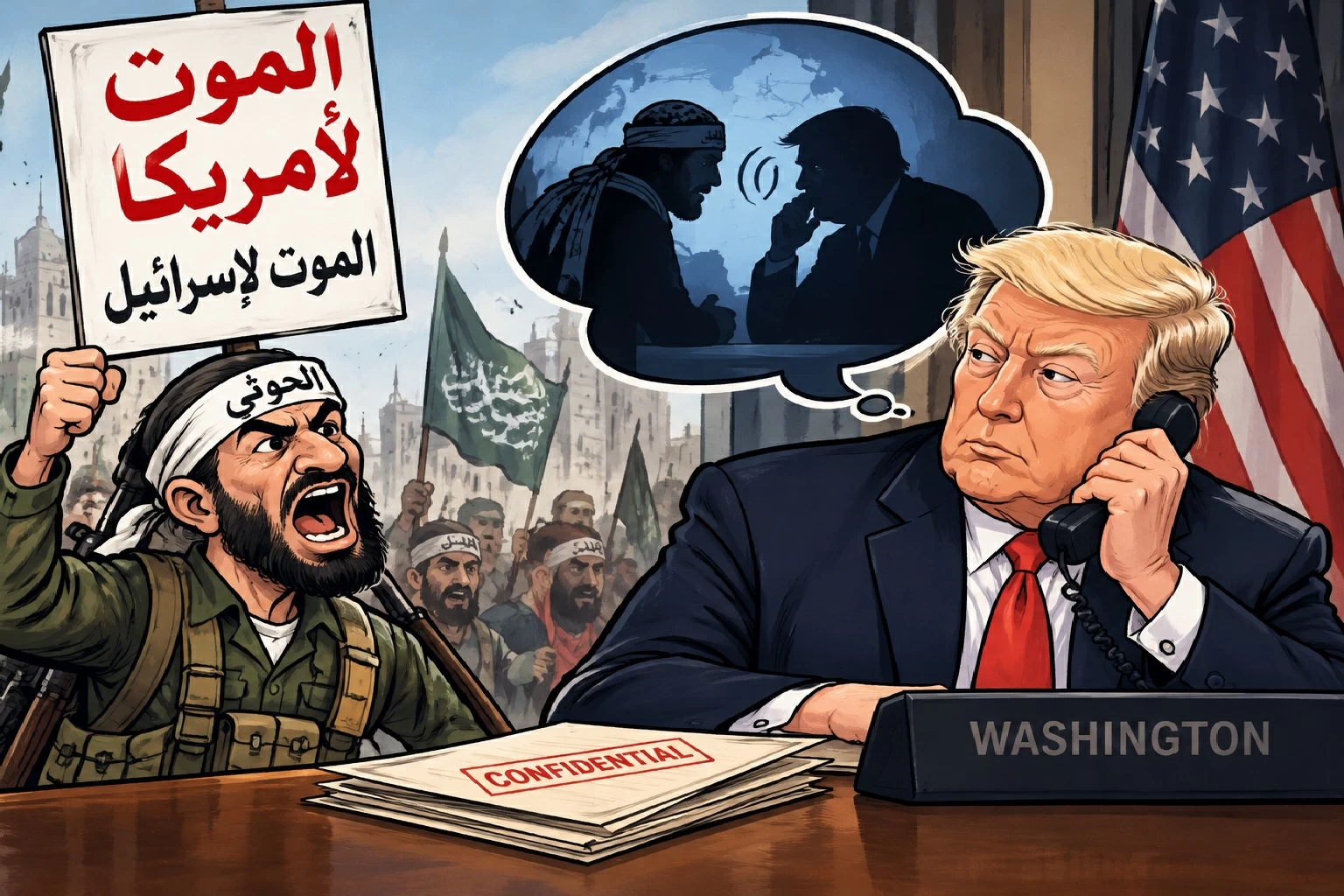
في اليمن، تبدو الصورة للوهلة الأولى واضحة. رايات الحوثيين مرفوعة، والمقاتلون في مسيرات التعبئة، والشعارات التي صنعت هوية الجماعة منذ سنوات تتردد في الساحات: «الموت لأمريكا.. الموت لإسرائيل». لكن في السياسة، خصوصاً في الحروب، لا تكون الصورة التي تُعرض للجمهور دائماً هي الصورة التي تظهر خلف الأبواب.
وفي لحظة شديدة الحساسية من الحرب اليمنية، جاءت جملة واحدة من الرئيس الأمريكي دونالد ترمب لتفتح نافذة نادرة على الجانب الآخر من المشهد. قال ترمب اليوم (السبت) إن الحوثيين تواصلوا مع إدارته، وإنهم لا يريدون أن تدخل الولايات المتحدة مباشرة في الصراع.
لم تكن هذه المعلومة صادرة عن خصوم الحوثيين، ولا عن مسؤول سعودي، ولا عن تسريب مجهول المصدر. ترمب نفسه قالها أمام الصحفيين. وهنا تظهر المفارقة التي تستحق التوقف عندها: كيف يمكن لجماعة جعلت من «الموت لأمريكا» أحد أشهر شعاراتها أن تبحث في الوقت نفسه عن تجنب المواجهة المباشرة مع الولايات المتحدة؟
شعار للشارع.. وحسابات مختلفة خلف الكواليس
«الصرخة» الحوثية ليست تفصيلاً هامشياً في خطاب الجماعة. إنها جزء أساسي من هويتها السياسية والتعبوية، وقد ارتبطت بها منذ نشأتها، إلى جانب خطاب عدائي تجاه الولايات المتحدة وإسرائيل. لكن تاريخ الجماعة نفسه يقدم مثالاً لافتاً على الفارق بين الخطاب العلني والحسابات السياسية.
في 2016، وخلال محادثةات السلام في الكويت، قدم ممثلون حوثيون اعتذاراً للولايات المتحدة عن استخدام شعار «الموت لأمريكا»، وقالوا إن استخدامه كان للاستهلاك الداخلي وتعبئة الشارع وتوحيد الأنصار. لم يكن ذلك يعني أن الجماعة تخلت عن خطابها المعادي لواشنطن، لكنه أظهر منذ ذلك الوقت أن الشعارات التي تُرفع أمام الجمهور لا تعني بالضرورة أن جميع تفاصيل السياسة تُدار بالطريقة نفسها خلف الأبواب. أي أن السؤال ليس جديداً تماماً. الجديد أن هذا التناقض عاد الآن إلى الواجهة، ولكن في ظروف أكثر خطورة بكثير. فالحوثيون لم يعودوا مجرد ميليشيا تخوض حرباً داخلية في اليمن. خلال الأيام الأخيرة، حققوا تقدماً سريعاً على الساحل الغربي، وسيطروا على المخا، ووصلوا إلى جزيرة ميون ومناطق قريبة من باب المندب، أحد أهم الممرات البحرية في العالم. وهذا يجعل أي اتصال بينهم وبين واشنطن ذا وزن مختلف تماماً.
وبينما تتحرك الاتصالات السياسية بعيداً عن الكاميرات، تتسارع التعبئة العسكرية على الأرض. وتظهر تقارير حديثة استمرار تجنيد الحوثيين وتعبئة المقاتلين، في وقت عادت فيه الحرب اليمنية إلى واحدة من أعنف مراحلها منذ سنوات. وتشير تقارير أممية ودولية إلى أن عشرات الآلاف من المدنيين اضطروا إلى النزوح مع تقدم الحوثيين على الساحل الغربي. كما وثقت وسائل إعلام دولية مشاهد لمسيرات ومقاتلين حوثيين في صنعاء، في صورة تعكس عودة التعبئة الجماهيرية والعسكرية بقوة. والأكثر إثارة أن الجماعة أعلنت في يوليو إنشاء قوات للتعبئة العامة، في خطوة تعكس انتقال التعبئة من مجرد نشاط دعائي إلى بنية أكثر تنظيماً لتوسيع القوة البشرية المتاحة للجماعة. وهكذا تبدو الصورة منقسمة إلى رسالتين: في الداخل: «استعدوا للحرب». وفي اتجاه واشنطن، وفق ما كشفه ترمب: «لا تدخلوا الحرب».
ماذا قال ترمب بالضبط؟
خلال حديثه مع الصحفيين في أيرلندا، قال ترمب إن الحوثيين تواصلوا مع الإدارة الأمريكية، وإنهم يفضلون ألا تدخل الولايات المتحدة بشكل مباشر في الصراع. وأضاف أن الحوثيين يسمحون بمرور معظم السفن، مع استثناء سفن دولة لم يسمها، وقال إنه يعتقد أن هذه المسألة يمكن حلها.
الجملة تبدو بسيطة، لكنها تحمل دلالة سياسية كبيرة. فواشنطن ليست مجرد طرف بعيد في الأزمة اليمنية. إنها الدولة التي يرفع الحوثيون شعار الموت ضدها. وفي الوقت نفسه، هي الدولة التي اختار الحوثيون التواصل معها عندما اقتربت الأزمة من نقطة قد تتحول فيها المواجهة إلى صدام أمريكي مباشر. وهنا تصبح المفارقة أكثر وضوحاً: الصوت الذي يقول «الموت لأمريكا» أمام الجماهير ليس بالضرورة الصوت نفسه الذي يتحدث عندما تصبح الولايات المتحدة قادرة على تغيير ميزان الحرب.
لماذا يريد الحوثيون إبعاد أمريكا؟
الإجابة قد تكون أبسط مما يبدو. الحوثيون يستطيعون تحمل مواجهة مع خصوم يمنيين، لكن دخول الولايات المتحدة عسكرياً مباشرة يغير الحسابات. وإذا كان ترمب يحاول تجنب فتح جبهة عسكرية أمريكية جديدة، يمكن التساؤل من زاوية عسكرية بحتة: إذا كانت واشنطن لا تريد الدخول، فلماذا تدفعها الميليشيا الحوثية إلى الدخول؟
التناقض يصبح أكثر حدة عندما ننظر إلى ما يحدث على الأرض. الجماعة التي تقول إنها لا تريد تدخلاً أمريكياً هي نفسها التي واصلت التقدم نحو واحد من أهم الممرات البحرية في العالم. فقد سيطر الحوثيون على المخا، ثم تقدموا نحو مناطق وجزر إستراتيجية في البحر الأحمر، بما فيها ميون، ما يمنحهم موقعاً بالغ الحساسية بالقرب من باب المندب. وبحسب رويترز، فإن السيطرة على باب المندب يمكن أن تمنح إيران والحوثيين نفوذاً كبيراً على طريق تمر عبره نسبة مهمة من التجارة العالمية وشحنات الطاقة. وهذا يعني أن المعركة لم تعد يمنية فقط. إنها أصبحت معركة على الجغرافيا والتجارة والطاقة. ومن هنا يمكن تفسير ارتفاع مستوى القلق الأمريكي.
واشنطن بين باب المندب وحسابات الحرب
واشنطن الآن أمام خيارين كلاهما مكلف. إذا تدخلت عسكرياً، فقد تجد نفسها في حرب جديدة في الشرق الأوسط، في وقت تخوض فيه أصلاً مواجهة واسعة مع إيران وتتعرض قواتها ومصالحها لضغوط متعددة. وإذا لم تتدخل، فقد يصبح باب المندب تحت نفوذ ميليشيا مسلحة مرتبطة بإيران، في وقت يعاني فيه مضيق هرمز أصلاً من اضطرابات خطيرة. وتقول رويترز إن احتمال إغلاق باب المندب بالكامل يمكن أن يؤثر في ما يصل إلى 7% من النفط العالمي و12% من التجارة العالمية.
ولهذا، فإن القضية بالنسبة إلى واشنطن ليست ببساطة: هل نضرب الحوثيين أم لا؟ بل: كيف نمنع الحوثيين من تحويل باب المندب إلى ورقة ضغط إستراتيجية دون التورط في حرب جديدة؟
«العدو الأكبر» الذي لا يريد الحوثي أن يحاربه!
هنا ربما تكمن أكثر المفارقات دلالة. فعلى مدى سنوات، بنى الحوثيون جزءاً كبيراً من شرعيتهم التعبوية على مواجهة الولايات المتحدة. لكن عندما أصبحت احتمالية دخول الولايات المتحدة المباشر أكثر واقعية، ظهرت رسالة مختلفة تماماً، بحسب ترمب: «الحوثيون اتصلوا بواشنطن وقالوا إنهم لا يريدونها أن تدخل». لا يعني ذلك بالضرورة أن الحوثيين «انهاروا» أو أنهم تخلوا عن خطابهم الأيديولوجي. ولا توجد حتى الآن معلومات علنية كافية لمعرفة من اتصل بمن، ومتى، وبأي قناة، وماذا عُرض أو طُلب خلال تلك الاتصالات. لكن ما نعرفه يكفي لطرح سؤال مهم: إذا كان شعار «الموت لأمريكا» يمثل موقفاً مطلقاً، فلماذا تصبح واشنطن أول عاصمة يراد إبعادها عن الحرب عندما تقترب المواجهة؟
ربما لأن الشعارات شيء، وحسابات البقاء شيء آخر. فالحرب تكشف دائماً الفرق بين العقيدة والمصلحة. وفي الساحات، تحتاج الجماعات المسلحة إلى قصة بسيطة، وعدو واضح، وشعار قصير، وراية، وحشد.
أما في غرف التفاوض، فالقصة مختلفة. فهناك خرائط، وممرات بحرية، وأسعار نفط، وقدرات عسكرية، وعقوبات، ووسطاء، واتصالات سرية، وحسابات لما يمكن أن يحدث في اليوم التالي.
ولهذا قد تكون أهم قصة في اليمن اليوم ليست مجرد أن الحوثيين سيطروا على موقع جديد. بل أن الجماعة التي بنت صورتها على تحدي القوة الأمريكية أصبحت، وفق اعتراف الرئيس الأمريكي نفسه، حريصة على ألا تستخدم واشنطن قوتها ضدها. وهذا لا يجعل شعارات الحوثيين أقل صخباً. لكنه يجعلها أكثر تسليطاً للضوء على تناقضات المسافة بين ما يُقال في الساحات وما يُحسب خلف الأبواب. فإذا كان «الموت لأمريكا» شعار الحرب أمام الجمهور، فإن طلب عدم تدخل أمريكا هو في النهاية لغة أخرى للحرب نفسها: لغة المصالح عندما تنتهي الهتافات.
In Yemen, the picture seems clear at first glance. The Houthi flags are raised, fighters are in mobilization marches, and the slogans that have defined the group's identity for years echo in the squares: "Death to America.. Death to Israel." But in politics, especially in wars, the image presented to the public is not always the same as the one that appears behind closed doors.
At a highly sensitive moment in the Yemeni war, a single sentence from U.S. President Donald Trump opened a rare window into the other side of the scene. Trump said today (Saturday) that the Houthis had communicated with his administration and that they do not want the United States to directly enter the conflict.
This information did not come from the Houthis' adversaries, nor from a Saudi official, nor from an anonymous leak. Trump himself stated it in front of reporters. Here lies the paradox worth noting: how can a group that has made "Death to America" one of its most famous slogans simultaneously seek to avoid direct confrontation with the United States?
A Slogan for the Street... and Different Calculations Behind the Scenes
The Houthi "cry" is not a marginal detail in the group's rhetoric. It is an essential part of their political and mobilization identity, linked to them since their inception, alongside a hostile discourse towards the United States and Israel. However, the group's own history provides a striking example of the difference between public discourse and political calculations.
In 2016, during the peace talks in Kuwait, Houthi representatives apologized to the United States for using the slogan "Death to America," stating that its use was for internal consumption and to mobilize the street and unite supporters. This did not mean that the group abandoned its anti-Washington rhetoric, but it showed that the slogans raised in front of the public do not necessarily mean that all political details are managed in the same way behind closed doors. Thus, the question is not entirely new. What is new is that this contradiction has resurfaced now, but in much more dangerous circumstances. The Houthis are no longer just a militia waging an internal war in Yemen. In recent days, they have made rapid advances on the western coast, seized Al-Mokha, and reached the island of Meon and areas close to Bab al-Mandab, one of the most important maritime passages in the world. This makes any contact between them and Washington carry a completely different weight.
As political communications move away from the cameras, military mobilization on the ground is accelerating. Recent reports indicate the continued recruitment of Houthis and mobilization of fighters, as the Yemeni war has returned to one of its fiercest phases in years. UN and international reports suggest that tens of thousands of civilians have been forced to flee as the Houthis advance on the western coast. International media have documented scenes of Houthi marches and fighters in Sana'a, reflecting a strong return to mass and military mobilization. Most strikingly, the group announced in July the establishment of public mobilization forces, a step that reflects the transition of mobilization from mere propaganda activity to a more organized structure to expand the human resources available to the group. Thus, the picture appears divided into two messages: internally: "Prepare for war." And towards Washington, as revealed by Trump: "Do not enter the war."
What Exactly Did Trump Say?
During his conversation with reporters in Ireland, Trump stated that the Houthis had communicated with the U.S. administration and that they preferred not to have the United States directly involved in the conflict. He added that the Houthis allow most ships to pass, with the exception of ships from a country he did not name, and he believes this issue can be resolved.
The sentence seems simple, but it carries significant political implications. Washington is not just a distant party in the Yemeni crisis. It is the state against which the Houthis raise the slogan of death. At the same time, it is the state the Houthis chose to communicate with when the crisis approached a point where confrontation could turn into direct American conflict. Here the paradox becomes clearer: the voice that says "Death to America" in front of the crowds is not necessarily the same voice that speaks when the United States is capable of changing the balance of war.
Why Do the Houthis Want to Keep America Away?
The answer may be simpler than it seems. The Houthis can withstand a confrontation with Yemeni adversaries, but direct military involvement by the United States changes the calculations. If Trump is trying to avoid opening a new American military front, one could ask from a purely military perspective: if Washington does not want to intervene, why is the Houthi militia pushing it to do so?
The contradiction becomes sharper when we look at what is happening on the ground. The group that claims it does not want American intervention is the same one that has continued to advance towards one of the most important maritime passages in the world. The Houthis have taken control of Al-Mokha and then advanced towards strategic areas and islands in the Red Sea, including Meon, which gives them a highly sensitive position near Bab al-Mandab. According to Reuters, control over Bab al-Mandab could grant Iran and the Houthis significant leverage over a route through which a substantial portion of global trade and energy shipments pass. This means that the battle is no longer just Yemeni. It has become a battle over geography, trade, and energy. Hence, the level of American concern can be explained.
Washington Between Bab al-Mandab and War Calculations
Washington now faces two costly options. If it intervenes militarily, it may find itself in a new war in the Middle East, at a time when it is already engaged in a broad confrontation with Iran and its forces and interests are under multiple pressures. If it does not intervene, Bab al-Mandab could fall under the influence of an armed militia linked to Iran, at a time when the Strait of Hormuz is already suffering from serious disturbances. Reuters reports that the possibility of completely closing Bab al-Mandab could affect up to 7% of global oil and 12% of global trade.
Thus, the issue for Washington is not simply: should we strike the Houthis or not? But rather: how do we prevent the Houthis from turning Bab al-Mandab into a strategic leverage point without getting involved in a new war?
The "Greatest Enemy" the Houthis Do Not Want to Fight!
Here perhaps lies the most telling paradox. For years, the Houthis have built a large part of their mobilization legitimacy on confronting the United States. But when the prospect of direct U.S. involvement became more realistic, a completely different message emerged, according to Trump: "The Houthis contacted Washington and said they do not want it to enter." This does not necessarily mean that the Houthis have "collapsed" or that they have abandoned their ideological rhetoric. There is still not enough public information to know who contacted whom, when, through what channel, and what was offered or requested during those communications. But what we do know is enough to raise an important question: if the slogan "Death to America" represents an absolute stance, why does Washington become the first capital to be kept away from the war when confrontation approaches?
Perhaps because slogans are one thing, and survival calculations are another. War always reveals the difference between doctrine and interest. In the squares, armed groups need a simple story, a clear enemy, a short slogan, a flag, and a crowd.
But in negotiation rooms, the story is different. There are maps, maritime passages, oil prices, military capabilities, sanctions, mediators, secret communications, and calculations of what might happen the next day.
Thus, the most important story in Yemen today may not just be that the Houthis have taken control of a new position. But that the group that built its image on challenging American power has become, according to the admission of the American president himself, keen to ensure that Washington does not use its power against it. This does not make the Houthis' slogans any less loud. But it shines a brighter light on the contradictions of the distance between what is said in the squares and what is calculated behind closed doors. If "Death to America" is the war slogan in front of the public, then the request for non-intervention by America is ultimately another language of the war itself: the language of interests when the chants end.