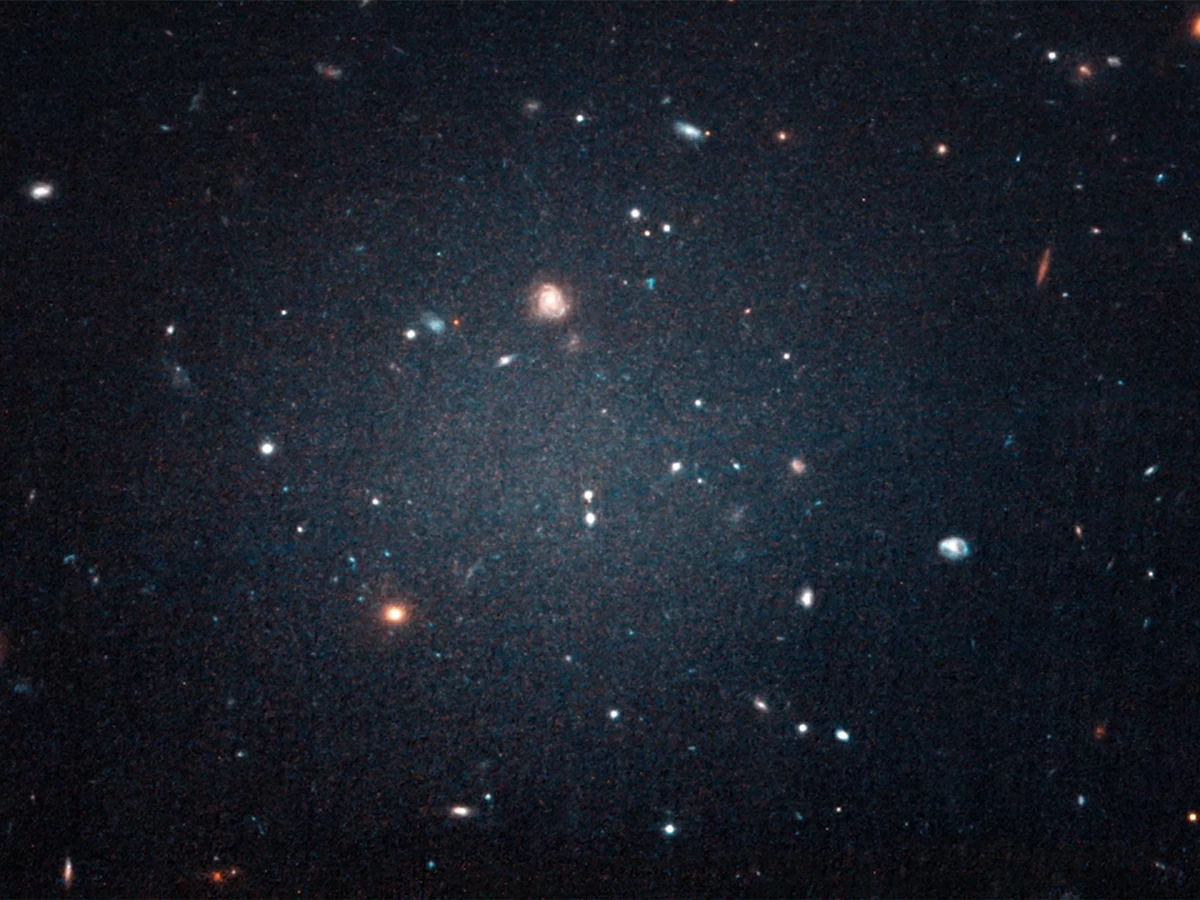
اكتشف علماء فلك في الولايات المتحدة مجرة جديدة تحمل اسم (NGC 1052-DF9)، تقع على بعد نحو 67 مليون سنة ضوئية من الأرض، ويُعتقد أنها تفتقر بشكل كبير إلى المادة المظلمة، في حالة غير مألوفة مقارنة بالنماذج المعروفة لتكوّن المجرات.
وبحسب فريق البحث، فإن المجرات عادة ما تتشكل داخل هالات واسعة من المادة المظلمة التي تسهم في تماسكها عبر الجاذبية. إلا أن هذه المجرة، إلى جانب مجرتي (DF2) و(DF4)، تُظهر خصائص مختلفة تثير تساؤلات حول آليات تشكلها، خصوصاً أنها تقع ضمن اصطفاف مكاني قريب يوحي باحتمال نشوء مشترك نتيجة حدث كوني غير اعتيادي.
وقال الباحث في الفيزياء الفلكية مايكل كيم من جامعة «ييل» إن هذه الحالات نادرة، مشيراً إلى أن معظم المجرات تعتمد في بنيتها على المادة المظلمة، بينما تمثل هذه المجرات استثناءً لافتاً.
ورغم أن طبيعة المادة المظلمة لا تزال غير معروفة بشكل مباشر، فإن العلماء يقدّرون أنها تشكل الجزء الأكبر من كتلة الكون، ويُستدل على وجودها من تأثيرها الجاذبي على حركة النجوم والمجرات.
ويرجح الباحثون أن هذه المجرات قد تكون تشكلت بعد اندماج مجرتين قزمتين، ما أدى إلى فصل المادة العادية عن المادة المظلمة نتيجة اختلاف سلوكهما خلال الاصطدام.
ويعتبر هذا الاكتشاف خطوة مهمة لفهم آليات تشكل المجرات، وقد يساهم في تعزيز الدراسات المتعلقة بالمادة المظلمة وطبيعتها، وهي من أبرز الألغاز غير المحسومة في علم الكونيات.
Astronomers in the United States have discovered a new galaxy named (NGC 1052-DF9), located about 67 million light-years from Earth, and it is believed to be significantly lacking in dark matter, in an unusual case compared to known models of galaxy formation.
According to the research team, galaxies typically form within vast halos of dark matter that contribute to their cohesion through gravity. However, this galaxy, along with galaxies (DF2) and (DF4), exhibits different characteristics that raise questions about their formation mechanisms, especially since it is located within a nearby spatial alignment suggesting a possible shared origin due to an unusual cosmic event.
Astronomer Michael Kimm from Yale University stated that these cases are rare, noting that most galaxies rely on dark matter for their structure, while these galaxies represent a striking exception.
Although the nature of dark matter remains directly unknown, scientists estimate that it makes up the majority of the universe's mass, inferred from its gravitational effects on the motion of stars and galaxies.
Researchers suggest that these galaxies may have formed after the merger of two dwarf galaxies, leading to the separation of ordinary matter from dark matter due to their differing behaviors during the collision.
This discovery is considered an important step in understanding the mechanisms of galaxy formation and may contribute to enhancing studies related to dark matter and its nature, which is one of the most prominent unresolved mysteries in cosmology.