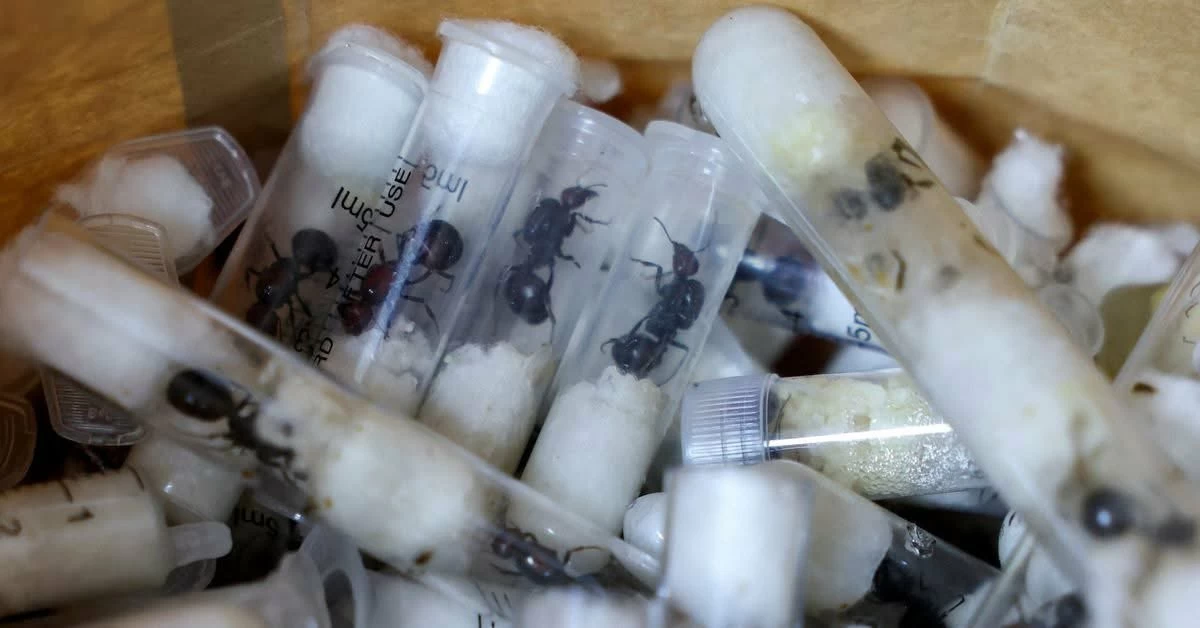
أعلنت السلطات الكينية القبض على مواطن صيني في مطار جومو كينياتا الدولي بنيروبي، بعد اكتشاف أكثر من 2200 نملة حية مهربة في أمتعته الشخصية أثناء محاولته مغادرة البلاد متجهًا إلى الصين.
وكشف المدعي العام الكيني ألين مولاما أمام المحكمة أن التفتيش الأمني أسفر عن العثور على 1948 نملة حديقة محفوظة بعناية داخل أنابيب اختبار متخصصة، بالإضافة إلى حوالى 300 نملة حية أخرى مخبأة داخل 3 لفافات من المناديل الورقية الناعمة داخل الحقيبة، ليصل العدد الإجمالي إلى 2238 نملة.
وأكد المسؤولون في هيئة الحياة البرية الكينية وفريق التحقيق أن القضية مرتبطة بشبكة دولية لتهريب الحياة البرية، مشيرين إلى أن المشتبه به سبق أن صدر أمر بمنعه من مغادرة البلاد العام الماضي في قضية مشابهة، لكنه تمكن من الفرار قبل أن يُعاد توقيفه.
ويُعد تهريب ملكات النمل ظاهرة متزايدة في كينيا خلال السنوات الأخيرة، حيث تُباع هذه النملات خاصة الأنواع النادرة أو ذات القيمة البيئية في أسواق الحشرات الغريبة، وتربية المزارع النملية، في آسيا وأوروبا.
وتعد ملكة نمل واحدة قادرة على إنشاء مستعمرة كاملة تضم آلاف الأفراد، مما يجعلها ذات قيمة تجارية عالية تصل أحيانًا إلى مئات الدولارات للقطعة الواحدة.
وكانت كينيا قد شهدت قضايا مشابهة في الفترة الأخيرة، منها غرامات بلغت حوالى 7700 دولار على كل متهم في شبكة سابقة لتهريب آلاف النمل، بالإضافة إلى قضايا أخرى شملت بلجيكيين وأجانب آخرين.
ويُعتبر هذا النوع من التهريب انتهاكًا لقوانين حماية الحياة البرية الكينية وقوانين اتفاقية CITES الدولية المتعلقة بالتجارة في الأنواع المهددة، رغم أن «نمل الحدائق» ليس مدرجًا دائمًا كمهدد، إلا أن التصدير غير المصرح به يُعد جريمة.
وأمرت المحكمة بحبس المشتبه به لعدة أيام إضافية لاستكمال التحقيقات، مع توجيه اتهامات رسمية بمحاولة تهريب الحياة البرية وانتهاك قوانين الجمارك والحياة البرية.
The Kenyan authorities announced the arrest of a Chinese national at Jomo Kenyatta International Airport in Nairobi after discovering more than 2,200 live ants smuggled in his personal belongings while attempting to leave the country heading to China.
Kenyan Attorney General Allen Mulama revealed in court that the security inspection resulted in the discovery of 1,948 carefully preserved garden ants inside specialized test tubes, in addition to about 300 other live ants hidden inside 3 rolls of soft tissue paper within the bag, bringing the total number to 2,238 ants.
Officials from the Kenyan Wildlife Service and the investigation team confirmed that the case is linked to an international wildlife smuggling network, noting that the suspect had previously been issued an order preventing him from leaving the country last year in a similar case, but he managed to escape before being re-arrested.
Smuggling queen ants has become an increasing phenomenon in Kenya in recent years, as these ants, especially rare or ecologically valuable species, are sold in exotic insect markets and ant farming in Asia and Europe.
A single queen ant is capable of establishing a complete colony consisting of thousands of individuals, making it highly valuable, sometimes reaching hundreds of dollars per piece.
Kenya has witnessed similar cases recently, including fines of about $7,700 for each defendant in a previous network for smuggling thousands of ants, in addition to other cases involving Belgians and other foreigners.
This type of smuggling is considered a violation of Kenyan wildlife protection laws and the international CITES agreement related to the trade in endangered species, although "garden ants" are not always listed as threatened, unauthorized export is considered a crime.
The court ordered the suspect to be detained for several additional days to complete the investigations, with formal charges of attempting to smuggle wildlife and violating customs and wildlife laws being filed.