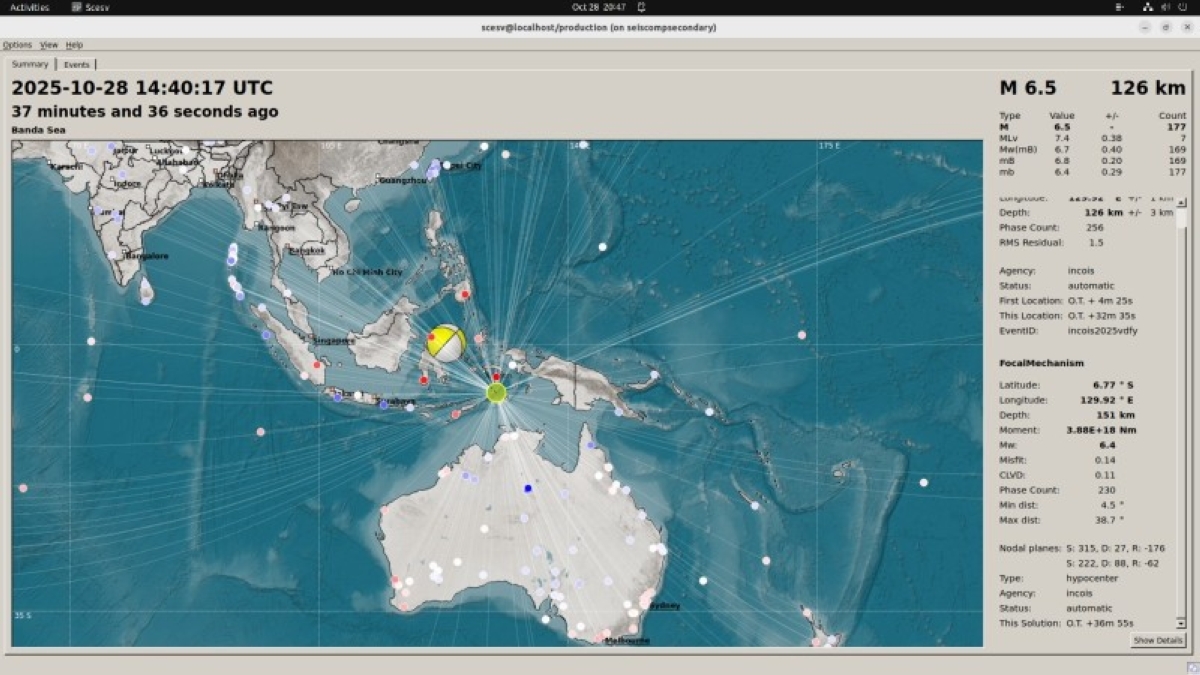
هز زلزال قوي بقوة 6.6 درجة على مقياس ريختر بحر باندا في إندونيسيا أمس (الثلاثاء)، ما أثار موجة من القلق في المناطق المجاورة، لكنه لم يتسبب في أضرار فورية أو إصابات، وفقا لتقارير السلطات المحلية.
ووقع الزلزال في الساعة 21:40 بتوقيت جاكرتا، بعمق يراوح بين 137 و148 كيلومترا تحت سطح البحر، وفقا للمركز الجيوفيزيائي الألماني، والوكالة الجيوفيزيائية الإندونيسية التي أكدت عدم وجود خطر تسونامي، ما سمح بتهدئة السكان في جزر المالوكو المجاورة مثل أمبون وبورو.
ووصف السلطات الإندونيسية الزلزال بأنه «متوسط العمق»، وهو ما يقلل من تأثيره السطحي، إذ يحدث معظم الزلازل الكبرى في بحر باندا على أعماق تصل إلى 600 كيلومتر بسبب النشاط التقني الشديد في المنطقة.
وأكدت السلطات أنه لم يتم الإبلاغ عن أي أضرار هيكلية أو انقطاع في الخدمات حتى الآن، لكنها حثت السكان في المناطق الساحلية على البقاء يقظين ومتابعة التحذيرات الرسمية.
وقال المدير التنفيذي للوكالة الجيوفيزيائية الإندونيسية، إيووك سوريو، في بيان رسمي: «الزلزال كان قويا لكنه عميق بما يكفي لعدم التسبب في هزات أرضية سطحية مدمرة، ونحن نراقب أي هزات تابعة محتملة».
وأفاد السكان في المناطق المتضررة جزئيا، مثل مدينة أمبون في جزر المالوكو، بسماع دوي شديد وشعور خفيف بالاهتزاز لمدة 20-30 ثانية، لكن الحياة عادت إلى طبيعتها سريعا.
ولم تصدر أي تقارير عن إصابات أو خسائر في الأرواح لهذا الزلزال الذي يأتي بعد أقل من أسبوعين من زلزال آخر بقوة 6.7 درجة ضرب مقاطعة بابوا في إندونيسيا، ما يعزز القلق من زيادة النشاط الزلزالي في المنطقة.
وتقع إندونيسيا على «حلقة النار» في المحيط الهادئ، وهي منطقة شبه دائرية تمتد لأكثر من 40,000 كيلومتر وتشمل 75% من البراكين النشطة في العالم و90% من الزلازل العالمية.
ويعد بحر باندا، الذي يقع شرق جزيرة سولاويسي وشمال أستراليا، أحد أكثر المناطق نشاطا بسبب التصادم بين الصفيحة الهندية-الأسترالية والصفيحة الهادئة، إذ تغوص الأخيرة تحت الأولى بعمق يصل إلى 700 كيلومتر، ويولد هذا النشاط التقني زلازل متوسطة العمق مثل هذا، ونادرا ما تسبب أضرارا سطحية، لكنها قد تؤدي إلى هزات تابعة.
A strong earthquake measuring 6.6 on the Richter scale shook the Banda Sea in Indonesia yesterday (Tuesday), raising a wave of concern in the surrounding areas, but it did not cause immediate damage or injuries, according to reports from local authorities.
The earthquake occurred at 21:40 Jakarta time, at a depth ranging between 137 and 148 kilometers beneath the sea surface, according to the German Geophysical Center and the Indonesian Geophysical Agency, which confirmed that there was no tsunami threat, allowing residents in the nearby Maluku Islands, such as Ambon and Buru, to feel reassured.
The Indonesian authorities described the earthquake as "moderate depth," which reduces its surface impact, as most major earthquakes in the Banda Sea occur at depths of up to 600 kilometers due to the intense tectonic activity in the region.
The authorities confirmed that no structural damage or service interruptions have been reported so far, but they urged residents in coastal areas to remain vigilant and follow official warnings.
The executive director of the Indonesian Geophysical Agency, Euwok Suryo, stated in an official statement: "The earthquake was strong but deep enough not to cause destructive surface tremors, and we are monitoring any potential aftershocks."
Residents in partially affected areas, such as the city of Ambon in the Maluku Islands, reported hearing a loud noise and feeling a slight tremor for 20-30 seconds, but life quickly returned to normal.
No reports of injuries or fatalities have emerged from this earthquake, which comes less than two weeks after another earthquake measuring 6.7 struck Papua province in Indonesia, raising concerns about increased seismic activity in the region.
Indonesia is located on the "Ring of Fire" in the Pacific Ocean, a semi-circular area extending over 40,000 kilometers that includes 75% of the world's active volcanoes and 90% of global earthquakes.
The Banda Sea, located east of Sulawesi Island and north of Australia, is one of the most active areas due to the collision between the Indian-Australian plate and the Pacific plate, with the latter subducting beneath the former at depths of up to 700 kilometers. This tectonic activity generates medium-depth earthquakes like this one, which rarely cause surface damage, but can lead to aftershocks.