


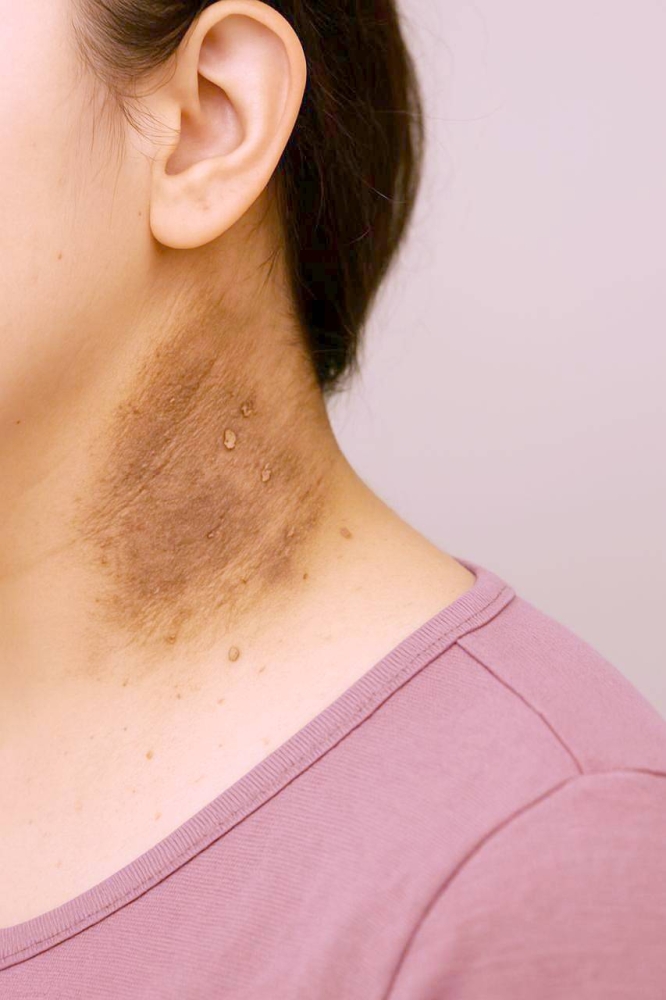
حذر مختصون من تجاهل تغيرات جلدية مفاجئة في الرقبة ومناطق الاحتكاك، مثل ظهور بقع داكنة أو زوائد جلدية، باعتبارها مؤشرات محتملة على مقاومة الأنسولين، الممهدة للإصابة بداء السكري من النوع الثاني.
وأشار تقرير نشرته «دايلي ميل» إلى أن ظهور بقع مخملية داكنة في الرقبة أو تحت الإبط قد يُعرف باسم «الشواك الأسود»، ويرتبط غالباً بزيادة إنتاج الأنسولين. كما أن الزوائد الجلدية المفاجئة وتراكم الدهون في قاعدة الرقبة قد يعكسان اختلالاً هرمونياً له صلة بمقاومة الأنسولين.
وينصح الأطباء بمراقبة هذه الإشارات، خصوصاً لمن لديهم تاريخ عائلي مع السكري أو يعانون من السمنة، والتوجه للفحص المبكر، إلى جانب تحسين نمط الحياة من خلال التغذية الصحية، وممارسة الرياضة، والمتابعة الدورية لمستويات السكر في الدم.
علامات خفية تنذر بالإصابة بمقاومة الأنسولين والسكري
4 يونيو 2025 - 11:06
|
آخر تحديث 4 يونيو 2025 - 11:06


تابع قناة عكاظ على الواتساب
«عكاظ» (جدة) OKAZ_online@
Specialists have warned against ignoring sudden skin changes in the neck and friction areas, such as the appearance of dark spots or skin tags, as they may be potential indicators of insulin resistance, which can lead to type 2 diabetes.
A report published by the "Daily Mail" indicated that the appearance of dark velvety patches on the neck or under the armpit may be known as "acanthosis nigricans," and is often associated with increased insulin production. Additionally, sudden skin tags and fat accumulation at the base of the neck may reflect a hormonal imbalance related to insulin resistance.
Doctors advise monitoring these signs, especially for those with a family history of diabetes or those suffering from obesity, and to seek early testing, along with improving lifestyle through healthy nutrition, exercising, and regularly monitoring blood sugar levels.
A report published by the "Daily Mail" indicated that the appearance of dark velvety patches on the neck or under the armpit may be known as "acanthosis nigricans," and is often associated with increased insulin production. Additionally, sudden skin tags and fat accumulation at the base of the neck may reflect a hormonal imbalance related to insulin resistance.
Doctors advise monitoring these signs, especially for those with a family history of diabetes or those suffering from obesity, and to seek early testing, along with improving lifestyle through healthy nutrition, exercising, and regularly monitoring blood sugar levels.


