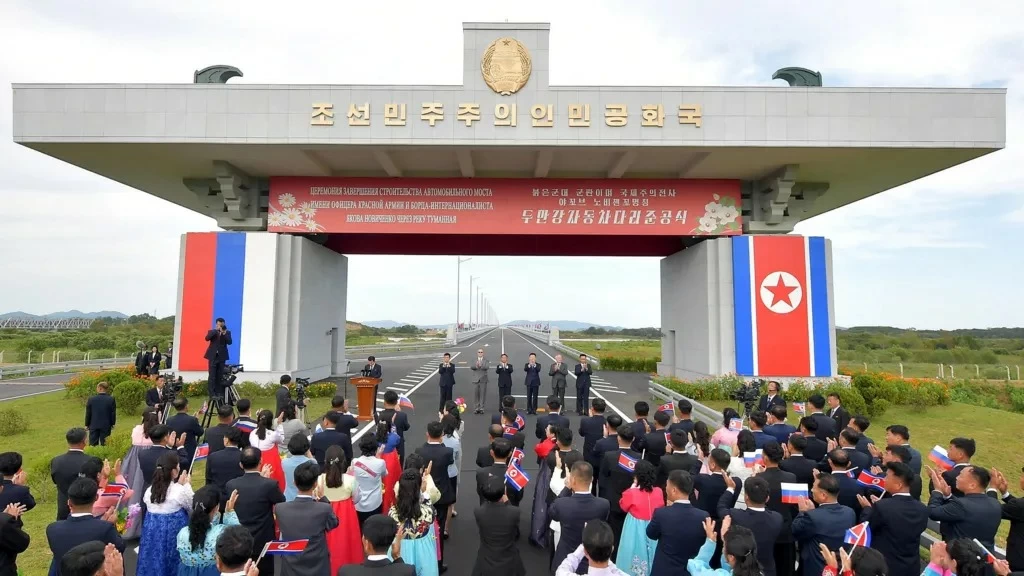
افتتحت روسيا وكوريا الشمالية أول جسر بري يربط بين البلدين، في خطوة من شأنها تسهيل حركة البضائع والمسافرين عبر الحدود المشتركة على نهر تومين، وتعزيز العلاقات الاقتصادية والاستراتيجية المتنامية بين موسكو وبيونغ يانغ.
وقالت وسائل إعلام رسمية في كوريا الشمالية إن الجسر سيُستخدم في «تبادل الأفراد والسياحة والتجارة»، بينما وصف رئيس الوزراء الروسي ميخائيل ميشوستين المشروع بأنه «رمز جديد للصداقة» بين البلدين، واعتبره رئيس الوزراء الكوري الشمالي باك ثاي سونغ «حدثًا تاريخيًا».
لكن افتتاح الجسر يأتي في وقت تتزايد فيه المخاوف بشأن البعد العسكري للشراكة بين البلدين، ولا سيما مع استمرار الحرب الروسية في أوكرانيا.
وقالت مجموعة Truth Hounds الأوكرانية المتخصصة في تحليل المعلومات مفتوحة المصدر إن الجسر قد يُستخدم، قبل أي شيء، لإنشاء «ممر لوجستي عسكري سري» لدعم روسيا في حربها ضد أوكرانيا.
وبحسب وكالة الأنباء الروسية «تاس»، يمكن للجسر استيعاب ما يصل إلى 300 مركبة و2323 شخصًا يوميًا، ما يوفر قدرة نقل كبيرة مقارنة بالوصلة البرية المحدودة التي كانت قائمة بين البلدين.
وأظهرت صور أقمار صناعية نشرتها هيئة الإذاعة البريطانية «بي بي سي» في مايو الماضي جسرًا يبلغ طوله نحو كيلومتر، إلى جانب طرق وصول جديدة ونقطة تفتيش حدودية ومنشآت خدمية ومواقف للسيارات.
وتوجد بالفعل روابط جوية وخط سكك حديدية بين روسيا وكوريا الشمالية، إلا أن الطريق البري الوحيد كان يعتمد حتى الآن على حل مؤقت؛ إذ كانت ألواح خشبية توضع، بترتيبات خاصة، فوق جسر السكك الحديدية للسماح بمرور السيارات، وفقًا لما أوردته «رويترز».
موسكو: الجسر لتعزيز التعاون الاقتصادي
وقالت الحكومة الروسية إن الجسر سيُستخدم في البداية لنقل البضائع، على أن يبدأ استقبال حركة المسافرين في وقت لاحق من العام.
وأكد ميشوستين أن المشروع من شأنه أن يعطي «دفعة قوية» لمزيد من تطوير التعاون التجاري والاقتصادي والعلمي والتكنولوجي والثقافي بين البلدين، مشيرًا خلال مشاركته عبر اتصال مرئي في مراسم الافتتاح إلى أن العلاقات بين موسكو وبيونغ يانغ وصلت إلى «مستوى غير مسبوق».
وتأتي هذه الخطوة في ظل تقارب متسارع بين البلدين منذ اندلاع الحرب الروسية في أوكرانيا، بعدما تعهد الرئيس الروسي فلاديمير بوتين والزعيم الكوري الشمالي كيم جونغ أون بمساعدة كل منهما الآخر في حال تعرض أي من البلدين لـ«عدوان».
مخاوف من تسهيل نقل الأسلحة والجنود
ويرى مراقبون أن التأثير الأكثر إلحاحًا للجسر قد يتمثل في تسهيل تدفق الأسلحة والذخائر الكورية الشمالية إلى روسيا.
وتقدر أجهزة الاستخبارات في كوريا الجنوبية أن بيونغ يانغ نقلت بالفعل إلى روسيا صواريخ وقذائف مدفعية وذخائر بقيمة تتراوح بين 7 و14 مليار دولار، جرى نقلها عبر السفن. كما تشير تقديرات إلى وجود نحو 11 ألف جندي كوري شمالي يشاركون في القتال ضد القوات الأوكرانية داخل روسيا.
وقالت مجموعة Truth Hounds إن معاهدة الشراكة الاستراتيجية الموقعة بين البلدين عام 2024 تفتح المجال أمام استخدام الجسر لنقل أفراد عسكريين كوريين شماليين وعمال بناء ومسؤولين عسكريين كبار مباشرة إلى الأراضي الروسية.
وفي الاتجاه المعاكس، يمكن أن يسمح الجسر بتسهيل انتقال التكنولوجيا والموارد الروسية إلى كوريا الشمالية.
وجاء إنشاء الجسر بعد اتفاق أُبرم خلال زيارة بوتين إلى كوريا الشمالية في عام 2024، وهي أول زيارة له إلى البلاد منذ 24 عامًا، وأسفرت عن توقيع معاهدة الشراكة الاستراتيجية بين موسكو وبيونغ يانغ.
وبدأ العمل في إنشاء الجسر عام 2025، واستغرق المشروع 495 يومًا حتى اكتماله بعد تعرضه لتأخيرات.
العمال والسياح الكوريون الشماليون
ولا يقتصر الاستخدام المتوقع للجسر على التجارة أو التعاون العسكري، إذ يُنتظر أن يسهم أيضًا في تسهيل انتقال العمال الكوريين الشماليين إلى روسيا.
وتقدر كوريا الجنوبية أن نحو 10 آلاف كوري شمالي يعملون حاليًا في مواقع البناء ومعسكرات قطع الأشجار داخل روسيا.
ويأتي ذلك رغم حظر الأمم المتحدة استخدام العمالة الكورية الشمالية، حيث تشير تقديرات إلى أن بعض هؤلاء يدخلون الأراضي الروسية تحت غطاء تأشيرات دراسية.
كما بدأ تدفق السياح الروس إلى كوريا الشمالية بصورة محدودة منذ السماح لهم بالدخول عام 2024، حيث تستضيفهم بيونغ يانغ ومنتجعات ساحلية، من بينها وونسان-كالما، في وقت لا تزال فيه كوريا الشمالية تفرض قيودًا على دخول مواطني العديد من الدول الأخرى.
وقال فيكتور تشا، الباحث في مركز الدراسات الاستراتيجية والدولية (CSIS)، في تصريحات لـ«بي بي سي فيريفاي» في مايو الماضي، إن سرعة بناء الجسر تعكس حجم النشاط التجاري بين الجانبين.
وأضاف أن هذا النشاط مدفوع بدرجة كبيرة بتزويد كوريا الشمالية روسيا بالجنود والأسلحة والذخائر والعمال لدعم حرب الرئيس بوتين في أوكرانيا.
وأشار تشا إلى أن الرابط الجديد يمثل تحولًا كبيرًا في العلاقات الحدودية بين البلدين، موضحًا أن هذا المعبر كان، قبل الحرب في أوكرانيا، من «أكثر الروابط خمولًا» بين كوريا الشمالية وجارتيها.
Russia and North Korea have opened their first land bridge connecting the two countries, a step that will facilitate the movement of goods and travelers across the shared border on the Tumen River, and enhance the growing economic and strategic relations between Moscow and Pyongyang.
North Korean state media reported that the bridge will be used for "the exchange of individuals, tourism, and trade," while Russian Prime Minister Mikhail Mishustin described the project as "a new symbol of friendship" between the two countries, and North Korean Prime Minister Pak Tae Song called it "a historic event."
However, the opening of the bridge comes at a time when concerns are rising about the military dimension of the partnership between the two countries, especially with the ongoing Russian war in Ukraine.
The Ukrainian group Truth Hounds, which specializes in open-source information analysis, stated that the bridge could be used, above all, to create a "secret military logistics corridor" to support Russia in its war against Ukraine.
According to the Russian news agency TASS, the bridge can accommodate up to 300 vehicles and 2,323 people daily, providing significant transport capacity compared to the limited land link that previously existed between the two countries.
Satellite images published by the BBC last May showed a bridge approximately one kilometer long, along with new access roads, a border checkpoint, service facilities, and parking lots.
There are already air links and a railway line between Russia and North Korea, but the only land route had until now relied on a temporary solution; wooden planks were specially arranged over the railway bridge to allow vehicles to pass, according to Reuters.
Moscow: The Bridge to Enhance Economic Cooperation
The Russian government stated that the bridge will initially be used for transporting goods, with passenger traffic expected to begin later this year.
Mishustin confirmed that the project would provide a "strong boost" for further development of trade, economic, scientific, technological, and cultural cooperation between the two countries, noting during his video participation in the opening ceremony that relations between Moscow and Pyongyang have reached an "unprecedented level."
This step comes amid a rapid rapprochement between the two countries since the outbreak of the Russian war in Ukraine, after Russian President Vladimir Putin and North Korean leader Kim Jong Un pledged to assist each other in the event of any "aggression" against either country.
Concerns About Facilitating the Transfer of Weapons and Soldiers
Observers believe that the most pressing impact of the bridge may be to facilitate the flow of North Korean weapons and munitions to Russia.
South Korean intelligence estimates that Pyongyang has already transferred missiles, artillery shells, and munitions worth between $7 billion and $14 billion to Russia, transported by ships. Estimates also indicate that there are about 11,000 North Korean soldiers participating in combat against Ukrainian forces inside Russia.
Truth Hounds stated that the strategic partnership treaty signed between the two countries in 2024 opens the door for using the bridge to transport North Korean military personnel, construction workers, and senior military officials directly to Russian territory.
Conversely, the bridge could facilitate the transfer of Russian technology and resources to North Korea.
The construction of the bridge followed an agreement reached during Putin's visit to North Korea in 2024, his first visit to the country in 24 years, which resulted in the signing of the strategic partnership treaty between Moscow and Pyongyang.
Work on the bridge began in 2025, and the project took 495 days to complete after experiencing delays.
North Korean Workers and Tourists
The expected use of the bridge is not limited to trade or military cooperation; it is also anticipated to facilitate the movement of North Korean workers to Russia.
South Korea estimates that around 10,000 North Koreans are currently working at construction sites and logging camps within Russia.
This comes despite a United Nations ban on the use of North Korean labor, with estimates suggesting that some of these individuals enter Russian territory under the guise of student visas.
Additionally, the flow of Russian tourists to North Korea has started on a limited basis since they were allowed entry in 2024, with Pyongyang hosting them in coastal resorts, including Wonsan-Kalma, while North Korea still imposes restrictions on the entry of citizens from many other countries.
Victor Cha, a researcher at the Center for Strategic and International Studies (CSIS), stated in remarks to BBC Verify last May that the speed of the bridge's construction reflects the volume of trade activity between the two sides.
He added that this activity is largely driven by North Korea supplying Russia with soldiers, weapons, munitions, and labor to support President Putin's war in Ukraine.
Cha noted that the new link represents a significant shift in border relations between the two countries, explaining that this crossing was, before the war in Ukraine, one of the "most dormant links" between North Korea and its neighbors.