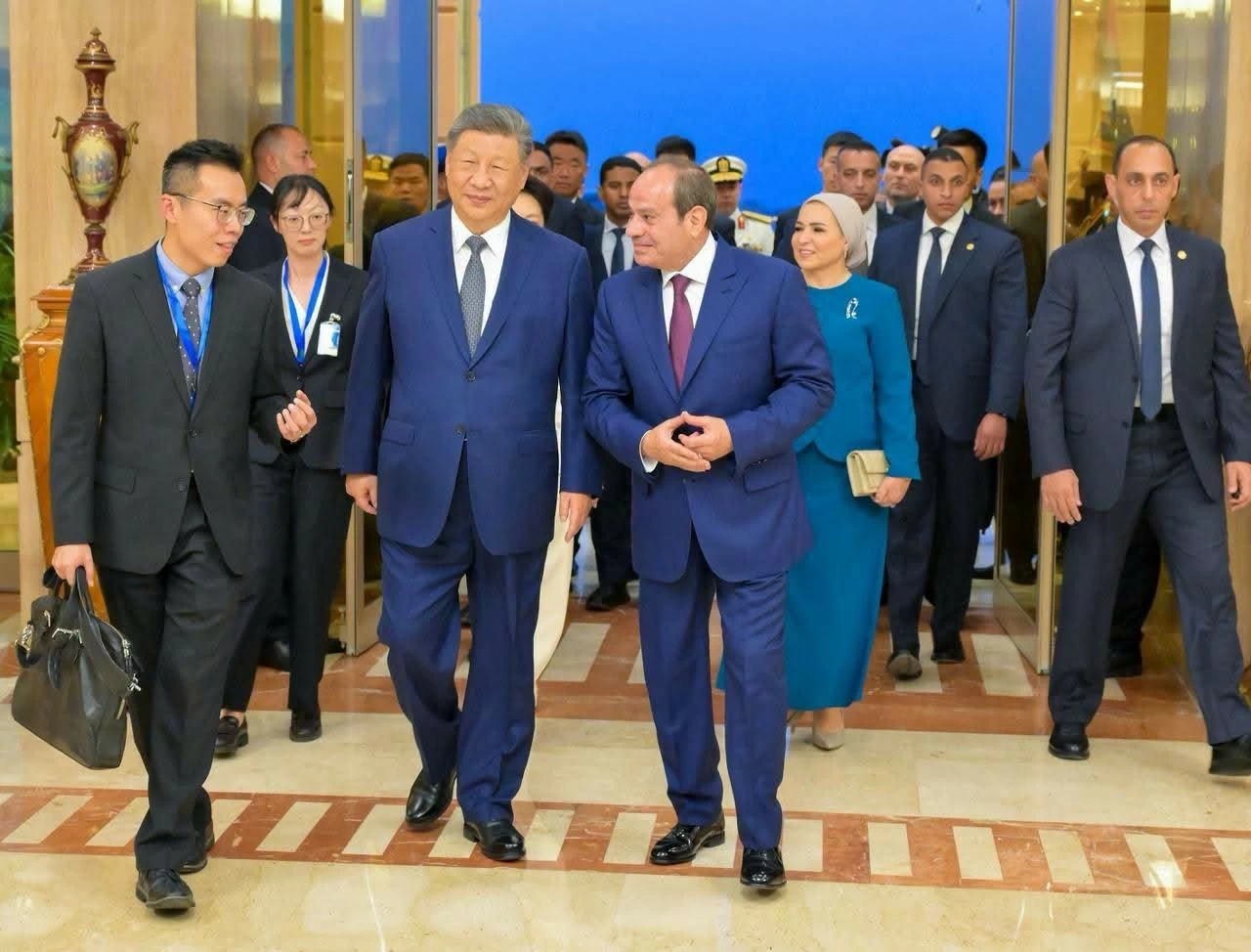
أعلنت مصر والصين اتفاقهما على مواصلة تعميق علاقات الشراكة الإستراتيجية الشاملة بين البلدين، وتعزيز التعاون السياسي والاقتصادي والأمني، إلى جانب تنسيق المواقف تجاه القضايا الإقليمية والدولية، وذلك في ختام زيارة دولة أجراها الرئيس الصيني شي جين بينغ إلى مصر يومي 1 و2 سبتمبر 2026.
وجاءت الزيارة تلبية لدعوة الرئيس المصري عبد الفتاح السيسي، بالتزامن مع الاحتفال بالذكرى السبعين لإقامة العلاقات الدبلوماسية بين مصر والصين، التي بدأت عام 1956، وكانت خلالها مصر أول دولة عربية وأفريقية تعترف بجمهورية الصين الشعبية وتقيم علاقات دبلوماسية معها.
وأكد الجانبان أن العقود السبعة الماضية شهدت تطورًا ملحوظًا في علاقات التعاون والصداقة بين البلدين، التي تقوم على المساواة والثقة والمنفعة المتبادلة والتضامن والمؤازرة والكسب المشترك، مشيرين إلى أن العلاقات المصرية الصينية أسهمت في تطوير روح الصداقة والتعاون بين الصين والدول العربية والأفريقية.
اتفاق على تعميق الشراكة الإستراتيجية
وعقد الرئيسان محادثات رسمية تناولت مجمل العلاقات الثنائية، واستعرضا التطور الملحوظ والطفرة النوعية التي شهدتها منذ تدشين الشراكة الإستراتيجية الشاملة عام 2014، كما تبادلا الآراء بشأن القضايا الدولية والإقليمية ذات الاهتمام المشترك، وتوصلا إلى توافق واسع النطاق.
واتفق الرئيسان على تعميق الشراكة الإستراتيجية الشاملة من خلال مواصلة التبادلات رفيعة المستوى، والاستفادة من الحوار الإستراتيجي بين وزيري الخارجية والآليات الأخرى، وتعزيز التنسيق الإستراتيجي، وتوطيد التعاون ذي المنفعة المتبادلة في مختلف المجالات.
كما اتفقا على توسيع التنسيق في قضايا الحوكمة العالمية والدفاع عن مصالح الدول النامية ودول الجنوب العالمي.
القضية الفلسطينية.. حل الدولتين ورفض التهجير
وأعاد الرئيسان التأكيد على أن القضية الفلسطينية هي القضية المركزية في الشرق الأوسط، وأكدا أهمية التوصل إلى تسوية عادلة ودائمة على أساس حل الدولتين.
وشدد الجانبان على ضرورة إقامة الدولة الفلسطينية المستقلة ذات السيادة على خطوط الرابع من يونيو 1967، وعاصمتها القدس الشرقية.
كما جددا رفضهما القاطع لأي مخططات لتهجير الشعب الفلسطيني من أراضيه تحت أي ذرائع أو مسميات.
ودعا الجانبان إلى تثبيت وقف إطلاق النار في قطاع غزة، وتسهيل تدفق المساعدات الإنسانية دون قيود، وعودة السلطة الفلسطينية إلى القطاع في أقرب وقت.
وأعربا عن قلقهما إزاء التصعيد الإسرائيلي الخطير في الضفة الغربية والقدس الشرقية، بما في ذلك ارتفاع وتيرة عنف المستوطنين ومصادرة الأراضي وبناء المستوطنات.
وشدد الرئيسان على أهمية الحفاظ على وحدة الأراضي الفلسطينية، ودعم دور وكالة الأمم المتحدة لغوث وتشغيل اللاجئين الفلسطينيين «الأونروا»، وضرورة عدم المساس بولايتها.
أمن البحر الأحمر والقرن الأفريقي
وأكد الرئيسان أن تعزيز الاستقرار في منطقة القرن الأفريقي يتطلب احترام سيادة دولها ووحدة أراضيها وسلامتها الإقليمية.
كما شددا على أن حوكمة البحر الأحمر وأمنه تقع مسؤوليتهما الرئيسية على الدول المشاطئة له، وأنه ينبغي الاحترام الكامل لإرادة هذه الدول.
ودعا الجانبان إلى تعزيز التعاون الإقليمي بين الدول المشاطئة للبحر الأحمر لمواجهة التحديات المشتركة وضمان حرية الملاحة والتجارة الدولية.
مصر والصين تدعمان وقف الحرب في السودان
وأكد الطرفان ضرورة احترام وحدة وسيادة أراضي السودان والحفاظ على مؤسساته الوطنية وعدم التدخل في شؤونه الداخلية.
كما أكدا عزمهما على العمل معًا من أجل وقف الحرب في السودان وإطلاق عملية سياسية شاملة بملكية سودانية.
إشادة صينية بالدور المصري
وأشاد الجانب الصيني بالدور المحوري الذي تضطلع به مصر في دعم الأمن والاستقرار الإقليميين، وجهودها المتواصلة للتوصل إلى تسويات سياسية شاملة للأزمات الجيوسياسية في الشرق الأوسط، وتعزيز مبادئ حسن الجوار واحترام سيادة الدول وعدم التدخل في شؤونها الداخلية.
وأعرب الجانب المصري عن تقديره لرؤية الرئيس الصيني شي جين بينغ بشأن صون وتعزيز السلام والاستقرار في الشرق الأوسط.
ورحب الجانبان بالجهود الإقليمية والدولية الرامية إلى خفض التوتر وتعزيز الحوار والتوصل إلى تفاهمات سياسية تراعي شواغل جميع الأطراف، وتسهم في ترسيخ الأمن والاستقرار في منطقة الخليج والشرق الأوسط.
الصين تؤكد أهمية نهر النيل.. ومصر تتمسك بمبدأ الصين الواحدة
وأكد الجانبان مجددًا تبادل الدعم الثابت في القضايا المتعلقة بالمصالح الجوهرية والشواغل الرئيسية لكل منهما.
وأكد الجانب الصيني إدراكه للأهمية الحيوية لنهر النيل بالنسبة إلى مصر باعتباره شريان الحياة الرئيسي، وحقها المشروع في حماية أمنها المائي والغذائي ومصالحها التنموية، داعيًا جميع دول حوض النيل إلى الالتزام بالقانون الدولي، بما في ذلك عدم التسبب في إحداث ضرر.
في المقابل، أكد الجانب المصري رفضه التدخل في الشؤون الداخلية للصين، ومواصلة الالتزام الثابت بمبدأ الصين الواحدة، وأن تايوان جزء لا يتجزأ من أراضي جمهورية الصين الشعبية، إلى جانب دعم موقف الجانب الصيني بشأن القضايا المتعلقة بسيادة الصين ووحدة أراضيها، ودعم تحقيق إعادة توحيد الصين.
قناة السويس والطاقة والذكاء الاصطناعي
وأشاد الرئيسان باستمرار التعاون الناجح في المشروعات الكبرى بمجالات البنية التحتية والنقل والطاقة والتصنيع والفضاء والتكنولوجيا، بما في ذلك استمرار تنفيذ خطة التعاون المشترك لمبادرة الحزام والطريق.
كما أكد الجانبان دعمهما لتطوير المنطقة الاقتصادية لقناة السويس، وتشجيع شركات البلدين على التعاون في مشروعات الطاقة المتجددة والذكاء الاصطناعي والتحول الرقمي والتصنيع المحلي.
واتفق الجانبان على العمل لتحقيق مواءمة أعمق بين رؤية مصر 2030 ومبادرة التعاون في بناء الحزام والطريق، بما يسهم في تحويل مصر إلى مركز إقليمي للصناعة والخدمات اللوجستية والطاقة النظيفة والاقتصاد الرقمي، يربط بين آسيا وأفريقيا وأوروبا.
تعاون في السيارات الكهربائية وبناء السفن وأشباه الموصلات
وبحسب البيان المشترك، تشمل مجالات التعاون المستقبلية توطين الصناعة، بما في ذلك صناعة السيارات الكهربائية وبناء السفن والطاقة المتجددة، مثل الألواح الشمسية وأبراج الرياح، إلى جانب تحلية مياه البحر.
كما اتفق الجانبان على توسيع التعاون في التكنولوجيا المتقدمة، ومنها الحوسبة السحابية ومراكز البيانات والاقتصاد القائم على البيانات وأشباه الموصلات والأمن السيبراني وتطبيقات الفضاء والاستشعار عن بعد وسلاسل إمداد المعادن الحرجة والزراعة وصناعة السيارات.
ويشمل التعاون أيضًا تعزيز بناء القدرات البشرية وتبادل الخبرات والتكنولوجيات في هذه المجالات، بما يدعم التحول الرقمي والتنمية المستدامة في مصر.
اتفاقية تبادل العملات وتعزيز الاستثمارات
وأعرب الرئيسان عن تقديرهما للتعاون المالي القائم بين البلدين، بما في ذلك إصدار سندات «الباندا» الصينية وتوسيع ترتيبات تبادل العملات المحلية.
كما شجعا المؤسسات المالية في البلدين على دعم الاستثمارات الصناعية والتنموية ومشروعات البنية التحتية والتحول الأخضر والرقمي.
وفي هذا الإطار، رحب الرئيسان بتجديد اتفاقية تبادل العملات بين البلدين وزيادة قيمتها.
توافق مصري صيني بشأن القضايا الإقليمية والدولية
أكد الرئيسان تعزيز التنسيق السياسي والأمني بين البلدين بشأن القضايا الإقليمية والدولية ذات الاهتمام المشترك، والحرص على مواصلة التنسيق الوثيق بما يسهم في دعم السلم والاستقرار والتنمية على المستويين الإقليمي والدولي.
كما أكدا التزام البلدين بمبادئ ومقاصد ميثاق الأمم المتحدة ومبادئ القانون الدولي، ورفض المعايير المزدوجة والإجراءات الأحادية الجانب.
وشدد الجانبان على ضرورة إصلاح النظام الدولي ومؤسسات التمويل الدولية لتكون أكثر عدلًا وتمثيلًا للدول النامية، وأكثر فاعلية في الاستجابة للتحديات العالمية.
واتفق الرئيسان على استمرار مصر والصين في تعزيز التنسيق والتعاون في المحافل الدولية، بما في ذلك الأمم المتحدة وتجمع «بريكس» ومنظمة شنغهاي للتعاون ومجموعة العشرين، وبما يشمل قضايا تغير المناخ والأمن الغذائي والطاقة والاقتصاد الرقمي.
وأكد الجانب المصري دعمه للرئاسة الصينية لتجمع «بريكس» عام 2027 وتنظيم الاجتماع التاسع عشر لقادة دول التجمع، فيما ثمّن الجانب المصري مبادرات الصين المتعلقة بإطلاق المنظمة الدولية للوساطة والمنظمة العالمية للتعاون في الذكاء الاصطناعي.
دعم التعاون العربي والأفريقي
وأشاد الرئيسان بالتعاون المثمر ضمن منتدى التعاون الصيني العربي ومنتدى التعاون الصيني الأفريقي، وأكدا عزمهما مواصلة تنفيذ مخرجاتهما وتعزيز التعاون العملي في إطارهما.
كما أكد الرئيسان أهمية تعزيز صوت الجنوب العالمي، ودعم حق الدول النامية في المشاركة العادلة والمتوازنة في صنع القرار الاقتصادي والسياسي الدولي، والعمل على تعزيز دور الأسواق الناشئة والدول النامية في النظام الدولي.
شي جين بينغ يدعو السيسي لزيارة الصين
ووجه شي جين بينغ الدعوة إلى الرئيس عبد الفتاح السيسي لزيارة الصين، حيث قبل الرئيس المصري الدعوة، ووعد بتلبيتها في الوقت الذي يناسب الجانبين.
Egypt and China announced their agreement to continue deepening the comprehensive strategic partnership between the two countries, enhancing political, economic, and security cooperation, as well as coordinating positions on regional and international issues, at the conclusion of a state visit by Chinese President Xi Jinping to Egypt on September 1 and 2, 2026.
The visit came in response to an invitation from Egyptian President Abdel Fattah el-Sisi, coinciding with the celebration of the seventieth anniversary of the establishment of diplomatic relations between Egypt and China, which began in 1956, during which Egypt was the first Arab and African country to recognize the People's Republic of China and establish diplomatic relations with it.
The two sides affirmed that the past seven decades have witnessed significant development in the cooperative and friendly relations between the two countries, based on equality, trust, mutual benefit, solidarity, support, and shared gains, noting that Egyptian-Chinese relations have contributed to fostering the spirit of friendship and cooperation between China and Arab and African countries.
Agreement to Deepen the Strategic Partnership
The two presidents held official talks that addressed the overall bilateral relations, reviewing the notable development and qualitative leap that have occurred since the launch of the comprehensive strategic partnership in 2014, and exchanged views on international and regional issues of mutual interest, reaching a broad consensus.
The two presidents agreed to deepen the comprehensive strategic partnership by continuing high-level exchanges, benefiting from the strategic dialogue between the foreign ministers and other mechanisms, enhancing strategic coordination, and solidifying mutually beneficial cooperation in various fields.
They also agreed to expand coordination on global governance issues and defend the interests of developing countries and the Global South.
The Palestinian Issue: Two-State Solution and Rejection of Displacement
The two presidents reiterated that the Palestinian issue is the central issue in the Middle East, emphasizing the importance of reaching a just and lasting settlement based on the two-state solution.
The two sides stressed the necessity of establishing an independent Palestinian state with sovereignty along the lines of June 4, 1967, with East Jerusalem as its capital.
They also renewed their firm rejection of any plans to displace the Palestinian people from their lands under any pretexts or names.
The two sides called for the establishment of a ceasefire in the Gaza Strip, facilitating the flow of humanitarian aid without restrictions, and the return of the Palestinian Authority to the sector as soon as possible.
They expressed their concern over the dangerous Israeli escalation in the West Bank and East Jerusalem, including the rising violence of settlers, land confiscation, and settlement construction.
The two presidents emphasized the importance of maintaining the unity of Palestinian territories, supporting the role of the United Nations Relief and Works Agency for Palestine Refugees in the Near East (UNRWA), and the necessity of not undermining its mandate.
Security of the Red Sea and the Horn of Africa
The two presidents affirmed that enhancing stability in the Horn of Africa requires respecting the sovereignty of its countries and the unity and territorial integrity of their lands.
They also stressed that the governance and security of the Red Sea are primarily the responsibility of the coastal states, and that the will of these countries should be fully respected.
The two sides called for enhancing regional cooperation among the coastal states of the Red Sea to address common challenges and ensure freedom of navigation and international trade.
Egypt and China Support Ending the War in Sudan
The two parties emphasized the necessity of respecting the unity and sovereignty of Sudan's territory, preserving its national institutions, and not interfering in its internal affairs.
They also affirmed their determination to work together to end the war in Sudan and launch a comprehensive political process with Sudanese ownership.
Chinese Praise for the Egyptian Role
The Chinese side praised Egypt's pivotal role in supporting regional security and stability, and its ongoing efforts to reach comprehensive political settlements for geopolitical crises in the Middle East, promoting the principles of good neighborliness, respecting the sovereignty of states, and non-interference in their internal affairs.
The Egyptian side expressed its appreciation for President Xi Jinping's vision regarding the preservation and enhancement of peace and stability in the Middle East.
Both sides welcomed regional and international efforts aimed at reducing tensions, enhancing dialogue, and reaching political understandings that consider the concerns of all parties, contributing to the consolidation of security and stability in the Gulf and the Middle East.
China Affirms the Importance of the Nile River, Egypt Adheres to the One China Principle
The two sides reaffirmed their mutual support on issues related to each other's core interests and major concerns.
The Chinese side acknowledged the vital importance of the Nile River to Egypt as its main lifeline and its legitimate right to protect its water and food security and developmental interests, calling on all Nile Basin countries to adhere to international law, including not causing harm.
In return, the Egyptian side affirmed its rejection of interference in China's internal affairs, its continued firm commitment to the One China principle, and that Taiwan is an integral part of the territory of the People's Republic of China, along with supporting China's position on issues related to its sovereignty and territorial integrity, and supporting the achievement of China's reunification.
Suez Canal, Energy, and Artificial Intelligence
The two presidents praised the continued successful cooperation in major projects in the fields of infrastructure, transportation, energy, manufacturing, space, and technology, including the ongoing implementation of the joint cooperation plan for the Belt and Road Initiative.
The two sides also affirmed their support for the development of the Suez Canal Economic Zone, encouraging companies from both countries to collaborate on renewable energy projects, artificial intelligence, digital transformation, and local manufacturing.
They agreed to work towards achieving deeper alignment between Egypt's Vision 2030 and the Belt and Road Initiative, contributing to transforming Egypt into a regional hub for industry, logistics services, clean energy, and the digital economy, linking Asia, Africa, and Europe.
Cooperation in Electric Vehicles, Shipbuilding, and Semiconductors
According to the joint statement, future areas of cooperation include localizing industries, including electric vehicle manufacturing, shipbuilding, and renewable energy, such as solar panels and wind towers, along with desalination of seawater.
The two sides also agreed to expand cooperation in advanced technologies, including cloud computing, data centers, data-driven economies, semiconductors, cybersecurity, space applications, remote sensing, critical mineral supply chains, agriculture, and automotive manufacturing.
The cooperation also includes enhancing human capacity building and exchanging expertise and technologies in these fields, supporting digital transformation and sustainable development in Egypt.
Currency Exchange Agreement and Investment Enhancement
The two presidents expressed their appreciation for the existing financial cooperation between the two countries, including the issuance of Chinese "panda" bonds and expanding arrangements for local currency exchange.
They also encouraged financial institutions in both countries to support industrial and developmental investments, infrastructure projects, and green and digital transformation.
In this context, the two presidents welcomed the renewal of the currency exchange agreement between the two countries and its increased value.
Egyptian-Chinese Consensus on Regional and International Issues
The two presidents confirmed the enhancement of political and security coordination between the two countries on regional and international issues of mutual interest, and their commitment to continue close coordination that contributes to supporting peace, stability, and development at both regional and international levels.
They also affirmed the commitment of both countries to the principles and purposes of the United Nations Charter and the principles of international law, and their rejection of double standards and unilateral actions.
The two sides stressed the necessity of reforming the international system and international financial institutions to make them fairer and more representative of developing countries, and more effective in responding to global challenges.
The two presidents agreed that Egypt and China would continue to enhance coordination and cooperation in international forums, including the United Nations, the BRICS group, the Shanghai Cooperation Organization, and the G20, including issues of climate change, food security, energy, and the digital economy.
The Egyptian side affirmed its support for China's presidency of the BRICS group in 2027 and the organization of the nineteenth summit of the leaders of the group, while the Egyptian side valued China's initiatives related to launching the International Mediation Organization and the Global Cooperation Organization in Artificial Intelligence.
Support for Arab and African Cooperation
The two presidents praised the fruitful cooperation within the framework of the China-Arab Cooperation Forum and the China-Africa Cooperation Forum, affirming their determination to continue implementing their outcomes and enhancing practical cooperation within their frameworks.
They also emphasized the importance of amplifying the voice of the Global South, supporting the right of developing countries to participate fairly and equitably in international economic and political decision-making, and working to enhance the role of emerging markets and developing countries in the international system.
Xi Jinping Invites Sisi to Visit China
Xi Jinping extended an invitation to President Abdel Fattah el-Sisi to visit China, to which the Egyptian president accepted, promising to fulfill it at a time convenient for both sides.