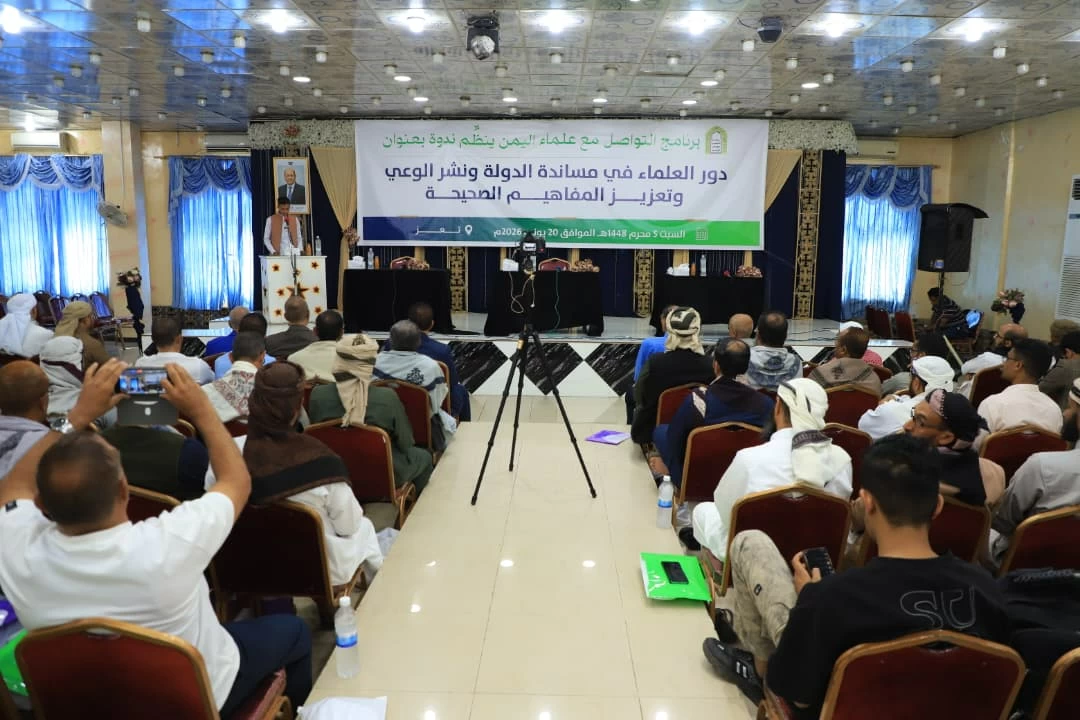
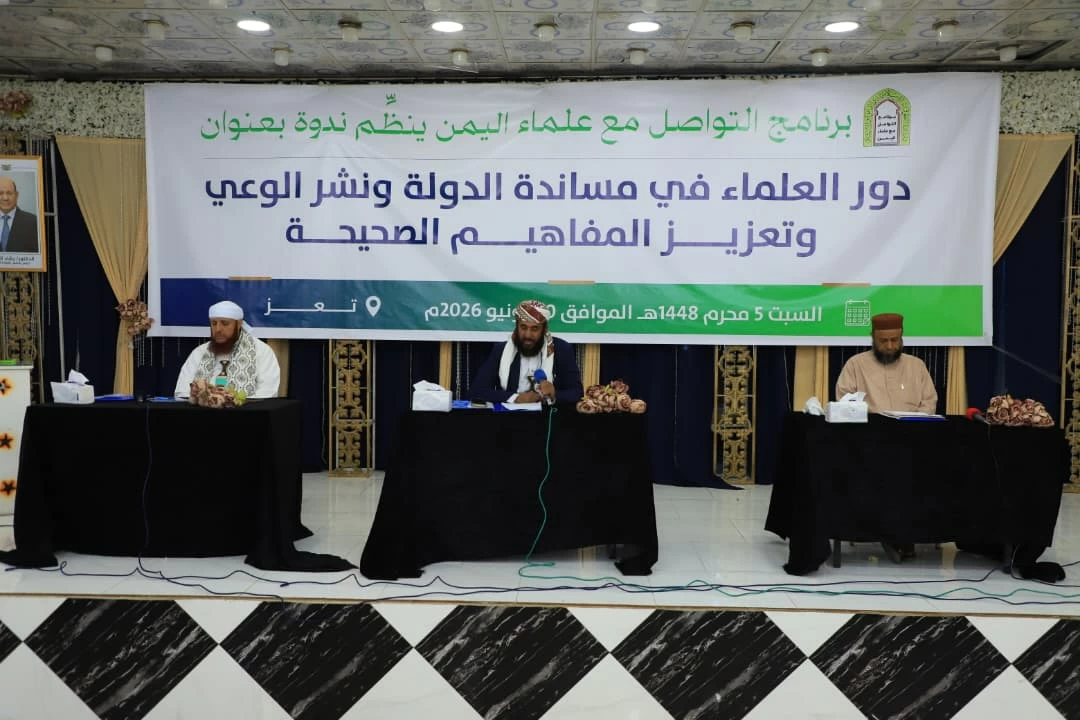
دعا علماء ودعاة يمنيون اليوم (السبت) إلى دعم الشرعية والالتفاف حول ولي الأمر والقيادة السياسية المعترف بها في اليمن، ممثلة برئيس مجلس القيادة الرئاسي الدكتور رشاد العليمي. وأكّدوا ضرورة المواجهة الفكرية الشاملة للخرافة وتطوير الخطاب الديني والإعلامي.
وأكّد العلماء في ندوة نظمها برنامج التواصل مع علماء اليمن في تعز أهمية تكامل الأدوار والمؤسسات لبناء الوعي وحماية الذاكرة التاريخية والهوية اليمنية وتأهيل الخطباء والاتصال الرقمي.
وأشاد الحاضرون بدور برنامج التواصل مع علماء اليمن وجهود وزارة الشؤون الإسلامية والدعوة والإرشاد في المملكة العربية السعودية في دعم العلماء والدعاة.
وأكّد العلماء خلال ندوة بعنوان «دور العلماء في مساندة الدولة ونشر الوعي وتعزيز المفاهيم الصحيحة» على ترسيخ الوسطية وتحصين الأجيال من الأفكار المتطرفة.
وأشاد الداعية الدكتور صادق السفياني بجهود برنامج التواصل مع علماء اليمن ومبادراته النوعية التي تخدم الدعوة وتوحيد الصف وبناء الوعي المجتمعي.
وقال الداعية محمود البركاني إن السنة أصل عقدي وقاعدة أساسية يقوم عليها نظام الحكم والإدارة في الإسلام، مؤكداً أنها تعد ركيزة لاستتباب الأمن وحفظ استقرار المجتمعات.
وأشار إلى أدوار العلماء في التصدي للتطرف وإرساء السلم الاجتماعي والحفاظ على الهوية، مع اعتماد منهج يجمع بين الأصالة والمعاصرة.
وقال الدكتور جميل النابهي إن بناء الوعي يؤصل الجوانب العقدية ويقوي علاقة الفرد بربه، مؤكداً على مسؤولية العلماء في تفنيد شبهات الحوثي ومواجهة الخرافات الفكرية وكشف زيف الملازم الحوثية.
وشدّد على تعزيز العلاقة مع دول الجوار، وفي مقدمتها المملكة العربية السعودية، والتحذير من مخاطر الفرقة، مؤكداً على مواجهة الشائعات بالحجة والبرهان.
وأشار الحسني إلى أن العلاقات مع دول الجوار، وفي مقدمتها المملكة العربية السعودية، تستند إلى قيم دينية وأخلاقية مشتركة تجعل التكامل ضرورة إستراتيجية.
Yemeni scholars and preachers called today (Saturday) for support of legitimacy and unity around the ruler and the recognized political leadership in Yemen, represented by the President of the Presidential Leadership Council, Dr. Rashad Al-Alimi. They emphasized the necessity of a comprehensive intellectual confrontation against superstition and the development of religious and media discourse.
The scholars confirmed during a seminar organized by the Communication Program with Yemeni Scholars in Taiz the importance of integrating roles and institutions to build awareness, protect historical memory, and preserve Yemeni identity, as well as to train speakers and enhance digital communication.
Attendees praised the role of the Communication Program with Yemeni Scholars and the efforts of the Ministry of Islamic Affairs, Da'wah, and Guidance in the Kingdom of Saudi Arabia in supporting scholars and preachers.
During the seminar titled "The Role of Scholars in Supporting the State, Spreading Awareness, and Promoting Correct Concepts," the scholars stressed the importance of establishing moderation and protecting generations from extremist ideas.
Preacher Dr. Sadiq Al-Sufyani praised the efforts of the Communication Program with Yemeni Scholars and its qualitative initiatives that serve the call to Islam, unify ranks, and build societal awareness.
Preacher Mahmoud Al-Barkani stated that the Sunnah is a foundational doctrinal principle and a basic rule upon which the system of governance and administration in Islam is based, affirming that it is a cornerstone for establishing security and maintaining the stability of communities.
He pointed to the roles of scholars in confronting extremism, establishing social peace, and preserving identity, while adopting an approach that combines authenticity and modernity.
Dr. Jamil Al-Nabahi stated that building awareness reinforces doctrinal aspects and strengthens the individual's relationship with their Lord, emphasizing the responsibility of scholars to refute the Houthi's doubts and confront intellectual superstitions, as well as to expose the falsehood of Houthi pamphlets.
He stressed the importance of enhancing relations with neighboring countries, foremost among them the Kingdom of Saudi Arabia, and warned against the dangers of division, emphasizing the need to counter rumors with evidence and proof.
Al-Husaini pointed out that relations with neighboring countries, particularly the Kingdom of Saudi Arabia, are based on shared religious and moral values that make integration a strategic necessity.