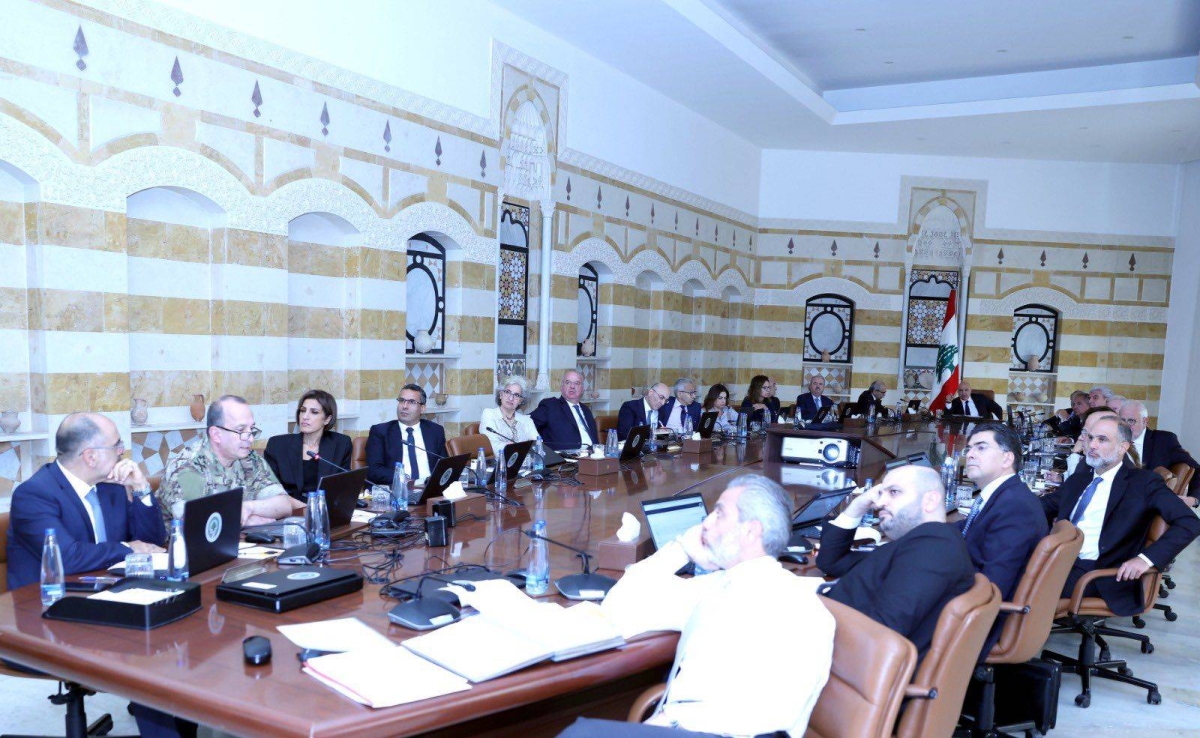
في لحظة سياسية دقيقة كادت تنذر بتصاعد التوتر، جاء انعقاد مجلس الوزراء اللبناني في قصر بعبدا اليوم (الاثنين) برئاسة الرئيس جوزيف عون، ليعيد الانتظام إلى المشهد الداخلي ويسحب فتيل التوتر.
الجلسة التي وُصفت بأنها من أكثر الجلسات سلاسة وهدوءاً، لم تشهد أي سجالات تذكر، خصوصاً من وزراء الثنائي الشيعي، واتسمت بطابع عملي ركز على الملفات الأمنية والإدارية الدقيقة، وفي مقدمها خطة حصر السلاح بيد الدولة وملف جمعية رسالات التابعة لحزب الله.
خطة حصر السلاح
في ملف حصر السلاح، قدم قائد الجيش رودولف هيكل التقرير الأول حول تنفيذ الخطة الوطنية لحصر السلاح، وهي الخطة التي أقرها مجلس الوزراء في الخامس من سبتمبر الماضي، وتعد خطوة مفصلية في مسار تثبيت سلطة الدولة على كامل الأراضي اللبنانية.
وقد عرض التقرير مراحل التنفيذ الميدانية واللوجستية، والجهوزية العالية للوحدات العسكرية والتنسيق القائم بين المؤسسة العسكرية والأجهزة الأمنية لتطبيق القرار وفقاً لما نصّ عليه اتفاق الطائف والقرار 1701.
إشادة بالدعم الأمريكي
وثمّن مجلس الوزراء الدعم الدولي المتواصل للجيش اللبناني، لا سيما ما أعلنته الولايات المتحدة الأمريكية أخيراً من مساعدات إضافية بقيمة 190 مليون دولار للجيش و40 مليون دولار لقوى الأمن الداخلي، مؤكداً أن هذه المساندة تعكس ثقة المجتمع الدولي بالمؤسسات الشرعية.
وقرر المجلس إبقاء مضمون الخطة سرياً في هذه المرحلة، على أن ترفع قيادة الجيش تقارير شهرية مفصّلة عن التقدّم في التنفيذ، تمهيداً لعرضها دورياً على مجلس الوزراء.
تعليق عمل جمعية الفنون اللبنانية
أما بالنسبة لأزمة إضاءة صخرة الروشة، أقر مجلس الوزراء تعليق عمل الجمعية اللبنانية للفنون «رسالات» إلى حين صدور نتائج التحقيقات التي تباشرها النيابة العامة التمييزية، وذلك على خلفية قيامها بإضاءة صخرة الروشة خلافاً لقرار محافظ بيروت، وبعد استعراض المخالفات القانونية والإدارية المثبتة.
كما تطرق المجلس إلى التطورات الإقليمية وجهود ترسيخ اتفاق وقف إطلاق النار في غزة وتسهيل دخول المساعدات الإنسانية، مع رفض قاطع لأي مشروع يهدف إلى ترحيل سكان القطاع.
وفي هذا السياق، أكد رئيس الحكومة نواف سلام أن السلام الذي تتيحه المبادرة المطروحة اليوم هو الأوفق لتحقيق حل الدولتين، مشدداً على تمسك لبنان بمبادرة السلام العربية التي أقرتها قمة بيروت كأساس لأي تسوية عادلة وشاملة.
In a politically sensitive moment that almost signaled an escalation of tension, the Lebanese Cabinet convened today (Monday) at the Baabda Palace, chaired by President Joseph Aoun, to restore order to the internal scene and defuse the tension.
The session, described as one of the smoothest and calmest, did not witness any significant debates, especially from the ministers of the Shiite duo, and was characterized by a practical focus on sensitive security and administrative files, foremost among them the plan to restrict arms to the state and the file of the "Rasalat" association affiliated with Hezbollah.
Plan to Restrict Arms
In the file regarding the restriction of arms, Army Commander Rudolf Haikal presented the first report on the implementation of the national plan to restrict arms, which was approved by the Cabinet on September 5th, and is considered a pivotal step in establishing the authority of the state over all Lebanese territory.
The report outlined the stages of field and logistical implementation, the high readiness of military units, and the existing coordination between the military institution and security agencies to apply the decision in accordance with the provisions of the Taif Agreement and Resolution 1701.
Praise for American Support
The Cabinet praised the ongoing international support for the Lebanese Army, particularly what the United States recently announced in additional aid of $190 million for the army and $40 million for internal security forces, affirming that this support reflects the international community's confidence in legitimate institutions.
The Council decided to keep the content of the plan confidential at this stage, with the Army Command to submit detailed monthly reports on the progress of implementation, in preparation for periodic presentation to the Cabinet.
Suspension of the Lebanese Arts Association
As for the crisis regarding the lighting of the Raouche Rock, the Cabinet approved the suspension of the Lebanese Arts Association "Rasalat" until the results of the investigations initiated by the Public Prosecution are released, following their lighting of the Raouche Rock in violation of the decision of the Beirut Governor, and after reviewing the documented legal and administrative violations.
The Council also addressed regional developments and efforts to solidify the ceasefire agreement in Gaza and facilitate the entry of humanitarian aid, with a firm rejection of any project aimed at displacing the residents of the sector.
In this context, Prime Minister Nawaf Salam emphasized that the peace offered by the initiative presented today is the most suitable for achieving a two-state solution, stressing Lebanon's commitment to the Arab Peace Initiative approved by the Beirut Summit as a basis for any just and comprehensive settlement.