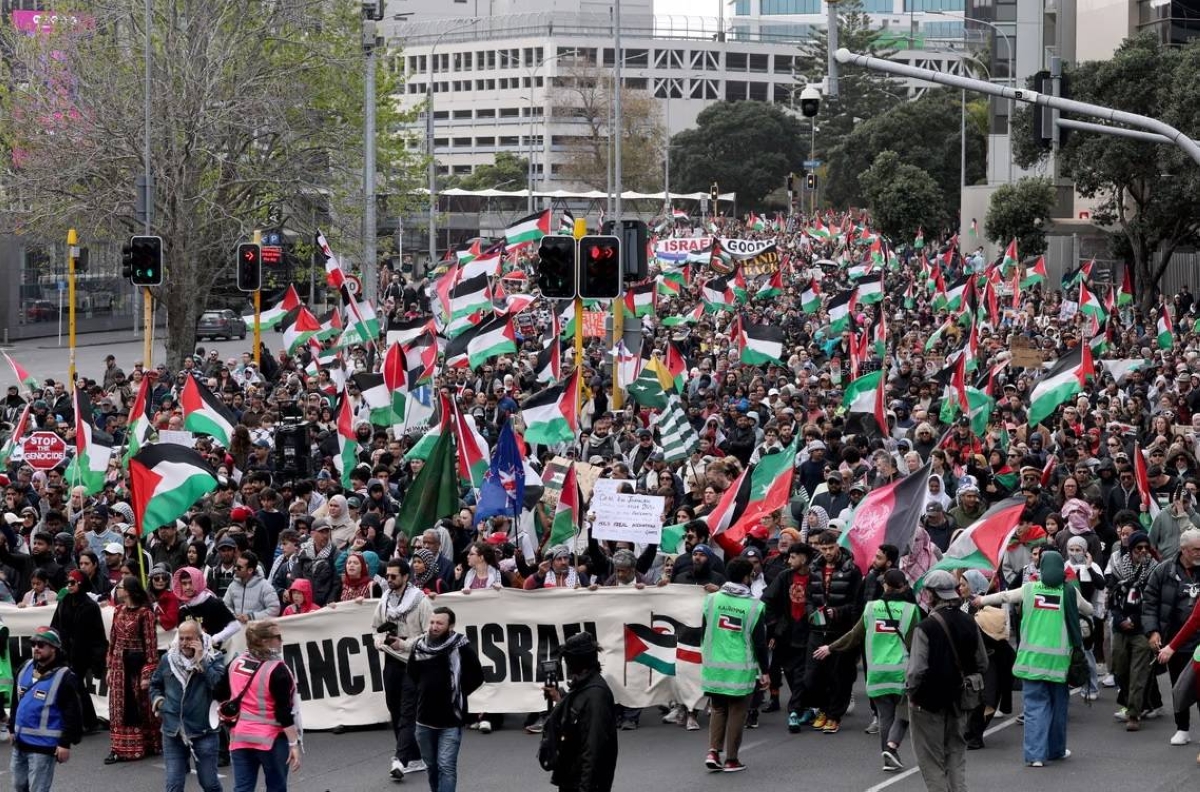
أثار قرار نيوزيلندا عدم الاعتراف بدولة فلسطين استياءً واسعاً بين الأحزاب المعارضة، والمجموعات الفلسطينية، ورئيسة الوزراء السابقة هيلين كلارك، الذين اعتبروا أن هذا القرار يضع البلاد في موقف معاكس للتاريخ ويخالف مواقف حلفائها التقليديين.
جاء ذلك بعد أن أعلنت دول مثل المملكة المتحدة وكندا وأستراليا اعترافها بدولة فلسطين قبل مؤتمر خاص للأمم المتحدة في نيويورك، حيث أصبحت 157 دولة تعترف بدولة فلسطين من أصل 193 دولة عضوة في الأمم المتحدة.
لماذا رفضت نيوزيلندا الاعتراف بالدولة الفلسطينية؟
وكان متوقعاً أن تحذو حكومة الائتلاف النيوزيلندية حذو حلفائها، خصوصاً بعد تصريحات رئيس الوزراء كريستوفر لوكسون ووزراء كبار بأن الاعتراف بالدولة الفلسطينية مسألة وقت وليس شرطاً، لكن وزير الخارجية ونستون بيترز أعلن في خطابه أمام الجمعية العامة للأمم المتحدة أن نيوزيلندا، رغم التزامها بحل الدولتين، لن تعترف بدولة فلسطين في الوقت الحالي بسبب استمرار الحرب، وهيمنة حماس على غزة، وغياب الوضوح بشأن مستقبل الدولة الفلسطينية، محذراً من أن الاعتراف الآن قد يعقد جهود وقف إطلاق النار.
غضب نيوزيلندي من الحكومة
وأثار هذا القرار غضب العديد من النيوزيلنديين، حيث عبر البعض عن استيائهم عبر وسائل التواصل الاجتماعي، فيما قام أعضاء من الكنيسة الأنجليكانية والكاثوليكية بتقييد أنفسهم بالسلاسل أمام مكتب وزيرة الهجرة في أوكلاند احتجاجاً.
ووصفت رئيسة الوزراء السابقة هيلين كلارك القرار بأنه يضع نيوزيلندا «على الجانب الخاطئ من التاريخ»، معتبرة أن مبررات القرار «غير منطقية» في ظل تزايد الاعترافات الدولية بدولة فلسطين.
تصعيد إسرائيلي في غزة
تأتي هذه التطورات في ظل تصعيد إسرائيل هجماتها على مدينة غزة، وسط مخاوف من ضم الضفة الغربية رداً على الاعترافات الدولية.
ووفقاً لتقرير لجنة تحقيق دولية مستقلة تابعة للأمم المتحدة، ارتكبت إسرائيل إبادة جماعية في غزة، حيث قتلت أكثر من 66 ألف شخص، وأصابت أكثر من 160 ألفاً آخرين منذ أحداث السابع من أكتوبر 2023. كما تسببت الإجراءات الإسرائيلية في تدمير واسع ومجاعة بسبب الحصار على المساعدات.
في الأثناء، وصف رئيس الوزراء الإسرائيلي بنيامين نتنياهو الاعتراف بدولة فلسطين بـ«الجنون»، متعهداً بـ«إنهاء المهمة» في غزة.
مظاهرات مؤيدة لفلسطين في أوكلاند
في المقابل، شهدت أوكلاند مظاهرات حاشدة مؤيدة لفلسطين في 13 سبتمبر، ما زاد الضغط على الحكومة النيوزيلندية.
واتهمت منظمة «العدالة لفلسطين» الحكومة بانعدام القيادة وظهورها بموقف «مشوش» دولياً، بينما وصف حزب الخضر القرار بـ«وصمة عار» على سمعة نيوزيلندا كصوت للسلام، وحزب العمال اعتبره «إحراجاً». وقال المتحدث باسم حزب العمال للشؤون الخارجية بيني هيناري إن لوكسون أضاع فرصة الوقوف مع الحق.
ورداً على الانتقادات، أكد لوكسون أن نيوزيلندا ليست مؤيدة لفلسطين أو إسرائيل، بل تدعو للسلام، مشيراً إلى أن الحكومة اتخذت قراراً مستقلاً. وأوضح متحدث باسم مكتب بيترز أن نيوزيلندا لا تشكك في نيات الدول التي اعترفت بفلسطين، لكنها ترى أن الاعتراف الآن قد لا يسهم بشكل إيجابي في تحقيق حل الدولتين.
The decision by New Zealand not to recognize the State of Palestine has sparked widespread discontent among opposition parties, Palestinian groups, and former Prime Minister Helen Clark, who believe that this decision places the country in a position contrary to history and contradicts the positions of its traditional allies.
This came after countries such as the United Kingdom, Canada, and Australia announced their recognition of the State of Palestine ahead of a special United Nations conference in New York, where 157 countries now recognize the State of Palestine out of 193 UN member states.
Why did New Zealand refuse to recognize the Palestinian state?
It was expected that the New Zealand coalition government would follow its allies, especially after statements from Prime Minister Christopher Luxon and senior ministers that recognizing the Palestinian state is a matter of time and not a condition. However, Foreign Minister Winston Peters announced in his speech before the UN General Assembly that New Zealand, despite its commitment to a two-state solution, would not recognize the State of Palestine at this time due to the ongoing war, Hamas's dominance in Gaza, and the lack of clarity regarding the future of the Palestinian state, warning that recognition now could complicate ceasefire efforts.
New Zealand anger towards the government
This decision has angered many New Zealanders, with some expressing their dissatisfaction on social media, while members of the Anglican and Catholic churches chained themselves in front of the Immigration Minister's office in Auckland as a form of protest.
Former Prime Minister Helen Clark described the decision as placing New Zealand "on the wrong side of history," considering the justifications for the decision to be "illogical" in light of the increasing international recognition of the State of Palestine.
Israeli escalation in Gaza
These developments come amid an escalation of Israel's attacks on the city of Gaza, amid fears of annexing the West Bank in response to international recognitions.
According to a report by an independent international commission of inquiry from the United Nations, Israel has committed genocide in Gaza, killing more than 66,000 people and injuring over 160,000 others since the events of October 7, 2023. Israeli actions have also led to widespread destruction and famine due to the blockade on aid.
Meanwhile, Israeli Prime Minister Benjamin Netanyahu described the recognition of the State of Palestine as "madness," vowing to "complete the mission" in Gaza.
Pro-Palestine demonstrations in Auckland
In contrast, Auckland witnessed massive pro-Palestine demonstrations on September 13, increasing pressure on the New Zealand government.
The organization "Justice for Palestine" accused the government of lacking leadership and presenting a "confused" international stance, while the Green Party described the decision as a "stain" on New Zealand's reputation as a voice for peace, and the Labour Party considered it an "embarrassment." Labour's foreign affairs spokesperson, Penny Henare, stated that Luxon missed the opportunity to stand with what is right.
In response to the criticisms, Luxon affirmed that New Zealand is neither pro-Palestine nor pro-Israel, but calls for peace, noting that the government made an independent decision. A spokesperson for Peters clarified that New Zealand does not question the intentions of countries that recognized Palestine, but believes that recognition now may not contribute positively to achieving a two-state solution.