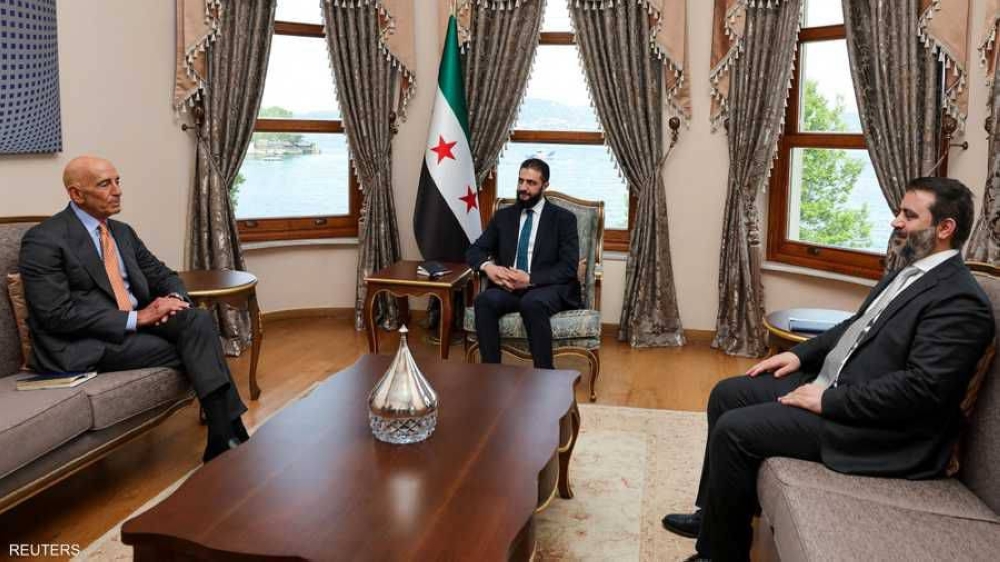
نشرت الرئاسة السورية في الساعات الأولى من صباح اليوم (الأحد)، تفاصيل لقاء الرئيس السوري أحمد الشرع مع المبعوث الأمريكي إلى دمشق توم باراك في إسطنبول، السبت.
وقال بيان الرئاسة إن الشرع ومعه وزير الخارجية السوري أسعد الشيباني، التقيا باراك «في إطار جهود الحكومة السورية الجديدة لإعادة بناء العلاقات الاستراتيجية مع الولايات المتحدة».
وركّز اللقاء على مناقشة عدد من الملفات الحيوية، في مقدّمتها متابعة تنفيذ قرار رفع العقوبات الأمريكية المفروضة على سورية، حيث أكّد الرئيس الشرع خلال الاجتماع أن هذه العقوبات ما تزال تشكّل عبئاً كبيراً على الشعب السوري، وتعيق جهود التعافي الاقتصادي.
وأشار مبعوث واشنطن إلى أن بلاده بدأت بالفعل إجراءات تخفيف العقوبات، تنفيذا لقرار الرئيس الأمريكي دونالد ترمب، وأن «العملية مستمرة حتى الوصول إلى الرفع الكامل والشامل لها».
كما ناقش الطرفان، وفقا للبيان، سبل دعم الاستثمار الأجنبي في سورية، لا سيما في قطاعي الطاقة والبنية التحتية، وأبدى الجانب السوري استعداده لتقديم التسهيلات اللازمة لجذب المستثمرين، والمساهمة في جهود إعادة الإعمار، مع ضمان بيئة مستقرة وآمنة.
وشدد الشرع على «رفض أي محاولات لتقسيم البلاد»، مؤكدا تمسك الحكومة بوحدة وسيادة الأراضي السورية، كما تم التأكيد على «أهمية تطبيق اتفاق فصل القوات لعام 1974 بين سورية وإسرائيل لضمان الاستقرار في الجنوب السوري».
وتطرق الجانبان إلى ملف الأسلحة الكيميائية، حيث «اتفقا على ضرورة التخلص الكامل منها بالتعاون مع المجتمع الدولي، ووفقا للاتفاقات الدولية ذات الصلة».
كذلك ناقش اللقاء «سبل التعاون الأمني المشترك لمواجهة التحديات الإقليمية، بما في ذلك مكافحة الإرهاب وضبط الحدود وتعزيز الأمن والاستقرار في المنطقة».
وأكدا ضرورة «تطبيق اتفاق شامل مع قوات سورية الديمقراطية (قسد)، يضمن عودة سيادة الحكومة السورية على كامل الأراضي السورية، مع بحث آليات دمج هذه القوات ضمن مؤسسات الدولة، بما يسهم في وحدة القرار والسيادة الوطنية».
The Syrian presidency published details of the meeting between Syrian President Ahmad al-Shara and the American envoy to Damascus, Tom Barak, in Istanbul on Saturday, in the early hours of this morning (Sunday).
The presidency's statement indicated that al-Shara, accompanied by Syrian Foreign Minister Asaad al-Shaybani, met with Barak "as part of the efforts of the new Syrian government to rebuild strategic relations with the United States."
The meeting focused on discussing several vital files, foremost among them the follow-up on the implementation of the decision to lift the American sanctions imposed on Syria. President al-Shara emphasized during the meeting that these sanctions continue to impose a significant burden on the Syrian people and hinder economic recovery efforts.
The Washington envoy noted that his country has already begun procedures to ease the sanctions, in implementation of President Donald Trump's decision, and that "the process is ongoing until a complete and comprehensive lifting of them is achieved."
According to the statement, the two sides also discussed ways to support foreign investment in Syria, particularly in the energy and infrastructure sectors. The Syrian side expressed its readiness to provide the necessary facilities to attract investors and contribute to reconstruction efforts, while ensuring a stable and secure environment.
Al-Shara stressed the "rejection of any attempts to divide the country," affirming the government's commitment to the unity and sovereignty of Syrian territory. It was also emphasized the "importance of implementing the 1974 separation of forces agreement between Syria and Israel to ensure stability in southern Syria."
The two sides addressed the issue of chemical weapons, where they "agreed on the necessity of their complete elimination in cooperation with the international community and in accordance with relevant international agreements."
The meeting also discussed "ways to enhance joint security cooperation to face regional challenges, including combating terrorism, controlling borders, and strengthening security and stability in the region."
They affirmed the necessity of "implementing a comprehensive agreement with the Syrian Democratic Forces (SDF) that ensures the return of the Syrian government's sovereignty over all Syrian territory, while discussing mechanisms to integrate these forces within state institutions, contributing to unified decision-making and national sovereignty."