فرض تطبيق «حضوري»، عودة وجبات الغداء إلى المعلمين والمعلمات، بعدما ألزمهم التطبيق بالبقاء سبع ساعات متصلة داخل المدارس، وكشف محمد الزهراني وفهد العتيبي لـ«عكاظ»، أن النظام يُلزمهم بالحضور اليومي الكامل حتى نهاية الدوام، ما أعادهم إلى نظام «القطّات» لشراء وجبات الغداء في المدرسة قبل الانصراف وتصل القطة ٢٠٠ ريال أسبوعياً.وأشار محمد الروقي، إلى أن بعض المعلمين يقطعون مسافات طويلة تصل إلى 300 كيلومتر يومياً ذهاباً وإياباً، الأمر الذي جعلهم يفضلون تناول الغداء في المدرسة قبل المغادرة، لتفادي التوقف على الطريق، خصوصاً أن وصولهم إلى منازلهم لا يكون إلا قبيل العصر.وأوضح آخرون، أن وجبة الغداء غالباً تكون في المدرسة، وأكدوا أن الوضع السابق كان أكثر مرونة، إذ كان المعلمون الذين يقطعون مسافات طويلة يحرصون على تقديم حصصهم مبكراً ليتمكنوا من الانصراف قبل الظهر، غير أن توثيق الحضور عبر «حضوري» قلب الموازين رأساً على عقب، إذ يتصل عملهم بعد وصولهم للمنازل في أعمال التحضير والتصحيح والمتابعة.وتساءل معلمون، عن جدوى إلزامهم بالبقاء في المدارس بعد خروج الطلاب، مؤكدين أن عملهم لا يقتصر على أوقات الدوام الرسمي مثل بقية القطاعات، بل يمتد إلى التحضير والتقويم وإعداد المواد التعليمية، وطالبوا وزارة التعليم بمراجعة القرار، وتصميم نظام أكثر مرونة يراعي طبيعة المرحلة الدراسية التي يعمل بها كل معلم.يُشار إلى أن «عكاظ»، نشرت في تقرير بعنوان: «ساعات حضوري تفجّر غضب المعلمين.. والتعليم ترد»، وأوضحت فيه الوزارة، أن التطبيق يهدف إلى إدارة عمليات الحضور والانصراف رقمياً لجميع منسوبي المدارس من معلمين وكوادر إدارية، بما يعزز التحول الرقمي ويرفع كفاءة بيئة العمل التعليمية، ويعتمد على تقنية تحديد المواقع الجغرافية بحيث لا يتم توثيق الحضور والانصراف إلا من داخل المدرسة.
«حضوري» يفرض «قطّات غداء المعلمين» في المدارس
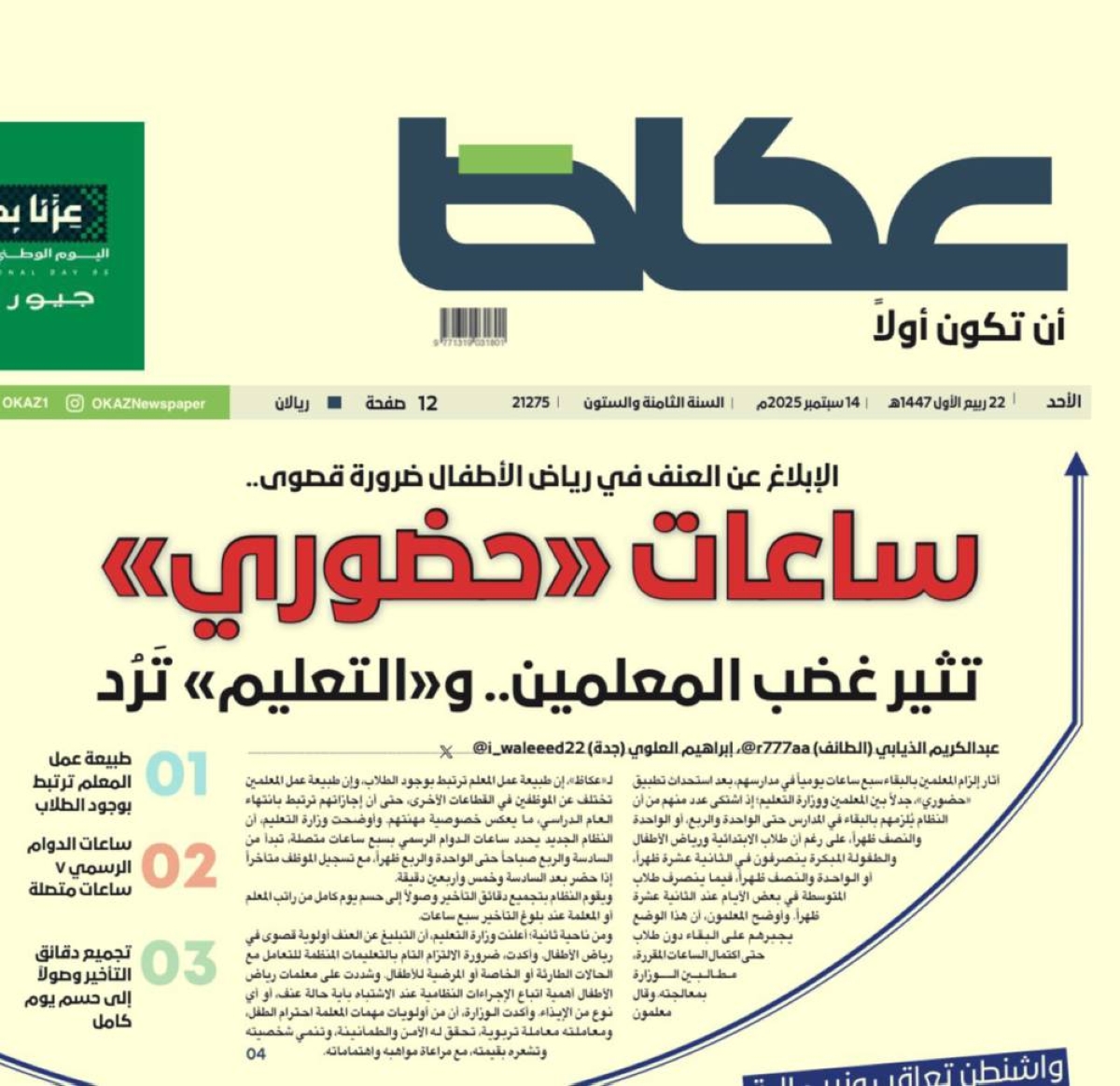


The "Hodouri" application has mandated the return of lunch meals for teachers, as the application requires them to stay for seven consecutive hours inside schools. Mohammed Al-Zahrani and Fahd Al-Otaibi revealed to "Okaz" that the system obliges them to attend daily until the end of the working hours, which has brought them back to the "cat" system for purchasing lunch at school before leaving, with the cost reaching 200 riyals weekly. Mohammed Al-Rouqi pointed out that some teachers travel long distances of up to 300 kilometers daily, round trip, which has made them prefer to have lunch at school before departing, to avoid stopping on the road, especially since they only reach their homes just before the afternoon. Others explained that lunch is often taken at school, and they confirmed that the previous situation was more flexible, as teachers who traveled long distances would ensure they delivered their classes early to be able to leave before noon. However, the documentation of attendance through "Hodouri" has turned the scales upside down, as their work continues after they arrive home with preparation, grading, and follow-up tasks. Teachers questioned the rationale behind requiring them to stay in schools after students leave, emphasizing that their work does not only encompass official working hours like other sectors, but extends to preparation, assessment, and the creation of educational materials. They called on the Ministry of Education to review the decision and design a more flexible system that considers the nature of the educational stage each teacher works in. It is worth noting that "Okaz" published a report titled: "Hodouri Hours Ignite Teachers' Anger... and Education Responds," in which the ministry clarified that the application aims to digitally manage attendance and departure operations for all school staff, including teachers and administrative personnel, enhancing digital transformation and improving the efficiency of the educational work environment, relying on geolocation technology so that attendance and departure can only be documented from within the school.