ارتفعت نسبة التحاق خريجي التعليم العالي بسوق العمل خلال ستة أشهر من التخرج إلى 44.43%، مقارنة بـ13.3% في عام 2019، وفق ما كشفه التقرير السنوي لبرنامج تنمية القدرات البشرية 2024. وبلغت نسبة توظيف خريجي التعليم التقني والمهني 47.81%، ما يعكس تحسناً ملموساً في جاهزية الخريجين لسوق العمل، بفضل إصلاحات هيكلية شملت جودة البرامج، وتكامل المسارات، وربط المخرجات بالاحتياج الوطني.
وأظهر التقرير تجاوز المملكة مستهدف 2025 في اعتماد مؤسسات التعليم العالي، إذ ارتفعت نسبة الاعتماد إلى 71.42% بعد اعتماد 12 مؤسسة و124 برنامجاً أكاديمياً، إضافة إلى توقيع 78 اتفاقية مواءمة بين مخرجات التعليم ومتطلبات سوق العمل.
في التعليم العام، أنجز البرنامج الوطني للتقويم والاعتماد المدرسي التقييم الذاتي لأكثر من 24000 مدرسة، والتقييم الخارجي وتصنيف 19000 مدرسة، ضمن خطة تستهدف رفع جودة التعليم العام وتطبيق المعايير المؤسسية على جميع المراحل.
كما ارتفعت نسبة الالتحاق برياض الأطفال إلى 36.7% في عام 2024، بعد أن كانت 21% فقط في 2019، ضمن مسار تصاعدي يهدف للوصول إلى 90% بحلول 2030. كما ارتفع عدد الطلبة الموهوبين إلى أكثر من 84000 طالب وطالبة.
وحقق قطاع التعليم العالي مستهدف 2024 في عدد الجامعات المصنفة عالمياً وفق مؤشر QS.
وتم ابتعاث أكثر من 12000 طالب لأفضل 200 جامعة في العالم، وأكثر من 2400 طالب لأفضل 30 جامعة عالمية، ضمن إستراتيجية خادم الحرمين الشريفين للابتعاث، التي تنفذ عبر أربعة مسارات: الرواد، إمداد، البحث والتطوير، وواعد.
كما بلغ متوسط عدد أيام التدريب المهني قبل التخرج 91.61 يوم، مقارنة بـ41 يوماً في 2019. كما وفّر البرنامج أكثر من 1.3 مليون فرصة تدريبية ضمن مبادرة «وعد»، فيما تم تدريب أكثر من 20000 متدرب في مجالات الاقتصاد الرقمي، منها الذكاء الاصطناعي والحوسبة السحابية وتطوير الألعاب. وتم تمكين 120 شركة ناشئة جامعية، وتطوير المهارات الريادية لأكثر من 11000 طالب وطالبة، إضافة إلى تخريج 135 شركة جامعية ناشئة من حاضنات أعمال موزعة على مختلف المناطق. كما أطلقت المملكة موسوعة «سعوديبيديا» كمنصة معرفية رقمية تخدم المحتوى الوطني بخمس لغات، شملت أكثر من 26000 مقالة، و47000 مادة مؤرشفة، و12000 مادة بصرية وتفاعلية.
«عكاظ» ترصد تحولات القدرات البشرية:
44 % من الجامعيين و47 % من التقنيين بسوق العمل في 6 أشهر
14 يوليو 2025 - 03:38
|
آخر تحديث 14 يوليو 2025 - 03:38
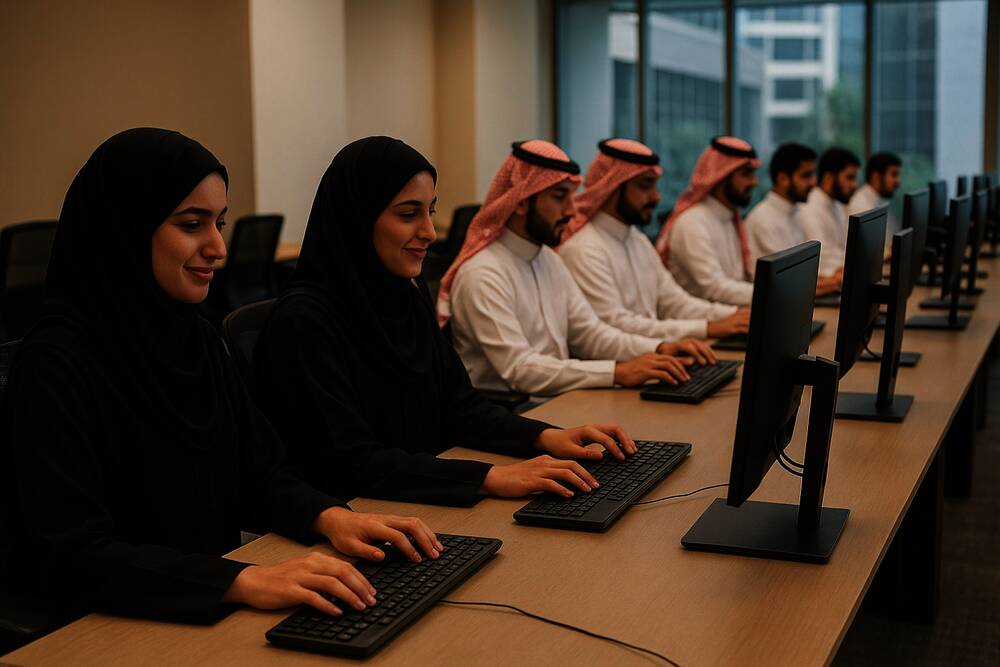
ارتفعت نسبة التحاق خريجي التعليم العالي بسوق العمل.


تابع قناة عكاظ على الواتساب
متعب العواد (حائل) Motabalawwd@
The percentage of higher education graduates joining the labor market increased to 44.43% within six months of graduation, compared to 13.3% in 2019, according to the annual report of the Human Capacity Development Program 2024. The employment rate for technical and vocational education graduates reached 47.81%, reflecting a significant improvement in graduates' readiness for the labor market, thanks to structural reforms that included the quality of programs, integration of pathways, and linking outputs to national needs.
The report showed that the Kingdom has surpassed the 2025 target for the accreditation of higher education institutions, as the accreditation rate rose to 71.42% after accrediting 12 institutions and 124 academic programs, in addition to signing 78 agreements to align educational outputs with labor market requirements.
In general education, the National Program for School Evaluation and Accreditation completed the self-evaluation of more than 24,000 schools, as well as external evaluation and classification of 19,000 schools, as part of a plan aimed at raising the quality of general education and applying institutional standards across all stages.
The enrollment rate in kindergartens also increased to 36.7% in 2024, up from only 21% in 2019, as part of an upward trajectory aiming to reach 90% by 2030. The number of gifted students also rose to more than 84,000 students.
The higher education sector achieved the 2024 target for the number of universities ranked globally according to the QS Index.
More than 12,000 students were sent to the top 200 universities in the world, and over 2,400 students to the top 30 global universities, as part of the Custodian of the Two Holy Mosques Scholarship Strategy, which is implemented through four pathways: Pioneers, Supply, Research and Development, and Promising.
The average number of days of vocational training before graduation reached 91.61 days, compared to 41 days in 2019. The program also provided more than 1.3 million training opportunities under the "Promise" initiative, while over 20,000 trainees were trained in digital economy fields, including artificial intelligence, cloud computing, and game development. Additionally, 120 university startup companies were empowered, and entrepreneurial skills were developed for more than 11,000 students, along with the graduation of 135 university startup companies from business incubators distributed across various regions. The Kingdom also launched the "SaudiPedia" encyclopedia as a digital knowledge platform serving national content in five languages, which included more than 26,000 articles, 47,000 archived materials, and 12,000 visual and interactive materials.
The report showed that the Kingdom has surpassed the 2025 target for the accreditation of higher education institutions, as the accreditation rate rose to 71.42% after accrediting 12 institutions and 124 academic programs, in addition to signing 78 agreements to align educational outputs with labor market requirements.
In general education, the National Program for School Evaluation and Accreditation completed the self-evaluation of more than 24,000 schools, as well as external evaluation and classification of 19,000 schools, as part of a plan aimed at raising the quality of general education and applying institutional standards across all stages.
The enrollment rate in kindergartens also increased to 36.7% in 2024, up from only 21% in 2019, as part of an upward trajectory aiming to reach 90% by 2030. The number of gifted students also rose to more than 84,000 students.
The higher education sector achieved the 2024 target for the number of universities ranked globally according to the QS Index.
More than 12,000 students were sent to the top 200 universities in the world, and over 2,400 students to the top 30 global universities, as part of the Custodian of the Two Holy Mosques Scholarship Strategy, which is implemented through four pathways: Pioneers, Supply, Research and Development, and Promising.
The average number of days of vocational training before graduation reached 91.61 days, compared to 41 days in 2019. The program also provided more than 1.3 million training opportunities under the "Promise" initiative, while over 20,000 trainees were trained in digital economy fields, including artificial intelligence, cloud computing, and game development. Additionally, 120 university startup companies were empowered, and entrepreneurial skills were developed for more than 11,000 students, along with the graduation of 135 university startup companies from business incubators distributed across various regions. The Kingdom also launched the "SaudiPedia" encyclopedia as a digital knowledge platform serving national content in five languages, which included more than 26,000 articles, 47,000 archived materials, and 12,000 visual and interactive materials.