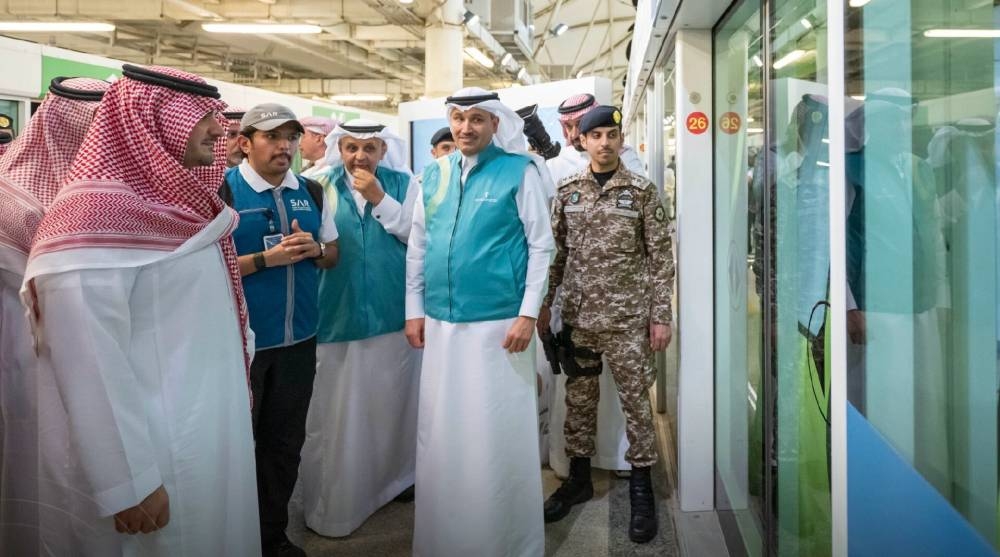
وقف وزير الداخلية رئيس لجنة الحج العليا الأمير عبدالعزيز بن سعود بن نايف بن عبدالعزيز، أمس، على جاهزية قطار المشاعر المقدسة لنقل حجاج بيت الله الحرام، وذلك خلال متابعته انطلاق أعمال تصعيد ضيوف الرحمن إلى مشعر عرفات عبر القطار ضمن الخطط التشغيلية لموسم حج 1446هـ.
واستمع خلال تفقده قطار المشاعر إلى شرح موجز من وزير النقل والخدمات اللوجستية رئيس مجلس إدارة الخطوط الحديدية السعودية (سار) المهندس صالح الجاسر، عن آليات التفويج، وجدولة الرحلات، وذلك في تكامل تام مع الجهات الأمنية والتنظيمية ذات العلاقة، بما يضمن انسيابية التشغيل وسلامة ضيوف الرحمن.
واستقل وزير الداخلية إحدى رحلات قطار المشاعر المقدسة إلى محطة «منى 3 (الجمرات)»، إذ اطلع على جاهزية المحطة لاستقبال ضيوف الرحمن، واطلع على التجهيزات القائمة فيها، والتي ترتبط مباشرة بـ«الدور الرابع من جسر الجمرات»، بما يسهم في تعزيز انسيابية الحركة والتنقل الآمن للحجاج أثناء أدائهم مناسك رمي الجمرات.
ويعتمد القطار على خمس حركات تشغيلية مرنة، صُممت بما يتماشى مع مراحل أداء المناسك، ويعمل بسرعة تصل إلى 80 كيلو مترًا في الساعة، عبر أسطول مكوّن من 17 قطارًا، وتبلغ سعة القطار الواحد 3000 راكب، مما يمنح المنظومة قدرة نقل جماعية تصل إلى 72 ألف راكب في الساعة الواحدة.
وتفقد خلال الزيارة قوات أمن المنشآت التي تعمل على تنظيم حركة المشاة وإدارة الحشود بالمناطق الخارجية المحيطة بمحطات قطار المشاعر المقدسة، واستمع لشرح موجز من قائد قوات أمن المنشآت المكلف اللواء المهندس سعد بن عبدالعزيز المغيصيب عن مراحل الخطط التي تعمل على تنفيذها القوات ودورها في مساندة ودعم قوات أمن الحج.
وفي سياق متصل، زار الأمير عبدالعزيز بن سعود موقع مشروع تظليل جبل الرحمة بمشعر عرفات واطلع على نماذج من المظلات المبتكرة التي ستسهم في تخفيف الإجهاد الحراري، وتقليل تأثير ارتفاع درجات الحرارة على صحة الحجاج وراحتهم، حيث صُممت ونُفذت وفق أعلى المعايير الفنية، واستخدم فيها مواد تسهم في انعكاس درجة الشمس بنسبة تتجاوز 47%.
The Minister of Interior and Chairman of the Supreme Hajj Committee, Prince Abdulaziz bin Saud bin Naif bin Abdulaziz, yesterday inspected the readiness of the Mashair Train to transport the pilgrims of the Sacred House of God. This was during his follow-up on the commencement of the operations to elevate the guests of الرحمن to the Arafat site via the train as part of the operational plans for the Hajj season of 1446 AH.
During his inspection of the Mashair Train, he listened to a brief explanation from the Minister of Transport and Logistics Services and Chairman of the Board of Directors of the Saudi Railways (SAR), Engineer Saleh Al-Jasser, about the crowd management mechanisms and the scheduling of trips, in complete integration with the relevant security and organizational authorities, ensuring smooth operations and the safety of the guests of الرحمن.
The Minister of Interior took one of the Mashair Train trips to the "Mina 3 (Jamarat)" station, where he reviewed the station's readiness to receive the guests of الرحمن and examined the existing preparations, which are directly linked to the "fourth floor of the Jamarat Bridge," contributing to enhancing the smooth movement and safe transportation of pilgrims during their stoning rituals.
The train relies on five flexible operational movements designed to align with the stages of performing the rituals, operating at speeds of up to 80 kilometers per hour, with a fleet consisting of 17 trains. Each train has a capacity of 3,000 passengers, allowing the system to achieve a collective transport capacity of up to 72,000 passengers per hour.
During the visit, he inspected the security forces responsible for organizing pedestrian movement and managing crowds in the external areas surrounding the Mashair Train stations. He listened to a brief explanation from the acting commander of the security forces, Major General Engineer Saad bin Abdulaziz Al-Mughaiseeb, about the phases of the plans being implemented by the forces and their role in supporting and assisting the Hajj security forces.
In a related context, Prince Abdulaziz bin Saud visited the site of the shading project at Mount Rahmah in Arafat and reviewed models of the innovative canopies that will help reduce heat stress and minimize the impact of high temperatures on the health and comfort of the pilgrims. These canopies were designed and implemented according to the highest technical standards, using materials that reflect sunlight by more than 47%.