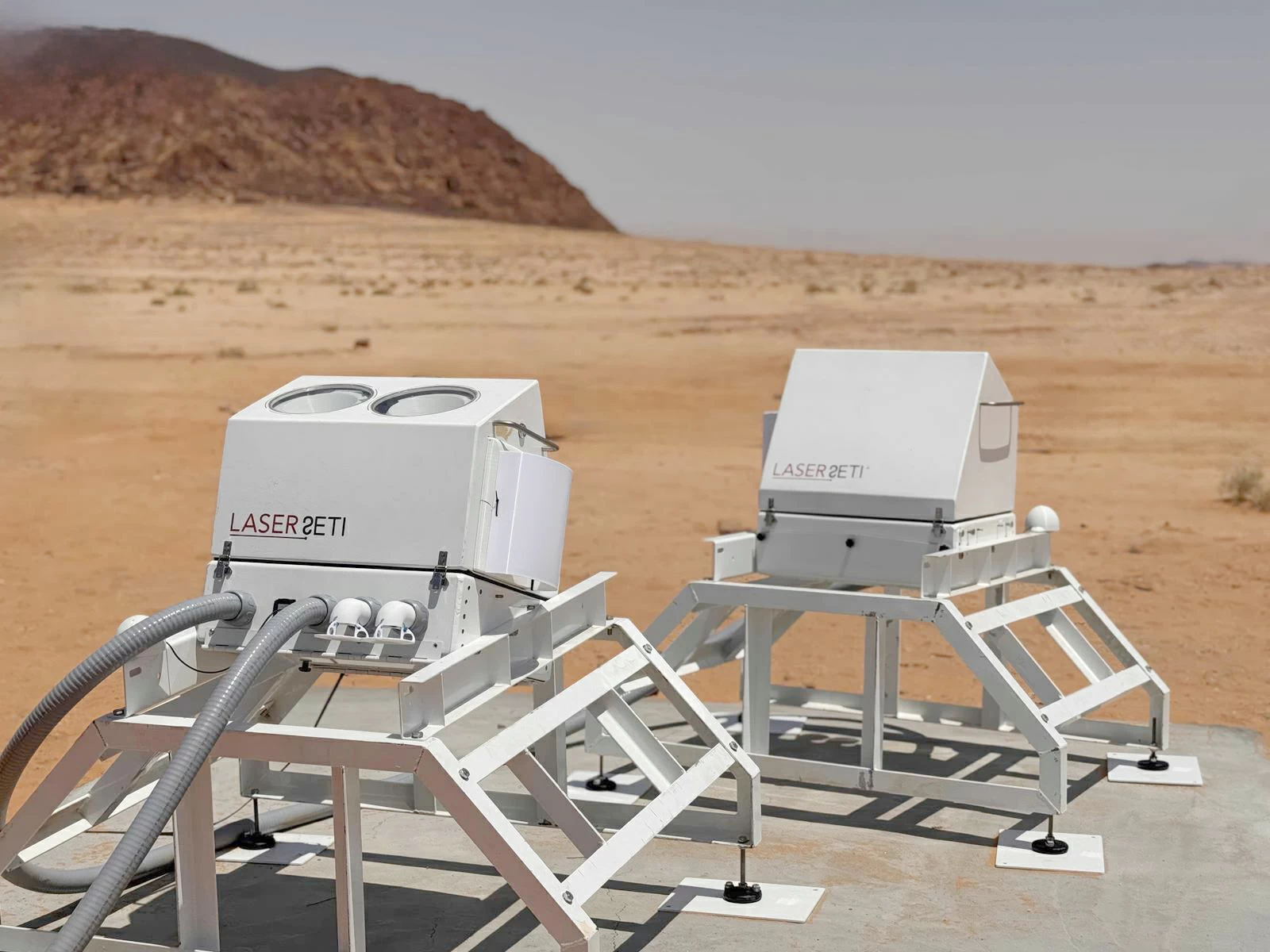
أعلنت الهيئة الملكية لمحافظة العلا، نجاح تركيب وتشغيل محطتين لمشروع «LaserSETI» العالمي في منارة العلا، لتعزيز حضور المحافظة ضمن شبكات الرصد الفلكي الدولية، والاستفادة من مقوماتها الطبيعية في دعم البحث العلمي، بما يتماشى مع مستهدفات رؤية العلا ورؤية السعودية 2030.
ويعتمد المشروع على شبكة دولية ترصد السماء باستمرار لاكتشاف الظواهر الضوئية العابرة، بما فيها الومضات والتغيرات النادرة والإشارات الليزرية المحتملة، وتتيح مقارنة البيانات المجمعة من مواقع متعددة لدعم التحليل العلمي ودراسة الظواهر التي يصعب رصدها من موقع واحد.
وبتشغيل المحطتين، أصبحت العلا أول موقع في آسيا وخامس مرصد تشغيلي ضمن الشبكة، إلى جانب مواقع في كاليفورنيا وهاواي وأريزونا وبورتوريكو.
واجتازت المحطتان مرحلة التشغيل الأولي في 19 أغسطس 2026، وتعملان بكامل طاقتهما لجمع بيانات الرصد بصورة مستمرة، وتحليلها بالتعاون مع فريق المشروع، دعماً للدراسات العلمية والبحوث المستقبلية.
وتقع المنارة شمال العلا، حيث يتميز موقعها بسماء مظلمة ومستويات منخفضة من التلوث الضوئي، مما يوفر ظروفاً ملائمة للرصد الفلكي.
The Royal Commission for AlUla Governorate announced the successful installation and operation of two stations for the global "LaserSETI" project at the AlUla Lighthouse, to enhance the governorate's presence within international astronomical observation networks and to utilize its natural resources in supporting scientific research, in line with the objectives of the AlUla Vision and Saudi Vision 2030.
The project relies on an international network that continuously monitors the sky to discover transient light phenomena, including flashes, rare changes, and potential laser signals. It allows for the comparison of data collected from multiple sites to support scientific analysis and the study of phenomena that are difficult to observe from a single location.
With the operation of the two stations, AlUla has become the first site in Asia and the fifth operational observatory within the network, alongside sites in California, Hawaii, Arizona, and Puerto Rico.
The two stations passed the initial operational phase on August 19, 2026, and are working at full capacity to continuously collect observation data and analyze it in collaboration with the project team, supporting scientific studies and future research.
The lighthouse is located north of AlUla, where its site is characterized by dark skies and low levels of light pollution, providing suitable conditions for astronomical observation.