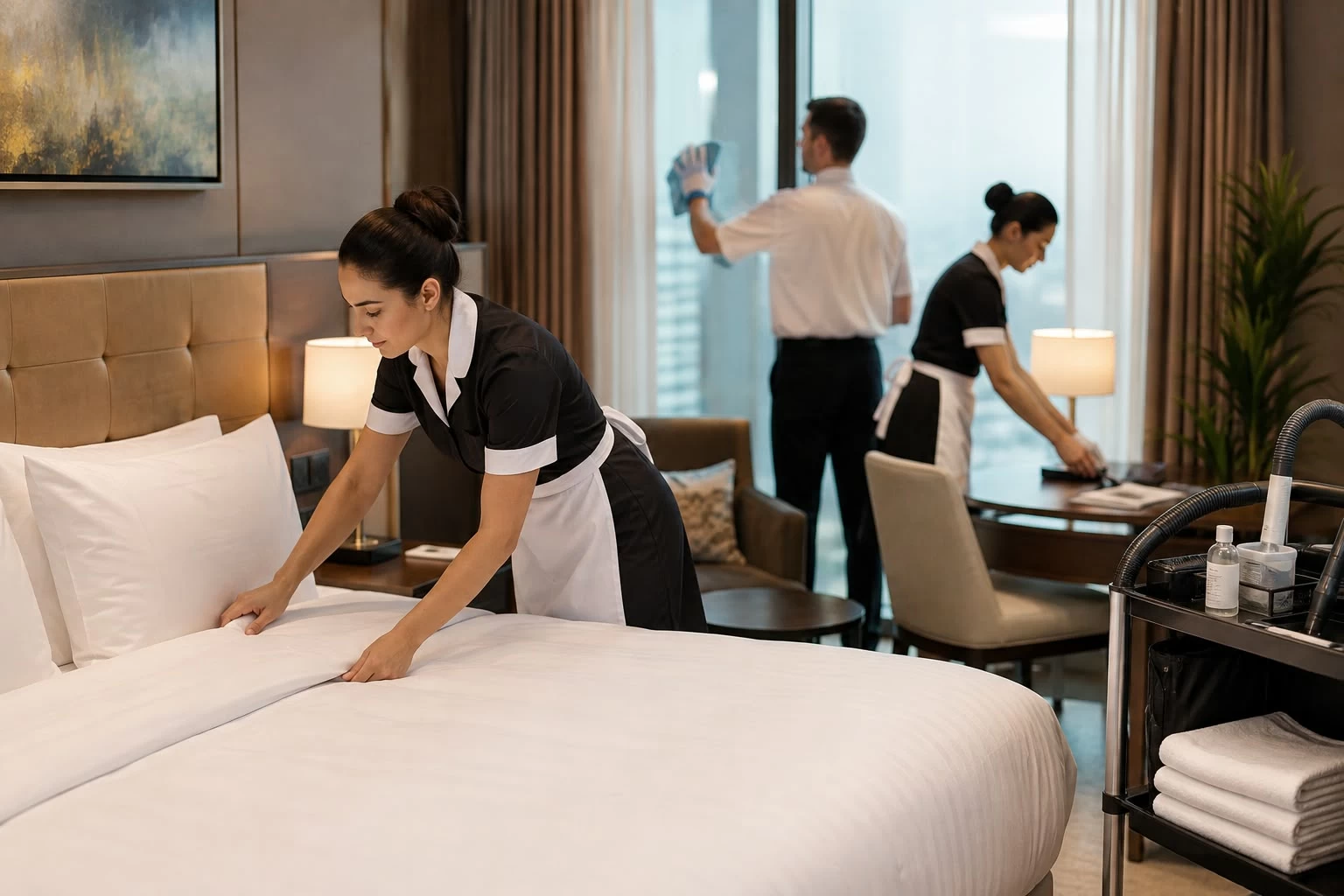
تتجه وزارة السياحة إلى إلزام مرافق الضيافة السياحية بحد أدنى من أعداد العاملين يرتبط بعدد الغرف وتصنيف المنشأة، ضمن مشروع «تعليمات الحد الأدنى لعدد العاملين في مرافق الضيافة السياحية»، الذي طرحته للاستطلاع قبل أيام لضمان كفاية القوى العاملة والارتقاء بجودة الخدمات وكفاءة التشغيل، بالتزامن مع القفزات الكبيرة التي تشهدها السياحة السعودية.
وحدد الاستطلاع للفنادق والفلل الفندقية والشقق الفندقية والمنتجعات المصنفة خمس نجوم فاخرة 3 عاملين لكل غرفة، و4 عاملين لكل 5 غرف في فئة الخمس نجوم، و3 عاملين لكل 5 غرف للأربع نجوم، وعاملين لكل 5 غرف للثلاث نجوم، وعاملاً لكل 5 غرف لفئة النجمتين، فيما يكون الحد الأدنى عاملاً واحداً لكل 10 غرف للمنشآت ذات النجمة الواحدة وغير المصنفة.
وشملت التعليمات النزل بواقع عامل لكل 10 غرف، والفنادق التراثية بواقع 3 عاملين لكل 5 غرف، فيما حددت للشقق المخدومة من الدرجة الأولى عاملاً لكل 5 غرف، وللفئة الاقتصادية عاملاً لكل 8 غرف، وهي النسب ذاتها المقررة لبيوت العطلات بحسب فئتيها الأولى والاقتصادية.
وألزمت التعليمات مرفق الضيافة بالمحافظة على الحد الأدنى لعدد العاملين بشكل مستمر طوال السنة الميلادية، مع منح المنشآت المرخصة قبل سريان التعليمات مهلة مواءمة لا تتجاوز 180 يوماً، فيما تُمنح المنشأة التي تنتقل إلى تصنيف أعلى مهلة لا تتجاوز 90 يوماً لاستكمال العدد المطلوب من العاملين.
كما تعتمد وزارة السياحة على بيانات وزارة الموارد البشرية والتنمية الاجتماعية للتحقق من أعداد العاملين، على أن يكون احتسابهم وفق المسجلين في ملف المنشأة سواء بصورة مباشرة أو عبر شركات التشغيل المرتبطة بها في منصة «أجير»، مع إلزام المرافق بتحديث بيانات العاملين خلال مدة لا تتجاوز 3 أشهر عند حدوث أي تغيير.
وبحسب المشروع، يبدأ قياس الالتزام وإيقاع العقوبات على المخالفين اعتباراً من 1 يناير 2027، فيما تخضع المخالفات لنظام السياحة ولوائحه التنفيذية.
وتأتي هذه التنظيمات في وقت تسجل فيه السياحة السعودية مستويات غير مسبوقة؛ إذ بلغ عدد السياح المحليين والوافدين خلال عام 2025 نحو 123 مليون سائح، بنمو يقارب 6% عن عام 2024، فيما سجل إجمالي الإنفاق السياحي رقماً قياسياً بلغ نحو 304 مليارات ريال، وفق التقرير الإحصائي السنوي لوزارة السياحة.
وتعكس القفزة السياحية المتسارعة الحاجة إلى رفع جاهزية مرافق الضيافة وزيادة كفاءة القوى العاملة فيها، خصوصاً مع اتساع حجم الطلب على الفنادق والشقق المخدومة والمنتجعات ومختلف أنماط الإيواء السياحي في المملكة.
The Ministry of Tourism is moving towards mandating tourism hospitality facilities to maintain a minimum number of employees linked to the number of rooms and the classification of the establishment, as part of the project "Minimum Worker Requirements in Tourism Hospitality Facilities," which was recently proposed for consultation to ensure workforce adequacy and enhance service quality and operational efficiency, coinciding with the significant leaps being witnessed in Saudi tourism.
The survey specified that for hotels, hotel villas, serviced apartments, and classified five-star luxury resorts, there should be 3 employees for each room, and 4 employees for every 5 rooms in the five-star category, 3 employees for every 5 rooms in the four-star category, 2 employees for every 5 rooms in the three-star category, and 1 employee for every 5 rooms in the two-star category, while the minimum is set at 1 employee for every 10 rooms for one-star establishments and unclassified facilities.
The instructions included hostels with 1 employee for every 10 rooms, and heritage hotels with 3 employees for every 5 rooms, while for first-class serviced apartments, it is set at 1 employee for every 5 rooms, and for the economic category, 1 employee for every 8 rooms, which are the same ratios established for holiday homes according to their first and economic categories.
The instructions require the hospitality facility to maintain the minimum number of employees continuously throughout the calendar year, granting licensed establishments before the implementation of the instructions a grace period not exceeding 180 days, while establishments moving to a higher classification are granted a period not exceeding 90 days to complete the required number of employees.
The Ministry of Tourism also relies on data from the Ministry of Human Resources and Social Development to verify the number of employees, ensuring that they are counted according to those registered in the establishment's file, either directly or through the operating companies linked to it on the "Ajeer" platform, with a requirement for facilities to update employee data within a period not exceeding 3 months upon any change.
According to the project, compliance measurement and the imposition of penalties on violators will begin on January 1, 2027, while violations will be subject to the tourism system and its executive regulations.
These regulations come at a time when Saudi tourism is recording unprecedented levels; the number of local and incoming tourists in 2025 is expected to reach about 123 million, with a growth of nearly 6% compared to 2024, while total tourism spending recorded a record figure of approximately 304 billion riyals, according to the annual statistical report from the Ministry of Tourism.
The rapid tourism leap reflects the need to enhance the readiness of hospitality facilities and increase workforce efficiency, especially with the growing demand for hotels, serviced apartments, resorts, and various types of tourist accommodation in the Kingdom.