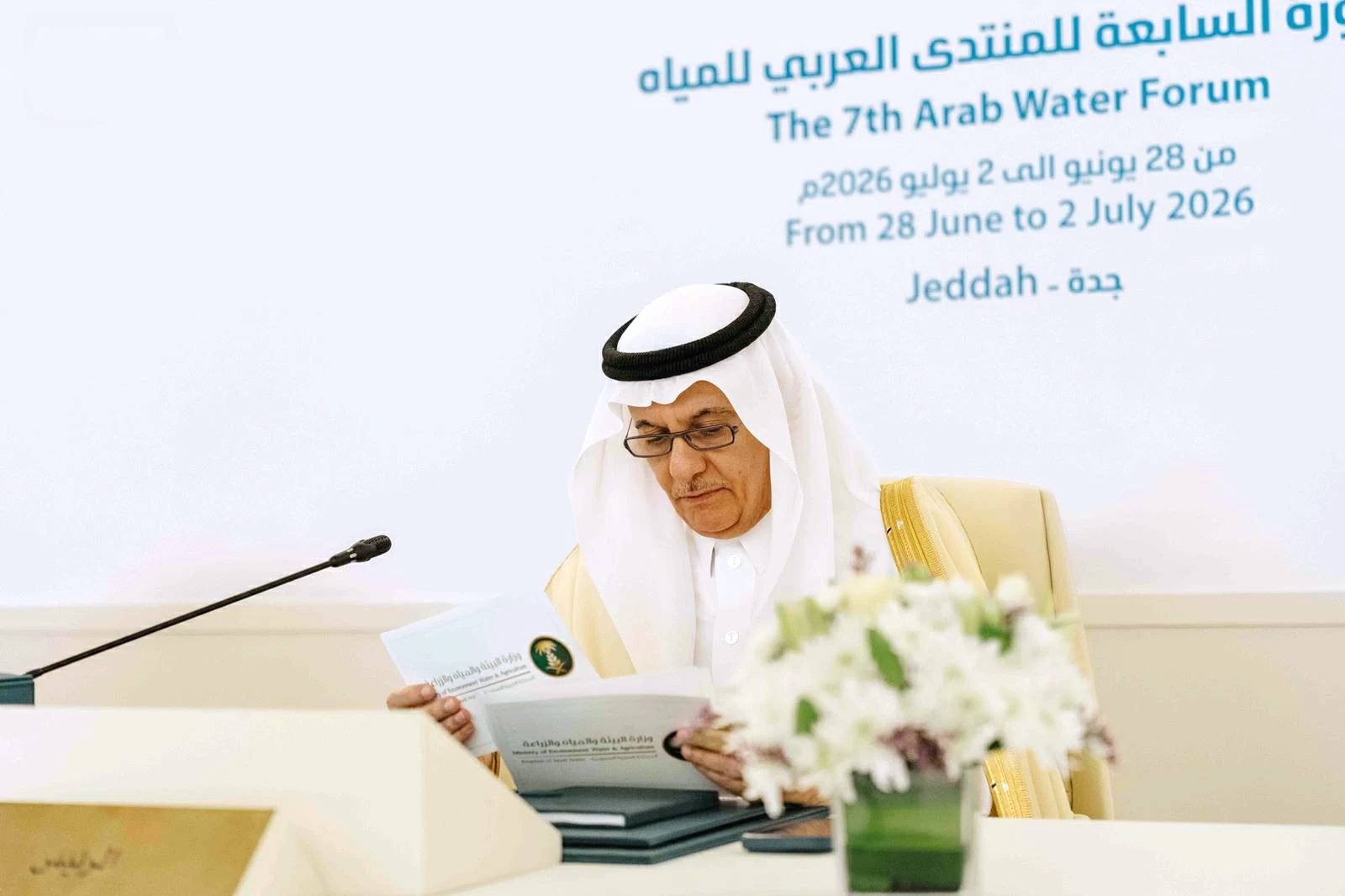
أكد وزير البيئة والمياه والزراعة المهندس عبدالرحمن الفضلي، أن التحديات المتزايدة لتحقيق الأمن المائي عالمياً تتطلب الانتقال من الحوار إلى التنفيذ، ومن الالتزامات العامة إلى نتائج عملية قابلة للقياس، مشدداً على أهمية تعزيز التعاون والشراكات الدولية في الإدارة المتكاملة للموارد المائية، بما يدعم مخرجات المنتدى العالمي الـ11 للمياه، الذي تستضيفه الرياض في مارس 2027.
جاء ذلك في كلمته، خلال الاجتماع التشاوري الثاني لأصحاب المصلحة لمنتدى أسبوع المياه السعودي المنعقد في جدة.
واتفق وزراء المياه العرب على صياغة خارطة طريق لتعزيز العمل العربي المشترك، من أجل مستقبل مائي آمن في المنطقة، وذلك من خلال استعراض أبرز التحديات والفرص، وأولويات العمل العربي في مجالات الموارد المائية غير التقليدية، والحلول القائمة على الطبيعة، والتدريب، والتوأمة المؤسسية، وآليات التمويل، والحوكمة الشاملة.
جاء ذلك، خلال الجلسة الوزارية رفيعة المستوى، التي رأسها وزير البيئة والمياه والزراعة، أمس، بمشاركة وزراء المياه وممثليهم من 11 دولة عربية، إضافة إلى عددٍ من الشركاء الإقليميين والدوليين، تحت عنوان: «الحلول المبتكرة والتمويل والحوكمة الشاملة من أجل مستقبل مائي آمن في المنطقة العربية»، وذلك ضمن أعمال المنتدى العربي السابع للمياه، إحدى الفعاليات الرئيسة لأسبوع المياه السعودي الأول. وناقشت الجلسة الوزارية التحديات المتزايدة التي تواجه الدول العربية في إدارة مواردها المائية، في ظل التغيرات المناخية، وتزايد الطلب على المياه، بسبب النمو السكاني والتوسع العمراني، إضافة إلى الضغوط المتزايدة لتوفير الغذاء والطاقة، وحماية البيئة، مشيرة إلى ضرورة الانتقال من الحلول المجزأة والإصلاحات الوطنية المنفردة، إلى استثمارات متكاملة، وشراكات إقليمية قادرة على تسريع الحلول المبتكرة، وتأمين التمويل المناسب، وتعزيز الحوكمة الشاملة، بما يقود إلى مستقبل مائي آمن وعادل في المنطقة العربية.
واستعرض الوزراء في الجلسة، أبرز المشاريع والمبادرات الرائدة في قطاع المياه والقطاعات المتصلة بها، مثل الطاقة، والزراعة، والبيئة، بما في ذلك الموارد المائية غير التقليدية، والحلول الرقمية والابتكار التقني، والإصلاحات المؤسسية والتشريعية، وكذلك أبرز احتياجات الاستثمار والتمويل على المستوى الوطني والإقليمي، بما في ذلك الشراكة بين القطاعين العام والخاص، والتمويل المدمج، والأدوات المالية المبتكرة، وقد شهدت الجلسة الوزارية مداخلات قصيرة من قِبل الشركاء الإقليميين والدوليين، حول آفاق التعاون والاستثمار الإقليمي لإيجاد حلول مبتكرة لتحديات المياه في المنطقة العربية.
إضافة إلى استكشاف مسارات عملية للتعاون العربي المشترك، من خلال إقرار مشروعات وتجارب مشتركة، وآليات لتبادل المعرفة والبيانات، وبرامج مشتركة لبناء القدرات والتوأمة بين المرافق والهيئات المعنية.
The Minister of Environment, Water, and Agriculture, Engineer Abdulrahman Al-Fadli, confirmed that the increasing challenges to achieve global water security require a shift from dialogue to implementation, and from general commitments to measurable practical results. He emphasized the importance of enhancing cooperation and international partnerships in the integrated management of water resources, which supports the outcomes of the 11th World Water Forum, to be hosted in Riyadh in March 2027.
This was stated in his speech during the second consultative meeting of stakeholders for the Saudi Water Week Forum held in Jeddah.
The Arab water ministers agreed to formulate a roadmap to enhance joint Arab action for a secure water future in the region, by reviewing the main challenges and opportunities, and the priorities of Arab work in the fields of unconventional water resources, nature-based solutions, training, institutional twinning, financing mechanisms, and comprehensive governance.
This took place during the high-level ministerial session, chaired by the Minister of Environment, Water, and Agriculture yesterday, with the participation of water ministers and their representatives from 11 Arab countries, in addition to several regional and international partners, under the title: "Innovative Solutions, Financing, and Comprehensive Governance for a Secure Water Future in the Arab Region," as part of the 7th Arab Water Forum, one of the main events of the first Saudi Water Week. The ministerial session discussed the increasing challenges facing Arab countries in managing their water resources in light of climate change, the growing demand for water due to population growth and urban expansion, as well as the increasing pressures to provide food and energy, and protect the environment. It highlighted the necessity to transition from fragmented solutions and isolated national reforms to integrated investments and regional partnerships capable of accelerating innovative solutions, securing appropriate financing, and enhancing comprehensive governance, leading to a secure and equitable water future in the Arab region.
The ministers reviewed during the session the most prominent projects and pioneering initiatives in the water sector and related sectors, such as energy, agriculture, and the environment, including unconventional water resources, digital solutions and technological innovation, institutional and legislative reforms, as well as the main investment and financing needs at the national and regional levels, including public-private partnerships, blended financing, and innovative financial instruments. The ministerial session witnessed brief interventions from regional and international partners regarding the prospects for regional cooperation and investment to find innovative solutions to water challenges in the Arab region.
Additionally, pathways for practical Arab joint cooperation were explored through the approval of joint projects and experiences, mechanisms for knowledge and data exchange, and joint programs for capacity building and twinning between relevant facilities and authorities.