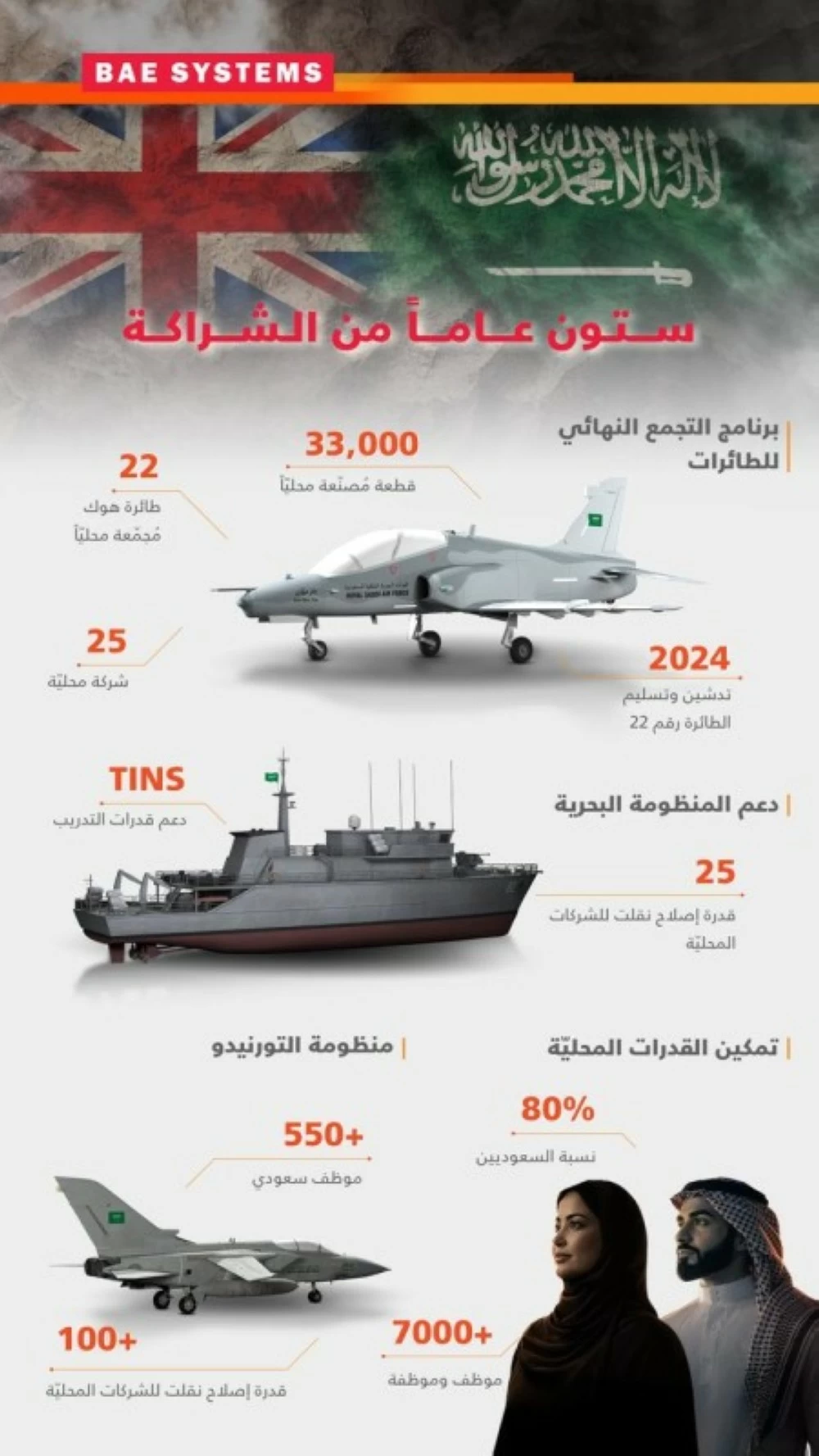
تواصل شركة بي أيه إي سيستمز، بالتعاون مع البرنامج السعودي البريطاني للتعاون الدفاعي، وبالشراكة الوثيقة مع القوات الجوية الملكية السعودية والقوات البحرية الملكية السعودية، وبإشراف الهيئة العامة للصناعات العسكرية، تحقيق تقدم ملموس في دعم منظومة وزارة الدفاع، من خلال تطوير القدرات العسكرية وتوطين الصناعات الدفاعية في المملكة العربية السعودية.
وتعكس هذه الشراكة الإستراتيجية التزام الأطراف كافة ببناء قاعدة صناعات دفاعية مستدامة تسهم في تعزيز الجاهزية العملياتية.
يُعتبر برنامج التجميع النهائي للطائرات في المملكة من المبادرات الإستراتيجية البارزة ضمن هذا التعاون. وقد انطلق البرنامج عام 2017 في منشأة البرنامج السعودي البريطاني للتعاون الدفاعي بقاعدة الملك عبدالعزيز الجوية بالقطاع الشرقي، حيث دشن صاحب السمو الملكي الأمير محمد بن سلمان ولي العهد رئيس مجلس الوزراء أول طائرة نفاثة متقدمة من طراز «هوك» تم تجميعها وتصنيع عدد من أجزائها محلياً وبالكامل بأيادٍ وطنية. وتم تسليم الطائرة رقم 22 خلال معرض الدفاع العالمي السابق، حيث رعى صاحب السمو الملكي الأمير خالد بن سلمان بن عبدالعزيز، وزير الدفاع، حفل التسليم حيث تم تسليط الضوء على إنجازات هذا البرنامج وأهميته في تعزيز قدرات التصنيع الدفاعي في المملكة العربية السعودية.
ساهم البرنامج أيضاً في تصنيع 33,000 قطعة محلياً من المكونات الداخلية والخارجية للطائرة، التي صُنعت بمشاركة 25 شركة سعودية ضمن سلسلة الإمداد المحلية، مما يبرز الدور الحيوي لشركة بي أيه إي سيستمز بالتعاون مع البرنامج السعودي البريطاني للتعاون الدفاعي في تمكين الكفاءات الوطنية ونقل الخبرات التقنية. مما يعكس التقدم الكبير في مسار بناء القدرات الوطنية. وقد ساهم البرنامج بشكل فعّال في نقل وتوطين التقنيات والقدرات التصنيعية، وإتاحة فرص واسعة لتوظيف وتدريب الكفاءات الوطنية، دعماً لجهود تحقيق مستهدفات رؤية 2030. وإلى جانب الأثر الصناعي والبشري، أحدث البرنامج أثراً إستراتيجياً تمثل في إنشاء مراجع تشريعية كاملة لتنفيذ مشاريع تجميع الطائرات محلياً والانتهاء من التشريعات اللازمة لقبولها والمصادقة على طيرانها، مما يضع أساساً تنظيمياً راسخاً لمشاريع المستقبل.
وحسب بيانات الهيئة العامة للصناعات العسكرية فإن قطاع الصناعات العسكرية في المملكة يشهد توسعاً ملحوظاً في فرص التوظيف وبناء القدرات، ويضم حالياً أكثر من 34 ألف موظف مباشر يعملون في منظومة الصناعات العسكرية، كما يتميز القطاع بنسبة سعودة للموظفين المباشرين تقارب 63%، مما يعكس حجم التحول الذي يشهده القطاع على مستوى الكفاءات الوطنية. في هذا الإطار، تمثل شركة بي أيه إي سيستمز نموذجاً عملياً لهذا التحول، حيث يعمل لديها في المملكة أكثر من 7,000 موظف وموظفة، يشكل السعوديون نسبة 80%. وقد أسهمت الشركة، من خلال تعاونها مع البرنامج السعودي البريطاني للتعاون الدفاعي، في نقل الخبرات الفنية والهندسية، بما يدعم الاستدامة التشغيلية وتمكين الكوادر الوطنية في مجالات التجميع، والفحص، وضمان الجودة، والاختبارات الجوية.
ويجسد هذا التعاون أيضاً نموذجاً ناجحاً للشراكة الدولية في تطوير هذا القطاع، مستنداً إلى الخبرة السابقة ضمن برنامج منظومة طائرات «التورنيدو»، الذي أسهم في إدخال أكثر من 100 قدرة إصلاح إلى الشركات المحلية وتمكين أكثر من 550 موظف سعودياً.
تأسيس مرافق صيانة داخل القواعد بالمملكة لصيانة أكثر من 400 قطعة
وقد اكتسب المهندسون والفنيون السعوديون، بالعمل جنباً إلى جنب مع مهندسي الشركة، خبرة متقدمة في عمليات الصيانة والفحص وضمان الجودة والاختبارات الجوية، مما سرَّع نمو القدرات الوطنية في قطاع الدفاع والطيران ورفع مستوى الاعتماد الذاتي في تشغيل وصيانة هذه الطائرات بمعايير عالمية.
وإلى جانب جهود التوطين الصناعي، يواصل البرنامج السعودي البريطاني للتعاون الدفاعي وشركة بي أيه إي سيستمز دعم برامج تدريب الطيارين السعوديين في القوات الجوية الملكية السعودية من خلال كلية الملك فيصل الجوية، إلى جانب إتاحة مسارات أكاديمية متخصصة عبر معهد الدراسات الفنية للقوات الجوية. وتركز هذه المبادرات على إعداد الطيارين وكوادر الدعم الفني عبر منظومة متكاملة تجمع بين التدريب العملي والتأهيل الأكاديمي المعتمد، بما يضمن استدامة الجاهزية التقنية والتشغيلية.
وفي إطار رؤية موحّدة لتطوير القدرات في مختلف المجالات الدفاعية، تدعم شركة بي أيه إي سيستمز مسارات التصنيع البحري ونقل الخبرات الهندسية وتأهيل الكوادر الوطنية بالتعاون مع القوات البحرية الملكية السعودية من خلال معهد الدراسات الفنية البحرية للقوات البحرية الملكية السعودية، بما يعزز جاهزية القطاع البحري ويدعم توطين الصناعات البحرية الدفاعية على غرار النجاحات المحققة في المجال الجوي.
ويشمل هذا التعاون توطين 25 من القدرات البحرية في الصيانة والإصلاح، بما يضمن نقل المعرفة وتوطين الصناعات في القطاع البحري. ومع استمرار هذا الزخم، تتعزز الثقة بدور البرنامج في دعم القدرات الدفاعية للمملكة وبناء قاعدة صناعات وطنية منافسة عالمياً، بما يسهم في تحقيق مستهدفات رؤية 2030 وترسيخ أسس الأمن الوطني على المدى الطويل.
BAE Systems continues, in collaboration with the Saudi British Defense Cooperation Program, and in close partnership with the Royal Saudi Air Force and the Royal Saudi Navy, under the supervision of the General Authority for Military Industries, to make significant progress in supporting the Ministry of Defense's system by developing military capabilities and localizing defense industries in the Kingdom of Saudi Arabia.
This strategic partnership reflects the commitment of all parties to build a sustainable defense industry base that contributes to enhancing operational readiness.
The final assembly program for aircraft in the Kingdom is considered one of the prominent strategic initiatives within this cooperation. The program was launched in 2017 at the Saudi British Defense Cooperation Program facility at King Abdulaziz Air Base in the Eastern Sector, where His Royal Highness Prince Mohammed bin Salman, the Crown Prince and Prime Minister, inaugurated the first advanced jet aircraft of the "Hawk" model, which was assembled and had several of its parts manufactured locally and entirely by national hands. Aircraft number 22 was delivered during the previous World Defense Exhibition, where His Royal Highness Prince Khalid bin Salman bin Abdulaziz, the Minister of Defense, sponsored the delivery ceremony, highlighting the achievements of this program and its importance in enhancing defense manufacturing capabilities in the Kingdom of Saudi Arabia.
The program also contributed to the local manufacturing of 33,000 parts from the internal and external components of the aircraft, which were produced with the participation of 25 Saudi companies within the local supply chain, highlighting the vital role of BAE Systems in collaboration with the Saudi British Defense Cooperation Program in empowering national competencies and transferring technical expertise. This reflects significant progress in building national capabilities. The program has effectively contributed to the transfer and localization of technologies and manufacturing capabilities, providing extensive opportunities for the employment and training of national competencies, supporting efforts to achieve the objectives of Vision 2030. In addition to the industrial and human impact, the program has created a strategic effect represented in establishing comprehensive legislative references for implementing aircraft assembly projects locally and completing the necessary legislation for their acceptance and certification for flight, thereby laying a solid organizational foundation for future projects.
According to data from the General Authority for Military Industries, the military industries sector in the Kingdom is witnessing a remarkable expansion in employment opportunities and capacity building, currently employing more than 34,000 direct employees working in the military industries system, with a Saudization rate for direct employees approaching 63%, reflecting the scale of transformation the sector is experiencing at the level of national competencies. In this context, BAE Systems represents a practical model for this transformation, employing more than 7,000 male and female employees in the Kingdom, with Saudis making up 80% of the workforce. The company has contributed, through its collaboration with the Saudi British Defense Cooperation Program, to transferring technical and engineering expertise, supporting operational sustainability and empowering national personnel in areas such as assembly, inspection, quality assurance, and flight testing.
This collaboration also embodies a successful model of international partnership in developing this sector, based on previous experience within the Tornado aircraft program, which contributed to introducing over 100 repair capabilities to local companies and empowering more than 550 Saudi employees.
Establishing maintenance facilities within the bases in the Kingdom to maintain more than 400 pieces
Saudi engineers and technicians have gained advanced experience in maintenance, inspection, quality assurance, and flight testing by working alongside the company's engineers, accelerating the growth of national capabilities in the defense and aviation sector and raising the level of self-reliance in the operation and maintenance of these aircraft to international standards.
In addition to industrial localization efforts, the Saudi British Defense Cooperation Program and BAE Systems continue to support training programs for Saudi pilots in the Royal Saudi Air Force through King Faisal Air Academy, alongside providing specialized academic pathways through the Technical Studies Institute of the Royal Saudi Air Force. These initiatives focus on preparing pilots and technical support personnel through an integrated system that combines practical training and accredited academic qualification, ensuring the sustainability of technical and operational readiness.
Within a unified vision for developing capabilities in various defense fields, BAE Systems supports maritime manufacturing pathways and the transfer of engineering expertise and the qualification of national personnel in collaboration with the Royal Saudi Navy through the Technical Studies Institute of the Royal Saudi Navy, enhancing the readiness of the maritime sector and supporting the localization of maritime defense industries, similar to the successes achieved in the aviation sector.
This collaboration includes the localization of 25 maritime capabilities in maintenance and repair, ensuring knowledge transfer and localization of industries in the maritime sector. As this momentum continues, confidence in the program's role in supporting the Kingdom's defense capabilities and building a competitive national industrial base globally is strengthened, contributing to achieving the objectives of Vision 2030 and establishing the foundations of national security in the long term.