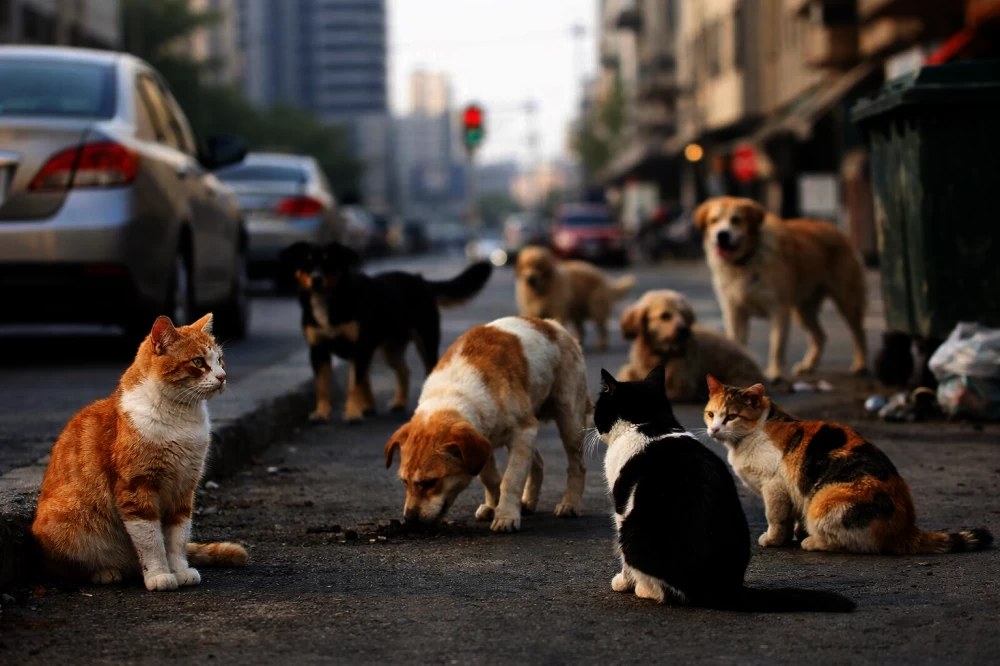
مشهد لقطط وكلاب سائبة داخل شارع سكني، يعكس واقع الانتشار داخل المدن وما يحمله من مخاطر صحية وبيئية. (متداولة)
تعاملت الجهات المختصة مع إهمال الحيوانات أو تركها في غير الأماكن المخصصة لها كقضية صحة عامة وبيئة، استنادًا إلى معطيات علمية وأرقام منشورة في دراسات أُجريت في المملكة، إضافة إلى تقارير رسمية طبّقت أحكام نظام الرفق بالحيوان.
وأظهرت دراسة مراجعة وبائية بعنوان «الليشمانيا الجلدية في السعودية: مراجعة وبائية وإجراءات المكافحة»، نُشرت 2017م، في مجلة Acta Tropica، اعتمادًا على بيانات وزارة الصحة السعودية، تسجيل أكثر من 26,300 حالة إصابة بالليشمانيا الجلدية خلال الفترة من 2006 إلى 2016م. وحدّدت الدراسة مناطق التوطن في الرياض، القصيم، المدينة المنورة، الأحساء، حائل، وعسير، مؤكدة ارتباط المرض بالبيئة الحضرية ونواقل العدوى.
و في دراسة سعودية حديثة بعنوان «التوصيف الجزيئي لأنواع الليشمانيا في الكلاب الضالة والمرضى البشر في المملكة»، نُشرت 2021 م، في مجلة Parasitology Research، بمشاركة جامعة الملك سعود، جامعة شقراء، ومدينة الملك سعود الطبية، جرى فحص 311 كلبًا ضالًا و27 مريضًا بشريًا في الرياض والقصيم. وأكدت النتائج وجود Leishmania major وLeishmania tropica لدى البشر والكلاب، مع تسجيل إصابة 25.9% من المرضى، ما يوضح دور الحيوانات غير الخاضعة للرقابة في انتقال الأمراض المشتركة.
واعتمدت دراسات وبائية منشورة في مجلات طبية سعودية ودولية على سجلات وزارة الصحة، وأشارت إلى تسجيل أكثر من 11 ألف حالة عضة حيوان للإنسان خلال الفترة 2007-2009م، وهو مؤشر يُستخدم في تقييم المخاطر المرتبطة بالحيوانات السائبة داخل المدن.
وتشير دراسات سوقية متخصصة في القطاع البيطري ونشاط العيادات ومتاجر مستلزمات الحيوانات الأليفة إلى ارتفاع أعداد الكلاب والقطط في السعودية إلى نحو 2.4 مليون حيوان خلال السنوات الأخيرة، مقارنة بتقديرات سابقة قاربت 0.8 مليون، ما يرفع الحاجة إلى التنظيم والالتزام بالرعاية.
وطبقا لبيانات وزارة البيئة والمياه والزراعة، يُدرج الإهمال ضمن مخالفات إساءة معاملة الحيوان، مع تطبيق غرامات مالية وتنفيذ حملات رقابية، بالتوازي مع برامج وزارة الشؤون البلدية والقروية والإسكان للإصحاح البيئي، ودور وزارة الصحة في الترصد الوبائي.
ضغط سلبي
على التوازن البيئي
لا يقتصر أثر الحيوانات السائبة على المخاطر الصحية، إذ تؤكد أبحاث علمية منشورة في دوريات دولية محكّمة أن انتشار الكلاب والقطط المتجولة يشكّل عامل ضغط مباشر على التوازن البيئي والحياة الفطرية، وأوضحت دراسات نُشرت في مجلة «نيتشر كوميونيكيشنز» أن القطط السائبة تتسبب عالميًا في نفوق مليارات الطيور والثدييات الصغيرة سنويًا، ما يضعها ضمن أكثر العوامل البشرية تأثيرًا على التنوع البيولوجي. وفي السياق ذاته، أشارت أبحاث منشورة في مجلة «بايولوجيكال كونسيرفيشن» إلى أن الكلاب المتجولة تؤثر في الأنظمة البيئية عبر الافتراس والمطاردة والتنافس على الموارد، مع تسجيل تأثير مباشر على مئات الأنواع البرية في بيئات مختلفة حول العالم. وتتعامل الجهات البيئية في المملكة مع هذه المؤشرات العلمية بوصفها أساسًا وقائيًا لتنظيم ملف الحيوانات السائبة، في إطار دور المركز الوطني لتنمية الحياة الفطرية في حماية الموائل الطبيعية، ومنع أي عناصر قد تُخلّ بالتوازن البيئي داخل المحميات والمناطق الحساسة.
A scene of stray cats and dogs in a residential street reflects the reality of their spread within cities and the health and environmental risks it carries. (Circulated)
The relevant authorities have treated the neglect of animals or leaving them in unsuitable places as a public health and environmental issue, based on scientific data and published figures from studies conducted in the Kingdom, in addition to official reports that applied the provisions of the Animal Welfare Law.
A review study titled "Cutaneous Leishmaniasis in Saudi Arabia: An Epidemiological Review and Control Measures," published in 2017 in the journal Acta Tropica, based on data from the Saudi Ministry of Health, recorded more than 26,300 cases of cutaneous leishmaniasis from 2006 to 2016. The study identified endemic areas in Riyadh, Qassim, Medina, Al-Ahsa, Hail, and Asir, confirming the disease's association with urban environments and vectors of infection.
In a recent Saudi study titled "Molecular Characterization of Leishmania Species in Stray Dogs and Human Patients in the Kingdom," published in 2021 in the journal Parasitology Research, in collaboration with King Saud University, Shaqra University, and King Saud Medical City, 311 stray dogs and 27 human patients were examined in Riyadh and Qassim. The results confirmed the presence of Leishmania major and Leishmania tropica in both humans and dogs, with 25.9% of patients recorded as infected, highlighting the role of uncontrolled animals in the transmission of zoonotic diseases.
Epidemiological studies published in Saudi and international medical journals relied on records from the Ministry of Health, indicating that more than 11,000 cases of animal bites on humans were recorded during the period from 2007 to 2009, which is an indicator used to assess the risks associated with stray animals within cities.
Market studies specialized in the veterinary sector and the activity of clinics and pet supply stores indicate that the number of dogs and cats in Saudi Arabia has risen to about 2.4 million animals in recent years, compared to previous estimates of around 0.8 million, raising the need for regulation and adherence to care.
According to data from the Ministry of Environment, Water, and Agriculture, neglect is classified among the violations of animal abuse, with financial penalties imposed and monitoring campaigns executed, alongside the programs of the Ministry of Municipal and Rural Affairs and Housing for environmental sanitation, and the role of the Ministry of Health in epidemiological surveillance.
Negative Pressure
on Environmental Balance
The impact of stray animals is not limited to health risks, as scientific research published in peer-reviewed international journals confirms that the spread of roaming dogs and cats exerts direct pressure on environmental balance and wildlife. Studies published in the journal Nature Communications indicate that stray cats globally cause the deaths of billions of birds and small mammals annually, placing them among the most significant human factors affecting biodiversity. In the same context, research published in the journal Biological Conservation noted that roaming dogs affect ecosystems through predation, chasing, and competition for resources, with a direct impact on hundreds of wildlife species in various environments around the world. Environmental authorities in the Kingdom address these scientific indicators as a preventive basis for regulating the issue of stray animals, within the framework of the National Center for Wildlife Development's role in protecting natural habitats and preventing any elements that may disrupt the environmental balance within reserves and sensitive areas.