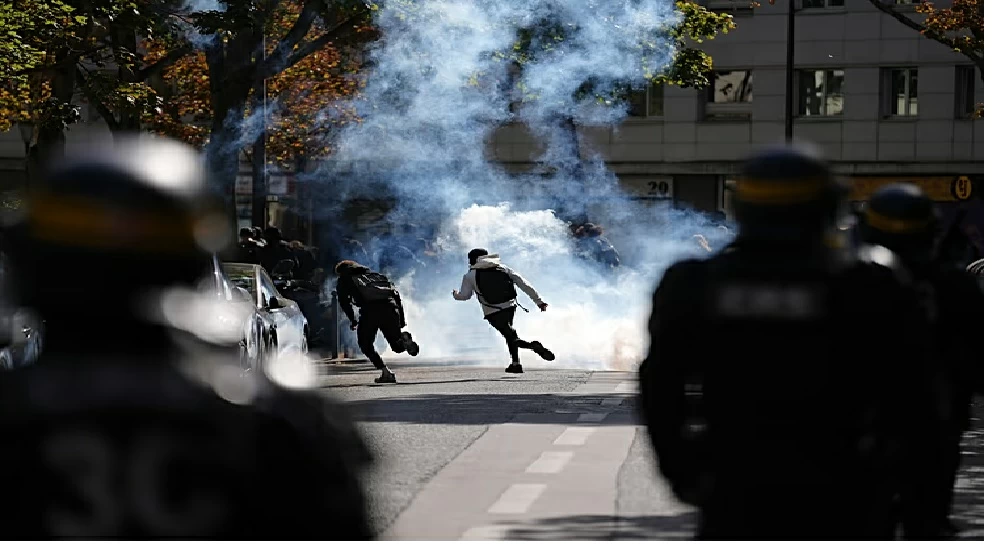
فيما اتهمت الحكومة الفرنسية اليسار الراديكالي بإغراق البلاد في الفوضى من خلال احتجاجات الطلاب، قرر عدد من أولياء الأمور والمعلمين الحضور للمساعدة في تأمين المظاهرات، في محاولة للحيلولة دون خروجها عن السيطرة.
وصف الرئيس الأمريكي دونالد ترمب ما تشهده فرنسا بأنه «هجرة جماعية خرجت عن السيطرة»، معتبراً أن القضية لا تقتصر على المدارس. وقال ترمب إن ما يحدث في فرنسا بسبب هجرة جماعية خرجت عن السيطرة، مضيفاً أن الأمر «لا يتعلق بالمدارس».
استجواب الحكومة في البرلمان
واتهم رئيس الوزراء الفرنسي سيباستيان لوكورنو اليسار الراديكالي بالسعي إلى إثارة الفوضى في فرنسا قبل الانتخابات الرئاسية المقرر أن تبدأ دورتها الأولى في أبريل 2027، على خلفية تصاعد الاحتجاجات الطلابية. وقال لوكورنو خلال جلسة استجواب للحكومة في الجمعية الوطنية، رداً على انتقادات حادة من ماتيلد بانو، رئيسة كتلة حزب «فرنسا الأبية»، إن اليسار الراديكالي يتعامل بقدر من الغموض مع العنف.
وأضاف أن العنف جزء من مشروعهم السياسي الرامي إلى إغراق البلاد في الفوضى من الآن وحتى الانتخابات الرئاسية، متهماً المعارضة بزرع الفوضى منذ انطلاق حركة احتجاج طلاب المدارس الثانوية. ووصف ما يحدث بأنه «أمر مشين»، مؤكداً أنه لن يسمح لهم بذلك.
وأمر الحكومة بإغلاق المدارس حتى نهاية الأسبوع الحالي. ونقلت وكالة «فرانس برس» عن مصدر مسؤول أن الرئيس إيمانويل ماكرون سيجتمع بوزراء بارزين لبحث الاحتجاجات الطلابية.
استئناف الاحتجاجات بعد العطلة
واستأنف الطلاب في فرنسا احتجاجاتهم بعد عطلة نهاية الأسبوع، في حراك يضع حكومة الرئيس إيمانويل ماكرون أمام ضغوط متزايدة. وشارك عشرات الآلاف في تظاهرات شهدتها باريس ونحو ثلاثين مدينة أخرى (الثلاثاء). ومنذ ساعات الصباح، بدأ طلاب بإغلاق عدد من المدارس في العاصمة. ونشرت السلطات نحو ألفي شرطي ودركي لتأمين المظاهرة المقررة بعد الظهر، بعد أعمال عنف وتخريب ومواجهات شهدتها بعض التحركات خلال الأيام الماضية.
وتساءل مراقبون ما إذا كانت أعمال العنف التي تظهر على هامش التظاهرات ستتصاعد فتزيد من حدة المواجهة بين الطلاب وقوات الأمن، وما إذا كانت الحكومة سترد بمزيد من التشدد الأمني.
وبحسب وزير الداخلية، أوقفت الشرطة أكثر من خمسة آلاف شخص خلال الأسبوع الماضي، 85% منهم من القاصرين. ومنذ انطلاق الحركة، أصيب 215 طالباً وأكثر من 700 من عناصر الأمن ونحو مئة من العاملين في قطاع التعليم. وفتحت المفتشية العامة للشرطة الوطنية عشرة تحقيقات منذ بدء الاحتجاجات، على خلفية تدخلات أمنية أثارت جدلاً واسعاً.
ويواجه الحراك اختباراً جديداً مع دعوة نقابة «سي جي تي»، إحدى أبرز النقابات العمالية في فرنسا، العاملين إلى الانضمام إلى الاحتجاجات، فيما قرر عدد من المعلمين وأولياء الأمور المشاركة للمساعدة في تأمين التظاهرات ومنع انزلاقها إلى أعمال عنف.
كيف بدأت الاحتجاجات؟
انطلقت شرارة التحركات في 17 سبتمبر من منطقة باريس، وتحديداً من كريتاي في الضواحي الجنوبية الشرقية للعاصمة، حيث احتج معلمون وطلاب على نقص الموظفين في إحدى المدارس الثانوية. وسرعان ما امتدت الإضرابات عن الدراسة وإغلاق المدارس والتظاهرات إلى ضواحٍ أخرى في باريس، ثم إلى مناطق مختلفة من البلاد، وصولاً إلى مدارس ثانوية في مدن صغيرة.
While the French government accused the radical left of plunging the country into chaos through student protests, a number of parents and teachers decided to attend to help secure the demonstrations, in an attempt to prevent them from spiraling out of control.
U.S. President Donald Trump described what is happening in France as a "mass migration that is out of control," considering that the issue is not limited to schools. Trump stated that what is happening in France is due to a mass migration that has spiraled out of control, adding that it "is not about schools."
Interrogation of the government in Parliament
French Prime Minister Sébastien Lecornu accused the radical left of seeking to incite chaos in France ahead of the presidential elections scheduled to begin their first round in April 2027, against the backdrop of escalating student protests. During a government interrogation session in the National Assembly, Lecornu, in response to sharp criticism from Mathilde Panot, the head of the "France Unbowed" party, stated that the radical left deals with violence with a degree of ambiguity.
He added that violence is part of their political project aimed at plunging the country into chaos from now until the presidential elections, accusing the opposition of sowing chaos since the launch of the high school student protest movement. He described what is happening as "shameful," asserting that he would not allow them to do so.
He ordered the government to close schools until the end of the current week. The AFP news agency reported that President Emmanuel Macron will meet with senior ministers to discuss the student protests.
Resumption of protests after the holiday
Students in France resumed their protests after the weekend, in a movement that puts President Emmanuel Macron's government under increasing pressure. Tens of thousands participated in demonstrations that took place in Paris and about thirty other cities (on Tuesday). Since the morning hours, students began closing several schools in the capital. Authorities deployed around two thousand police and gendarmes to secure the scheduled afternoon demonstration, following incidents of violence, vandalism, and clashes that occurred during some movements in the past few days.
Observers wondered whether the acts of violence that are appearing on the fringes of the demonstrations would escalate, increasing the confrontation between students and security forces, and whether the government would respond with increased security measures.
According to the Minister of the Interior, the police arrested more than five thousand people during the past week, 85% of whom were minors. Since the start of the movement, 215 students and more than 700 security personnel and about a hundred education sector workers have been injured. The General Inspectorate of the National Police has opened ten investigations since the protests began, in light of security interventions that have sparked widespread controversy.
The movement faces a new test with the call from the "CGT" union, one of the prominent labor unions in France, for workers to join the protests, while a number of teachers and parents decided to participate to help secure the demonstrations and prevent them from slipping into violence.
How did the protests begin?
The spark of the movements ignited on September 17 in the Paris area, specifically from Créteil in the southeastern suburbs of the capital, where teachers and students protested against staff shortages at a high school. The strikes, school closures, and demonstrations quickly spread to other suburbs in Paris, and then to various regions of the country, reaching high schools in small towns.