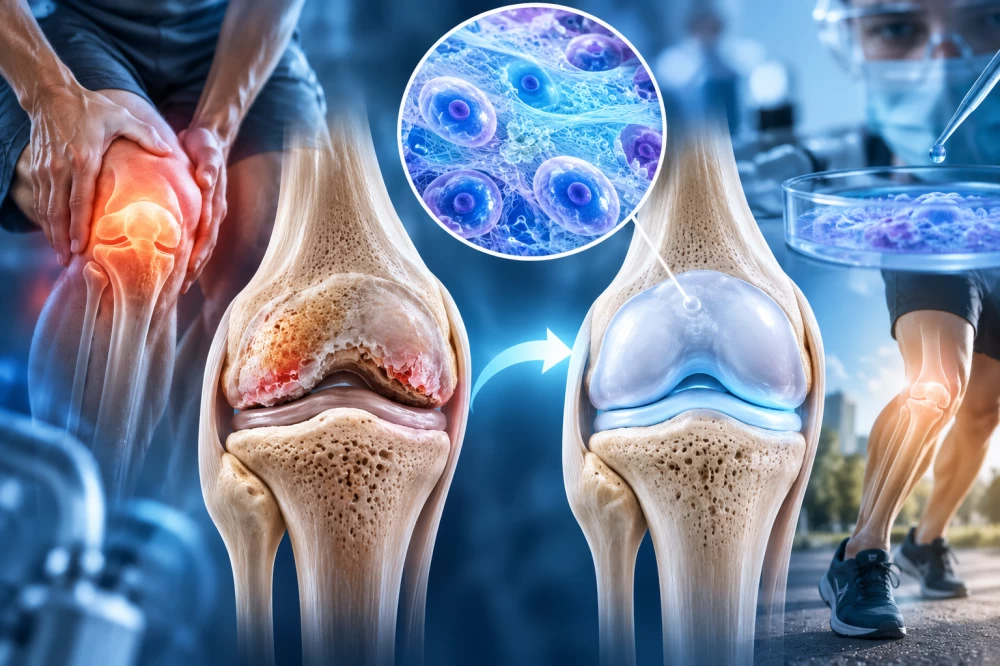
في تطور علمي قد يمهد مستقبلاً لعلاج خشونة المفاصل وإصلاح الغضاريف المتضررة دون اللجوء إلى استبدال المفصل، نجح باحثون في تحفيز إعادة نمو غضروف المفاصل من خلال تعطيل بروتين يرتفع مستواه مع التقدم في العمر ويحد من قدرة الأنسجة على التجدد.
وأظهرت الدراسة، التي قادها باحثون في كلية الطب بجامعة ستانفورد ونُشرت في مجلة Science، أن تثبيط بروتين يُعرف باسم 15-PGDH أدى إلى تجدد الغضروف المفصلي في ركب فئران مسنة، كما ساعد على الحماية من الإصابة بالتهاب المفاصل التنكسي بعد إصابات في الركبة تشبه تمزق الرباط الصليبي الأمامي لدى البشر.
غضروف جديد من الخلايا الموجودة أصلاً
واللافت أن عملية التجدد لم تعتمد على الخلايا الجذعية كما توقع الباحثون، بل دفعت الخلايا الغضروفية الموجودة أصلاً في المفصل إلى تغيير نشاطها الجيني والعودة إلى حالة أقرب إلى الخلايا الشابة، ما حفزها على إنتاج غضروف مفصلي جديد.
وقال الباحثون إن تثبيط 15-PGDH خفّض أعداد الخلايا المرتبطة بتدهور الغضروف، وزاد في المقابل الخلايا المسؤولة عن إنتاج المكونات الأساسية للغضروف المفصلي.
وقالت الباحثة في ستانفورد هيلين بلاو إن النتائج تكشف «طريقة جديدة لتجديد أنسجة البالغين»، مشيرة إلى أن الفريق كان يتوقع العثور على دور للخلايا الجذعية، لكن التجارب أظهرت أن التجدد حدث من خلال الخلايا الغضروفية الموجودة بالفعل.
نتائج واعدة في أنسجة بشرية
ولم تقتصر التجارب على الحيوانات؛ إذ اختبر الباحثون المادة المثبطة للبروتين على عينات غضروف بشري مأخوذة من مرضى خضعوا لعمليات استبدال كامل للركبة بسبب خشونة المفاصل.
وبعد أسبوع من العلاج المخبري، رصد الفريق انخفاض النشاط المرتبط بتدهور الغضروف، والأهم أن العينات البشرية بدأت في تكوين غضروف مفصلي جديد.
وقالت الباحثة نيدهي بوتاني إن النتائج تشير إلى إمكانية استهداف الخلايا الموجودة بالفعل داخل الغضروف ودفعها نحو التجدد، وهو ما قد يفتح مستقبلاً مجالاً لعلاجات تستهدف السبب الأساسي لفقدان الغضروف بدلاً من الاكتفاء بتخفيف الألم.
هل يمكن الاستغناء عن استبدال المفاصل؟
تثير النتائج آمالاً في تطوير دواء يؤخذ عن طريق الفم أو حقن موضعية يمكنها مستقبلاً إصلاح الغضروف المتضرر وإبطاء أو عكس مسار خشونة المفاصل، الأمر الذي قد يقلل الحاجة إلى عمليات استبدال الركبة والورك.
لكن الباحثين شددوا على أن النتائج لا تعني توفر علاج للبشر حالياً؛ إذ أثبتت التجارب إعادة نمو الغضروف في الحيوانات وفي عينات أنسجة بشرية داخل المختبر، فيما لا تزال هناك حاجة إلى تجارب سريرية لإثبات سلامة وفاعلية العلاج في المرضى.
ويكتسب الاكتشاف أهمية خاصة لأن العلاجات الحالية لخشونة المفاصل تركز بدرجة كبيرة على السيطرة على الألم والأعراض، بينما لا يوجد حتى الآن دواء معتمد قادر على إعادة بناء الغضروف المفقود.
وأشار فريق ستانفورد إلى أن مثبطاً فموياً لبروتين 15-PGDH وصل بالفعل إلى تجارب سريرية من المرحلة الأولى لغرض مختلف يتعلق بضعف العضلات المرتبط بالتقدم في العمر، ويأمل الباحثون في إطلاق تجربة مماثلة لاختبار قدرته على تجديد غضروف المفاصل لدى البشر.
In a scientific development that may pave the way for future treatments for joint stiffness and the repair of damaged cartilage without resorting to joint replacement, researchers have succeeded in stimulating the regrowth of joint cartilage by inhibiting a protein whose levels rise with age and limits the tissues' ability to regenerate.
The study, led by researchers at the Stanford University School of Medicine and published in the journal Science, showed that inhibiting a protein known as 15-PGDH led to the regeneration of articular cartilage in the knees of aged mice, and also helped protect against degenerative arthritis following knee injuries similar to human anterior cruciate ligament tears.
New Cartilage from Existing Cells
Interestingly, the regeneration process did not rely on stem cells as the researchers had expected, but instead prompted the existing cartilage cells in the joint to change their genetic activity and return to a state closer to that of young cells, which stimulated them to produce new articular cartilage.
The researchers stated that inhibiting 15-PGDH reduced the number of cells associated with cartilage degradation, while increasing the cells responsible for producing the essential components of articular cartilage.
Stanford researcher Helen Blau noted that the results reveal "a new way to renew adult tissues," pointing out that the team had expected to find a role for stem cells, but experiments showed that regeneration occurred through the already existing cartilage cells.
Promising Results in Human Tissues
The experiments were not limited to animals; the researchers tested the protein-inhibiting substance on human cartilage samples taken from patients who underwent total knee replacement due to joint stiffness.
After a week of laboratory treatment, the team observed a decrease in activity associated with cartilage degradation, and importantly, the human samples began to form new articular cartilage.
Researcher Nidhi Bhutani stated that the results suggest the possibility of targeting the existing cells within the cartilage and driving them towards regeneration, which could potentially open the door to treatments that address the underlying cause of cartilage loss rather than just alleviating pain.
Can Joint Replacement Be Avoided?
The results raise hopes for the development of an oral medication or localized injections that could in the future repair damaged cartilage and slow or reverse the progression of joint stiffness, which may reduce the need for knee and hip replacement surgeries.
However, the researchers emphasized that the results do not mean that a treatment for humans is currently available; the experiments have demonstrated cartilage regrowth in animals and in human tissue samples in the lab, while clinical trials are still needed to prove the safety and efficacy of the treatment in patients.
The discovery is particularly significant because current treatments for joint stiffness largely focus on controlling pain and symptoms, while there is still no approved medication capable of rebuilding lost cartilage.
The Stanford team noted that an oral inhibitor of the 15-PGDH protein has already reached phase one clinical trials for a different purpose related to age-related muscle weakness, and the researchers hope to launch a similar trial to test its ability to regenerate joint cartilage in humans.