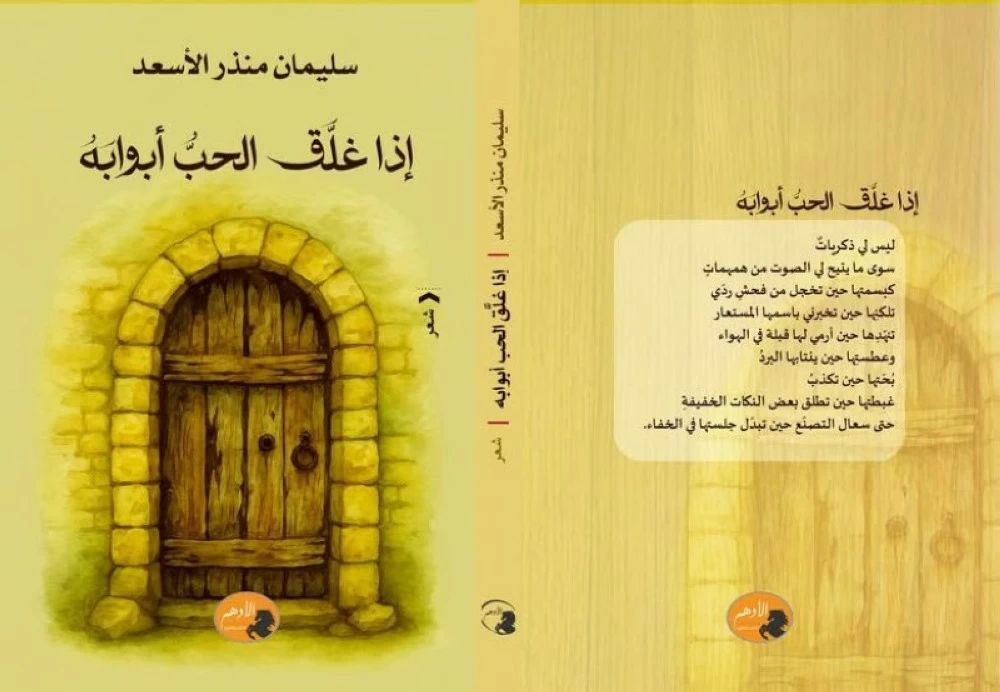
صدر ديوان «إذا غلّق الحب بابه» للشاعر السوري سليمان منذر الأسعد، الذي يفتتحه بعتبة يصعدها القارئ ليطرق باب الحب، وربما يسمح له بالولوج إلى عوالم تدور كلها في فلك المحبوبة.
عندما يسجد الشعر للعاشقين
وترفض عيناك أن تسجدا
لأنهما عسل والبرايا تراب.
المحبوبة المنزهة، النازلة في مكانة وحدها، يفسح لها الأسعدالمساحة ويتوجها بتاج التفرد والعلو، هي امرأة في الثلاثين تتوضأ بالدمع كي تقرأ الشعر، ولا تفسر للعطر منطقها، وحين يأتي صوتها في أولى القصائد عبر الهاتف تستبيح الفضاء بأنفاسها وتكنس عن مقلتيها النعاس وتزهو كزنبقة في فضاء المرايا.
يلمع نرجس هذه المحبوبة في غرور أكثر قصائد الديوان الذي يعود بنا لمحراب الحب؛ صحيح إنها عودة إلى الغرام الأصيل والعشق القديم ولكنها بمنطق الشعر الجديد. إن غار الشاعر العربي على محبوبته من النسيم فإن سليمان يخشى على فاتنته من كل شيء ويحرسها من غبار الحضارة ومن جحيم الحداثة ومن الصخب.
يريد الشاعر الحفاظ على محبوبته التي هي روحه وذاته على الحقيقة والمجاز؛ ولا عجب والشاعر العربي سبق ونوه عن ذاته وعن نفسه بالمحبوبة الأنثى. لذا فإن التوجه بـ«الغزل» نحو المرأة مسمى دلالة تتسع لتشمل المحبوبة والذات والكينونة.
هكذا يدور الشاعر وشعره حول الذات الأنثوية، حتى وهما يبحثان عن كيانهما الضائع ويلملمان شتاتهما في قصيدة «رحلة في عباب العمر»، تستشعر أن القصيدة التي ستلي تحمل إجابات عن أسئلة وشجون طرقها سريعًا وأكمل إلى طريق الحب وراء الشاعر العربي جميل بن معمر الشارد على المقاهي والباحث عن «بثينة» في كل شيء وكل مكان.
لا يغيب الحب حتى عن الموعد الذي يضربه الشاعر مع الموت، فالشاعر الذي وجد الموت متكئًا على سور حديقته، يقرأ في الصحف القديمة، لا يجد من مفر إلا العدو بحثا عن حبيبة تلمست موضع قبلته فتذكرت حبيبها فعرج طيفها ليقشر الأحزان عن وجهه.
في آخر الديوان يضع الشاعر نصائحه لمحبوبته، يوصيها ألا تحب فالحب أحزان مؤجلة ولعنة لكائنات الليل، وعليها ألا تتورط فيه، ولكنها وصايا كاذبة، فمن منا سيبتعد عن الحب «المقتل اللذيذ» و«منتهى آلام الجريح» و«مركب الغرقى»، كلنا بالتأكيد سيتورط فيما يحذرنا الشاعر منه ويضعه شبكة للاصطياد.
الديوان الجديد لسليمان الأسعد يُكرّس حضوره كأحد الأصوات الشعرية العربية التي تجمع بين الصدق الإنساني والوعي الحرفي، مستفيداً من خبرته الصحفية الواسعة في عدّة وسائل إعلام دوليّة، وفي الكتابة الإبداعيّة والسلامة اللغويّة. كما أن توليه وظائف تنفيذيّة متعلّقة بإستراتيجيّات المحتوى وإشرافه على مشروعات ثقافية وعروض مسرحية كبرى في الرياض وجدة وأبها والدمام، يمنح نصه عمقاً إضافياً، مما يجعل ديوانه الجديد دعوة لإعادة تعريف علاقتنا بمفهوم الحب والنهايات.
The collection "If Love Closes Its Door" by the Syrian poet Suleiman Munther Al-As'ad opens with a threshold that the reader ascends to knock on the door of love, perhaps allowing them to enter worlds that revolve entirely around the beloved.
When poetry bows to lovers
And your eyes refuse to bow
Because they are honey and humanity is dust.
The exalted beloved, standing alone in her status, is given space by Al-As'ad and crowned with a diadem of uniqueness and elevation. She is a woman in her thirties who washes with tears to read poetry, and she does not explain her logic to perfume. When her voice comes in the first poems over the phone, she invades the space with her breath, sweeps the drowsiness from her eyelids, and blooms like a lily in the realm of mirrors.
The narcissism of this beloved shines in the most arrogant poems of the collection, which takes us back to the sanctuary of love; it is true that it is a return to authentic passion and ancient infatuation, but it is with the logic of new poetry. If the Arab poet is jealous of his beloved from the breeze, Suleiman fears for his enchanting one from everything and guards her from the dust of civilization, from the hell of modernity, and from the noise.
The poet wants to preserve his beloved, who is his soul and essence in truth and metaphor; it is no wonder that the Arab poet has previously alluded to himself and his essence through the female beloved. Thus, the approach of "flirting" towards women is a designation that expands to encompass the beloved, the self, and being.
Thus, the poet and his poetry revolve around the feminine self, even as they search for their lost identity and gather their scattered pieces in the poem "A Journey in the Waves of Life." You sense that the following poem carries answers to questions and concerns that he quickly traversed, continuing on the path of love behind the Arab poet Jamil bin Ma'mar, who wanders in cafes searching for "Buthayna" in everything and everywhere.
Love does not even fade from the appointment the poet makes with death, for the poet who found death leaning against the wall of his garden, reading in old newspapers, finds no escape except the enemy in search of a beloved who felt the place of his kiss and remembered her lover, causing her apparition to descend to peel the sorrows from his face.
At the end of the collection, the poet offers his advice to his beloved, advising her not to love, for love is postponed sorrows and a curse for the creatures of the night, and she should not get entangled in it. But these are false recommendations, for who among us will distance themselves from "the delicious murder" and "the ultimate pain of the wounded" and "the boat of the drowned"? Surely, we will all get entangled in what the poet warns us against and sets as a net for trapping.
Suleiman Al-As'ad's new collection cements his presence as one of the Arabic poetic voices that combine human sincerity and craft awareness, benefiting from his extensive journalistic experience in several international media outlets, as well as in creative writing and linguistic accuracy. His executive roles related to content strategies and his supervision of major cultural projects and theatrical performances in Riyadh, Jeddah, Abha, and Dammam give his text additional depth, making his new collection an invitation to redefine our relationship with the concept of love and endings.