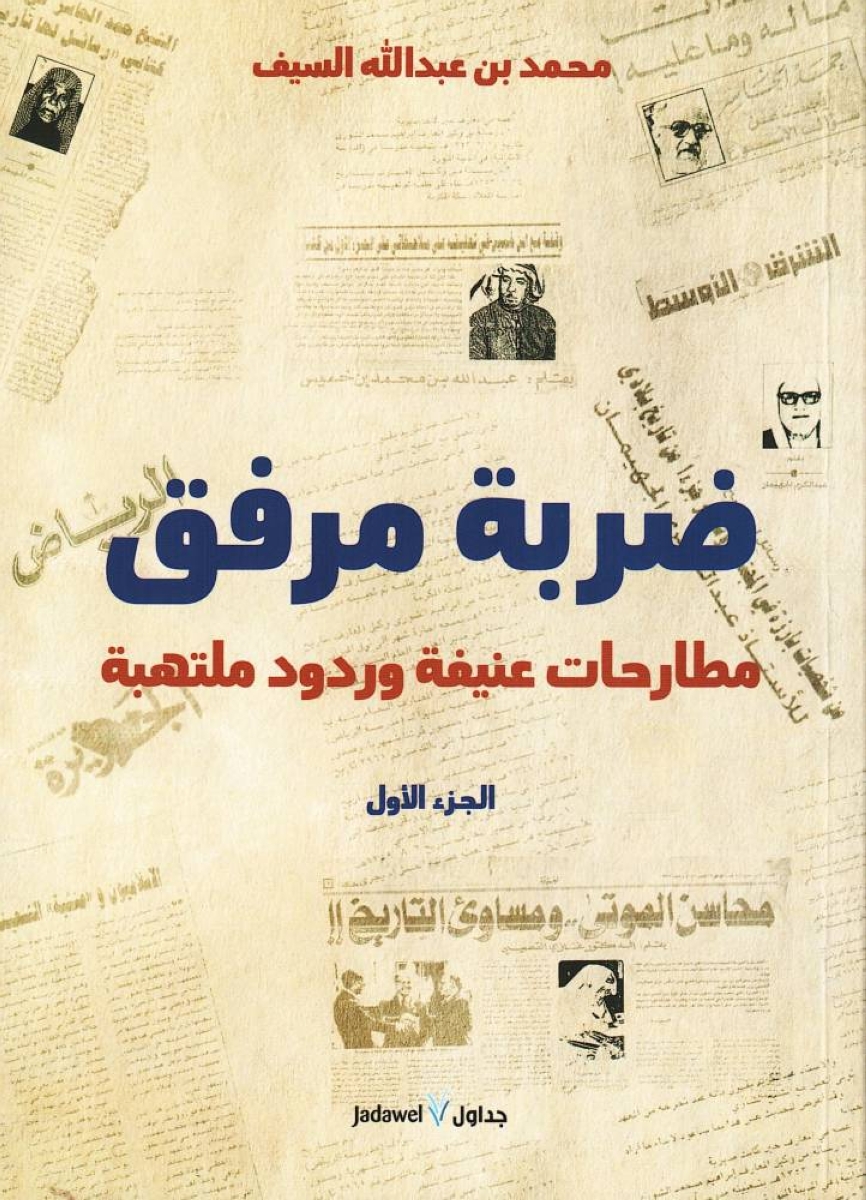
في كتاب ضربة مرفق: مطارحات عنيفة وردود ملتهبة، الصادر حديثاً في جزئه الأوّل عن دار جداول للنشر والترجمة والتوزيع، تتبّع الكاتب الباحث المؤرخ السعودي محمد بن عبدالله السيف في 300 صفحة من القطع الكبير 7 معارك ثقافية دارت على صفحات الصحف، معتمداً على أرشيفه الصحفي الشخصي، وعلى ما اطّلع عليه من معارك قرأها في وقتها أو قادته إليها الصدفة أثناء البحث في أرشيف الصحف السعودية.
الكتاب ليس مجرد أرشيف صحفي كما ذكر السيف في مقدّمة كتابه هذا، بل هو إحياء لذاكرة الجدل في الوسط الثقافي السعودي، وتوثيق لصدام فكري كان جزءاً مهماً في نموّ الفكر، وحيويّة المشهد الثقافي.
عنوان يوحي بالمواجهة
الكتاب من عنوانه يعلن عن طبيعته الجدلية التي توحي بالمواجهة، فعبارة «ضربة مرفق» توحي بالاحتكاك الحاد والمواجهة المباشرة، بينما يلمّح العنوان الفرعي «مطارحات عنيفة وردود ملتهبة» إلى حدّة النقاشات التي تجاوزت أحياناً الإطار الفكري إلى أبعاد شخصيّة.
7 معارك فكرية
ضمّ الكتاب في جزئه الأوّل 7 معارك صحفيّة وقعت بين كتّاب ومثقفين سعوديين، مثل: «الرسائل» بين حمد الجاسر وعبدالكريم الجهيمان، «السادات» بين أحمد محمد جمال وعبدالله بن خميس وغازي القصيبي وعثمان العمير وجاسر الحربش وحمد الجاسر، «مصطفى جمال الدين» بين محمد رضا نصر الله وأحمد التويجري، «جبال الجزيرة» بين عبدالله بن خميس وعبدالعزيز الرويس، «الأبوّة» بين خالد الدخيّل وعبدالله الشهيل، «زكي يماني» بين عبدالله جفري وعابد خزندار، «حسن الترابي» بين زياد الدريس وعبدالله باجبير، وكان الباعث لهذه المعارك إمّا كتاب مطبوع أو مقال منشور في صحيفة ورقيّة.
مواجهة الجهيمان والجاسر
ما يلفت الانتباه أكثر في هذا الكتاب السجال الذي دار بين حمد الجاسر وعبدالكريم الجهيمان على صفحات صحيفة الرياض (17/ شعبان 1418هـ - 6/ رمضان / 1418هـ) بعد صداقة وثيقة ومتينة امتدت لأكثر من 70 عاماً، من أجل كتاب «رسائل لها تاريخ» الذي نشره الجهيمان وأهدى نسخة منه للشيخ حمد الجاسر، وكما ذكر محمد السيف في مقدمة كتابه هذا فالشيخ الجاسر لم يكن راضياً عن كتاب الجهيمان، لأنّه سبقه في الفكرة، ونشر بعضاً ممّا في أرشيفه من رسائل، وبهذا النشر فوّت الفرصة على الجاسر في نشر ما يمتلك من رسائل تفوق رسائل الجهيمان قيمة وعدداً وأهميّة، إضافة إلى سبب آخر – ذكره السيف في المقدمة – يخصّ ما ورد في رسالة عبدالله بن الشيخ أحمد المغربي، وما كان يمارسه من استفزاز لحمد الجاسر الذي كان يغضب منه ويطارده وقد وضع طرف ثوبه في فمه، فيظهر ما أسماه بـ«القشّ» وهو ما تمنّى حمد الجاسر عدم إيراد مثل هذه الرسائل في الكتاب.
أما عبدالكريم الجهيمان فقد استفزه الجاسر الذي تساءل في إحدى حلقاته الثمان عن المكان الذي ذهب إليه الجهيمان بعد وزارة المالية، وفي هذا إشارة إلى سجن الجهيمان.
اعتراضات الجاسر
مع أنّ الشيخ حمد الجاسر قد وصف كتاب الجهيمان بالطريف في أسلوبه، وفي موضوعه، الذي لم يسبق له أن قرأ في الكتب المتعلّقة بـ«السير الذاتية» عمّا يماثله، إلاّ أنّه اعترض على الجهيمان في طباعته لتلك الرسائل، وكان عليه أن يكتفي بالصورة فقط، لأنها واضحة – كما قال، إضافة إلى أنّ الرسائل المنشورة – كما قال الجاسر – لم ترتب في الكتاب حسب موضوعاتها أو على تسلسل تواريخها، وإنما سردت سرداً دون تنسيق أو ترتيب، كما ألحق مقطوعات من الشعر لشعراء لم يسمهم مع شهرة هذه المقطوعات. وعاب الجاسر على الجهيمان في كتابه هذا أنّ المقدمة موجزة، وكذلك الفهرس الذي لم يشمل كلّ المواضع التي وردت فيها تلك الأسماء، وأنّ بعض الرسائل ما كان على الجهيمان أن ينشرها.
ومع وجاهة ما كتب الجاسر من نقدات على كتاب الجهيمان إلاّ أنّ القارئ لما بين سطور هذه الحلقات الثمان يلحظ أنّ حديث الجهيمان «العابر» عن الجاسر كان المحفّز الأكبر لكتابة هذه المقالات، فقد وصف ذاكرة الجهيمان بأنها خانته في أكثر من موضوع، ويمكن الاستشهاد على ذلك بما ذكره الجهيمان في إحدى رسائله من أنّ الجاسر كان يشترك معهم في السهرة الممتعة بعض الأوقات، وردّ الجاسر بأنّ الجهيمان نفسه لم يكن يداوم، أما هو فقد كان من المداومين، وأنّه كان يقرأ الكتاب المختار في تلك السهرة.
حجج الجهيمان
استفتح عبدالكريم الجهيمان في مقالاته الخمس التي ردّ بها على نقدات الشيخ حمد الجاسر على كتابه «رسائل لها تاريخ» بأخذه نسخة من الكتاب وأنّه قدّمها للشيخ حمد قائلاً له: هذه رسائل قديمة من شخصيات يشرّفني أن تكون لي بهم علاقة تواصل.
فقال: مثل من؟ فقلت: فلان وفلان وفلان، فقال: إنّ لديّ رسائل أعرق وأعمق من رسائلك. فقلت مداعباً: أرجوك إرجاء نشرها حتى ينفد كتابي.
ولعلّ الجهيمان هنا أراد أن يثبت أنّ دوافع الشيخ حمد الجاسر في نقد الكتاب ليست موضوعية، بل شخصية.
كما لفت في أكثر من مقالة إلى أنّ ما كتبه الشيخ حمد الجاسر في حلقاته الثمان لم يتجاوز الاقتباسات من كتابه، وليس للشيخ حمد - كما قال - فيها إلاّ القليل.
واتهم الجهيمان الشيخ حمد الجاسر بـ «المتظاهر بأنّه لا ينسى»، وأنّه يريد أن يقول إنه لا تفوته شاردة ولا واردة، وأنّه يعرف أشياء لا يعرفها الناس.
وأرجع الجهيمان اعتراض الشيخ حمد الجاسر على نشر الجهيمان لبعض الرسائل إلى أنّ له «مواقف شخصيّة من أصحابها».
وسجّل الجهيمان في رسائله هذه اعتراضه على لقب «علامة الجزيرة» وتساءل: هل أنت أعلم واحد في الجزيرة؟!
توثيق لذاكرة الصحافة
بعيداً عن الخلافات الشخصية، والمعارك الثقافية، التي كانت الصحافة الورقيّة ساحة لها، فإنّ محمد السيف في كتابه هذا قدّم توثيقاً نادراً لحيوية السجالات الفكرية والثقافية في الصحافة السعودية خلال العقود الماضية، وذكّر الأجيال الجديدة بأنّ صفحات الصحف كانت يوماً ما مسرحاً لمعارك فكريّة حقيقيَة، تجاوزت حدود المجاملة والعلاقات الشخصيّة إلى ميادين النقد والمساءلة.
In the book "Arm Strike: Violent Debates and Fiery Responses," recently published in its first part by Dar Jadawel for Publishing, Translation, and Distribution, the Saudi researcher and historian Mohammed bin Abdullah Al-Saif tracks 7 cultural battles that took place on the pages of newspapers over 300 large-format pages, relying on his personal journalistic archive and on what he encountered from battles he read at the time or stumbled upon while researching in the archives of Saudi newspapers.
The book is not just a journalistic archive, as Al-Saif mentioned in the introduction to this book, but it is a revival of the memory of debate in the Saudi cultural scene and a documentation of an intellectual clash that was an important part of the growth of thought and the vitality of the cultural scene.
A Title Suggesting Confrontation
The book, from its title, announces its dialectical nature that suggests confrontation. The phrase "Arm Strike" implies sharp friction and direct confrontation, while the subtitle "Violent Debates and Fiery Responses" hints at the intensity of discussions that sometimes transcended the intellectual framework to personal dimensions.
7 Intellectual Battles
The first part of the book includes 7 journalistic battles that occurred between Saudi writers and intellectuals, such as: "The Letters" between Hamad Al-Jasir and Abdul Karim Al-Juhiman, "Sadat" between Ahmed Mohammed Jamal, Abdullah bin Khamis, Ghazi Al-Qusaibi, Othman Al-Omair, Jaser Al-Harbash, and Hamad Al-Jasir, "Mustafa Jamal Al-Din" between Mohammed Reda Nasrallah and Ahmed Al-Tuwaijri, "Mountains of the Peninsula" between Abdullah bin Khamis and Abdulaziz Al-Ruwais, "Fatherhood" between Khalid Al-Dakhil and Abdullah Al-Shuhail, "Zaki Yamani" between Abdullah Jafri and Abed Khazandar, and "Hassan Al-Turabi" between Ziad Al-Drees and Abdullah Bajbeer. The impetus for these battles was either a printed book or an article published in a paper newspaper.
The Confrontation between Al-Juhiman and Al-Jasir
What stands out more in this book is the debate that took place between Hamad Al-Jasir and Abdul Karim Al-Juhiman on the pages of Al-Riyadh newspaper (17/ Sha'ban 1418 AH - 6/ Ramadan / 1418 AH) after a close and strong friendship that lasted for more than 70 years, regarding the book "Letters with a History" that Al-Juhiman published and gifted a copy to Sheikh Hamad Al-Jasir. As Mohammed Al-Saif mentioned in the introduction to this book, Sheikh Al-Jasir was not satisfied with Al-Juhiman's book because it preceded him in the idea and published some of what was in his archive of letters, thus missing the opportunity for Al-Jasir to publish what he had of letters that exceeded Al-Juhiman's in value, number, and importance. Additionally, there was another reason – mentioned by Al-Saif in the introduction – concerning what was stated in a letter from Abdullah bin Sheikh Ahmed Al-Maghribi and what he practiced in provoking Hamad Al-Jasir, who was angered by him and pursued him, having put the corner of his garment in his mouth, revealing what he called "the straw," which Hamad Al-Jasir wished not to include in the book.
As for Abdul Karim Al-Juhiman, he was provoked by Al-Jasir, who questioned in one of his eight episodes about where Al-Juhiman went after the Ministry of Finance, hinting at Al-Juhiman's imprisonment.
Al-Jasir's Objections
Although Sheikh Hamad Al-Jasir described Al-Juhiman's book as amusing in its style and subject, which he had never read about in books related to "biographies," he objected to Al-Juhiman for printing those letters, stating that he should have settled for just the images, as they were clear – as he said. Additionally, the published letters – as Al-Jasir stated – were not organized in the book according to their subjects or in chronological order, but were narrated without coordination or arrangement, and he attached excerpts of poetry from poets he did not name despite the fame of these excerpts. Al-Jasir criticized Al-Juhiman in this book for the brevity of the introduction and the index, which did not include all the places where those names appeared, and that some letters should not have been published by Al-Juhiman.
Despite the validity of what Al-Jasir wrote in his critiques of Al-Juhiman's book, the reader of what lies between the lines of these eight episodes notices that Al-Juhiman's "passing" talk about Al-Jasir was the greatest motivator for writing these articles. He described Al-Juhiman's memory as having failed him on more than one subject, and one can cite what Al-Juhiman mentioned in one of his letters that Al-Jasir used to join them in enjoyable evenings at times, to which Al-Jasir responded that Al-Juhiman himself did not attend regularly, while he was one of the regular attendees, and that he read the selected book during that evening.
Al-Juhiman's Arguments
Abdul Karim Al-Juhiman opened his five articles in response to Sheikh Hamad Al-Jasir's critiques of his book "Letters with a History" by taking a copy of the book and presenting it to Sheikh Hamad, saying to him: These are old letters from personalities I am honored to have a communication relationship with.
He said: Like whom? I said: So-and-so and so-and-so and so-and-so. He said: I have letters that are more ancient and deeper than your letters. I jokingly said: Please postpone publishing them until my book runs out.
Perhaps Al-Juhiman wanted to prove here that Sheikh Hamad Al-Jasir's motives for criticizing the book were not objective but personal.
He also pointed out in more than one article that what Sheikh Hamad Al-Jasir wrote in his eight episodes did not exceed quotations from his book, and that Sheikh Hamad – as he said – had little to do with them.
Al-Juhiman accused Sheikh Hamad Al-Jasir of "pretending not to forget," wanting to imply that he does not miss any detail and that he knows things that people do not know.
Al-Juhiman attributed Sheikh Hamad Al-Jasir's objection to the publication of some letters by Al-Juhiman to having "personal stances from their owners."
Al-Juhiman recorded in these letters his objection to the title "The Scholar of the Peninsula" and questioned: Are you the most knowledgeable person in the peninsula?!
Documentation of Journalistic Memory
Apart from personal disputes and cultural battles, which paper journalism was a battlefield for, Mohammed Al-Saif in this book has provided a rare documentation of the vitality of intellectual and cultural debates in Saudi journalism over the past decades, reminding new generations that the pages of newspapers were once a stage for real intellectual battles that transcended the limits of courtesy and personal relationships to fields of criticism and accountability.