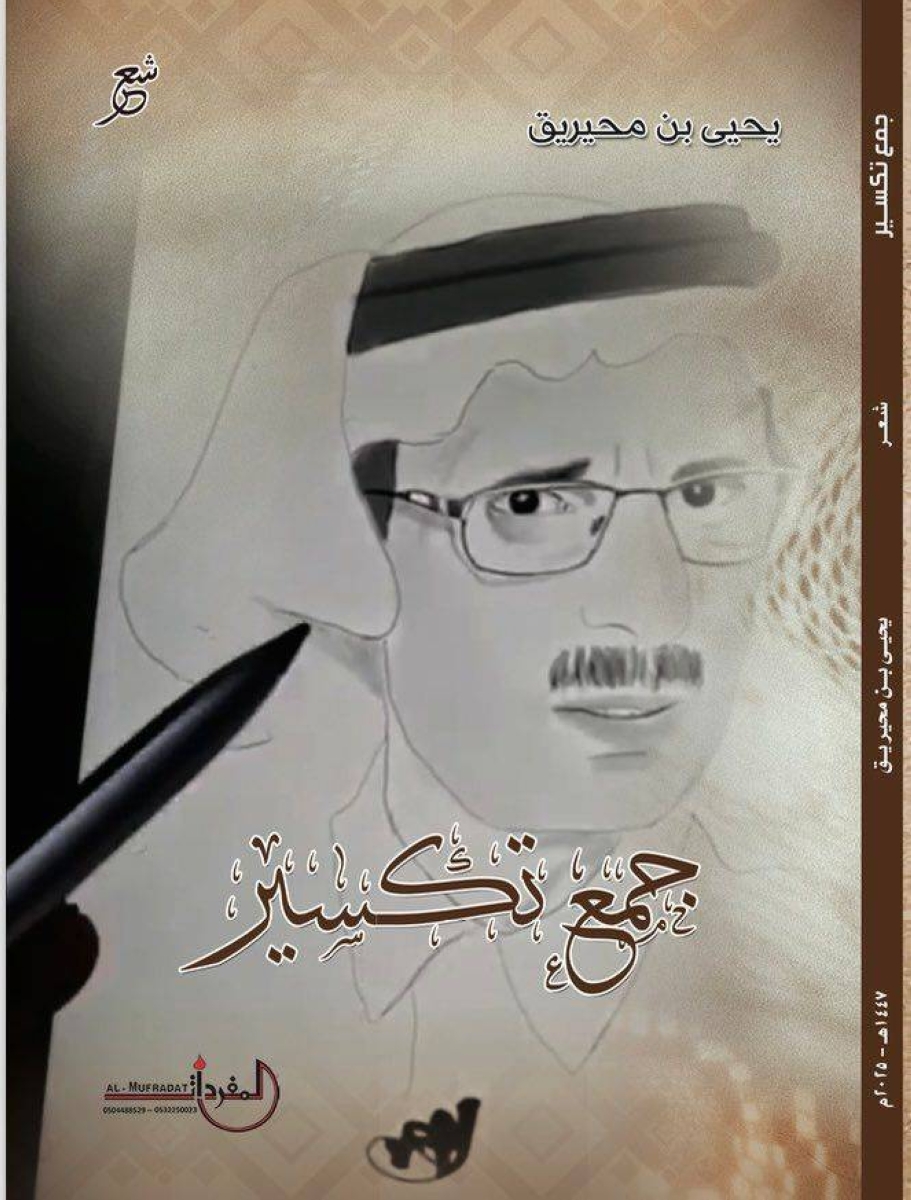
بعد مسيرة طويلة حافلة بالتميز والإبداع، قرر الأديب والشاعر المعروف يحيى بن حمدان المحيريق، جمع شتات قصائده التي تغنت بها الركبان على امتداد الخليج والوطن العربي من الماء إلى الماء، في ديوان شعري بعنوان «جمع تكسير».
ويضم الديوان الذي صدر الأربعاء الماضي عن دار المفردات للنشر معظم قصائد المحيريق الوجدانية وأشهرها.
وعلى الغلاف الأخير لديوان «جمع تكسير»، سطّر المحيريق جانبًا من تجربته الإبداعية وذكرياته قائلاً:
«في تجربتي الشعرية المتواضعة وفي حياتي بشكل عام، مررت بمراحل متعددة كانت لكل مرحلة منها طابعها وجمالها.
كانت منها مرحلة البدايات وفيها الحماس والوقوع تحت سلطان المعاناة والشغف، ثم تليها مراحل لا تقل عنها حماسًا ولكنه زاد فيها عمق التجربة، تلى ذلك المرحلة التي يصبح فيها الإنسان متمرسًا جدًا في مجاله وأكثر قدرة على الغوص في بحر تلك التجربة وأمواجها.
ولأن قصائدي منها الموجود والمفقود وتحتاج إلى بحث كثير وجهد أكثر ربما لا أقدر عليه في وضعي الصحي الراهن؛ لذا فقد آثرت أن أصدر ديوانًا يضم جل قصائدي الوجدانية، التي منها قصائد جابت الآفاق في الخليج وشبه جزيرة العرب عندما قدر لها الانتشار بعد أن شدا بها الصديق الكويتي الراحل الفنان يوسف محمد ـ يرحمه اللّه رحمة واسعة ـ ومن غنوها بعده».
واستطرد المحيريق: «لم أكن محترفًا للشعر الغنائي البتة، بل كنت أكتب لنفسي وأنكوي بما كتبت قبل أن يكتوي به الآخرون، كان من أهم تلك القصائد قصائدي التالية:
دق التليفون بالصدفة وشليته
ألو، نعم مين؟ قالت لي: أنا نورة..
وأيضا قصيدة «رسالة إلى مسافرة» كما أسميتها في مسودة القصيدة عند تأليفها، أو «اعذريني» والتي مطلعها:
اعذريني عن التوديع مقدر أواجه
واتركي لي رسالة حب وامضي عليها
واتركي في زوايا البيت لي أي حاجة
ريح منديل والا صورتك علقيها
أيضا قصيدة «يا اللي نسيت المحبّة» والتي جاء في مطلعها:
يا اللي نسيت المحبّة ربّك اولى بك
مانيب ملزوم أحبك وانت غشاشي
اكشف نواياك واتبع ملة أصحابك
خلك على المذهب اللي ترغبه ماشي
بالدير والا على سجاد محرابك
لك رب وانا بعد لي رب واخاشي
وخلص الشاعر يحيى بن حمدان المحيريق للقول: «سيجد القارئ الكريم داخل هذا الديوان قصائد متباينة في عدد أبياتها، حيث سيجد قصائد تتكوّن من سبعة أبيات أو أكثر، أو من ستة وعشرين بيتًا أو أقل، أيضًا سيجد النتفة والقطعة.
وأوضح المحيريق أن النتفة مصطلح يطلقونه على البيتين، والقطعة مصطلح يرمز إلى الأبيات الأكثر من بيتين والأقل من السبعة أبيات.
وأضاف: «أسباب ذلك أنني أكتب البيتين أو الثلاثة الأبيات والأربعة فأجد أن المعنى اكتمل وأتوقف، والعبرة ليست في عدد الأبيات ولكن في روعة الصياغة واكتمال المعنى وجماله».
يذكر أن الشاعر يحيى المحيريق سبق أن صدر له كتاب «كاريزما الذكريات»، الذي تناول فيه جانبًا من ذكرياته مع الشعر ومحطات حياته وتفاصيل بداياته في الكويت التي شهدت نجوميته إعلاميًا وشعريًا.
After a long journey filled with excellence and creativity, the renowned writer and poet Yahya bin Hamdan Al-Muhairiq decided to gather his scattered poems that have been celebrated by travelers across the Gulf and the Arab world from sea to sea, in a poetry collection titled "Broken Gathering."
The collection, which was released last Wednesday by Dar Al-Mufradat for Publishing, includes most of Al-Muhairiq's emotional poems and the most famous among them.
On the back cover of the "Broken Gathering" collection, Al-Muhairiq penned a part of his creative experience and memories, saying:
"In my humble poetic experience and in my life in general, I have gone through multiple stages, each with its own character and beauty.
There was the stage of beginnings, filled with enthusiasm and the influence of suffering and passion, followed by stages that were no less enthusiastic but deepened the experience. This was followed by the stage where a person becomes very skilled in their field and more capable of diving into the sea of that experience and its waves.
Since my poems include both existing and lost works and require much research and greater effort that I may not be able to undertake in my current health condition; I preferred to publish a collection that includes most of my emotional poems, among which are poems that traveled the horizons in the Gulf and the Arabian Peninsula when they were able to spread after being sung by my late Kuwaiti friend, the artist Yusuf Mohammed — may God have mercy on him — and by those who sang them after him."
Al-Muhairiq continued: "I was never a professional lyric poet; rather, I wrote for myself and felt the pain of what I wrote before others did. Among the most important of those poems are the following:
The phone rang by chance, and I answered it
Hello, yes, who is this? She said: I am Noora..
And also the poem "A Message to a Traveler," as I named it in the draft of the poem when I composed it, or "Forgive Me," which begins with:
Forgive me for the farewell, I must face
And leave me a message of love and go on
And leave me something in the corners of the house
A handkerchief or your picture, hang it up
Also the poem "Oh You Who Forgot Love," which begins with:
Oh you who forgot love, your Lord is more deserving of you
I am not obliged to love you while you deceive me
Reveal your intentions and follow the path of your friends
Stick to the doctrine you desire, it’s fine
In the town or on the carpet of your prayer niche
You have a Lord, and I also have a Lord, and I fear Him
And the poet Yahya bin Hamdan Al-Muhairiq concluded by saying: "The dear reader will find within this collection poems varying in the number of their verses, where they will find poems consisting of seven verses or more, or of twenty-six verses or less, and they will also find the couplet and the piece.
Al-Muhairiq clarified that the couplet is a term they use for two verses, while the piece refers to verses more than two but less than seven.
He added: "The reason for this is that I write two, three, or four verses and find that the meaning is complete, and I stop. The essence is not in the number of verses but in the beauty of the formulation and the completeness and beauty of the meaning."
It is worth mentioning that poet Yahya Al-Muhairiq previously published the book "Charisma of Memories," in which he discussed aspects of his memories with poetry, milestones in his life, and details of his beginnings in Kuwait, which witnessed his rise to fame both in media and poetry.