



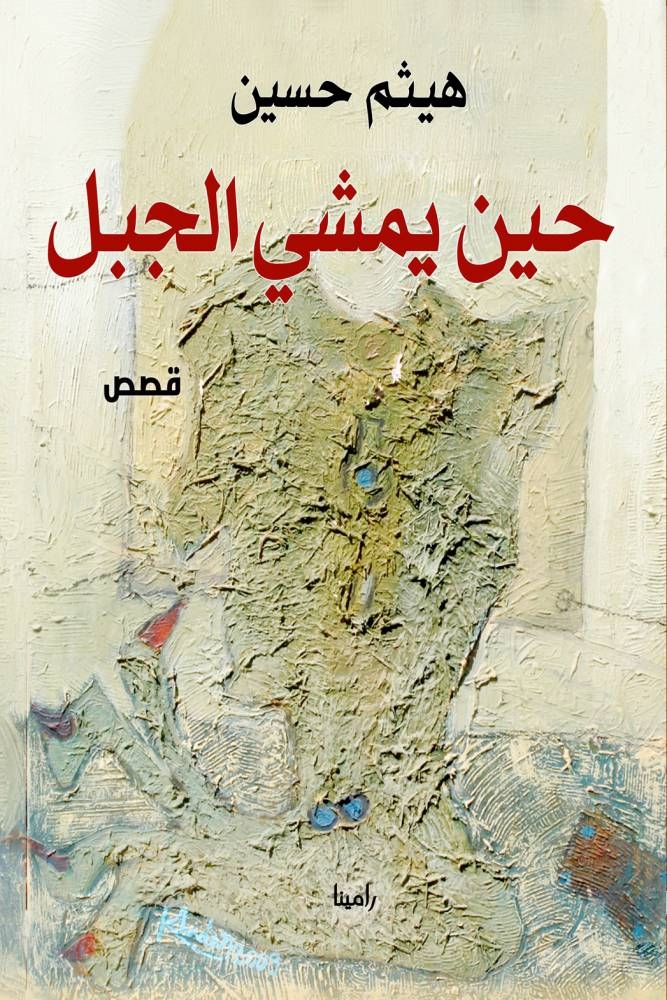
أصدر الكاتب السوري هيثم حسين، عمله الأحدث «حين يمشي الجبل» عن دار رامينا في لندن. والعمل عبارة عن مجموعة قصصيّة، يستعيد بها الكاتب من منفاه الهويّة بالأمل في مستقبل آمن، وتظل الرواية بالنسبة للكاتب الذي عرفه القرّاء عبر فضاء الرواية والسيرة والنقد (حياة)، فيما القصة عنده عوالم صغيرة.
وتضمّ المجموعة 24 نصاً قصصياً قصيراً عن عوالم داخلية مثقلة بالمنفى، تتقاطع فيها اللغة مع الذاكرة، والظلّ مع المعنى، والمنزل المؤقّت مع سؤال الانتماء للأبدي والدائم.
وتؤسّس مجموعة «حين يمشي الجبل» لحقبة زمنية، لتغدو وثيقة أدبية يمكن قراءتها باعتبارها أداةً للكشف والانمحاء، وللصمت بوصفه لغة. ويشكّل عنوان الكتاب «حين يمشي الجبل» مفتاحاً تأويلياً يختزل تجربة التحدّي والعبور واللاعودة، وزعزعة اليقينيّات، حيث الجبل، رمز الثبات، يتحوّل إلى كائن يتقدّم، يهرب، يتكلّم، يمشي ويشهد.
تُفتتح المجموعة بقصة «نافذة لا تُغلق»، التي تحوّل شقّةً لندنيّةً إلى فضاء للتماهي بين الحقيقيّ والمتخيّل، وتختم بـ«ظلّي العائد من الكتاب»، في بنية تحتفي بالكتابة كفعل مقاومة، وبينهما، تتوزّع القصص على محاور متداخلة، تحضر فيها صور الجبال التي تمشي، والمكتبات التي تُمحى، والهواتف التي تُسرق لتكشف هشاشة الهوية الرقمية، وشخصيات مثل الغجريّ الذي يحمل بقجته، والشاعر الذي قرّر أن يصمت، والمترجم الذي أضاع اسمه بين اللغات.
وفي قصة «قاموس شخصي»، يعيد حسين بناء علاقته بالكلمات بوصفها بقايا أماكن وشظايا لغات، بينما ترسم قصة «جسور لندن» لوحة غرائبية لمدينة تُفقد جسورها واحداً تلو الآخر، بوصفها استعارة لسقوط المعنى في المدن المنفية، وتقع في 196 صفحة من القطع الوسط.
وهيثم حسين: روائيّ كرديّ سوريّ، من مواليد عام 1978، مقيم في لندن، عضو جمعية المؤلفين في بريطانيا، مؤسّس ومدير موقع الرواية نت. ترجمت أعماله إلى الإنجليزيّة والفرنسيّة والتشيكيّة والكرديّة..
من أعماله الروائية والنقدية: «آرام سليل الأوجاع المكابرة»، «رهائن الخطيئة»، «إبرة الرعب»، «عشبة ضارّة في الفردوس»، «قد لا يبقى أحد»، «العنصريّ في غربته»، «كريستال أفريقيّ»، «الرواية بين التلغيم والتلغيز»، «الرواية والحياة»، «الروائيّ يقرع طبول الحرب»، «الشخصيّة الروائيّة.. مسبار الكشف والانطلاق»، «لماذا يجب أن تكون روائياً؟!».
يرى الرواية حياة والقصة عوالم صغيرة
هيثم حسين يستعيد من منفاه الأمل بـ«حين يمشي الجبل»
23 مايو 2025 - 07:39
|
آخر تحديث 23 مايو 2025 - 07:39


تابع قناة عكاظ على الواتساب
علي الرباعي (الباحة) Al_ARobai@
The Syrian writer Haitham Hussein has released his latest work "When the Mountain Walks" published by Rameena in London. The work is a collection of short stories, through which the writer recalls his identity from exile, with hope for a safe future. The novel remains, for the writer known to readers through the realm of novels, biography, and criticism (Life), while the story for him represents small worlds.
The collection includes 24 short narrative texts about internal worlds burdened by exile, where language intersects with memory, shadow with meaning, and the temporary home with the question of belonging to the eternal and the permanent.
The collection "When the Mountain Walks" establishes a temporal era, becoming a literary document that can be read as a tool for revelation and erasure, and silence as a language. The title of the book "When the Mountain Walks" serves as an interpretive key that encapsulates the experience of challenge, crossing, and non-return, and the destabilization of certainties, where the mountain, a symbol of stability, transforms into a being that advances, escapes, speaks, walks, and witnesses.
The collection opens with the story "A Window That Does Not Close," which transforms a London apartment into a space for merging the real and the imagined, and concludes with "My Shadow Returning from the Book," in a structure that celebrates writing as an act of resistance. Between these two stories, the narratives are distributed across overlapping axes, featuring images of walking mountains, libraries that are erased, and phones that are stolen to reveal the fragility of digital identity, along with characters such as the gypsy carrying his bundle, the poet who decided to remain silent, and the translator who lost his name among languages.
In the story "A Personal Dictionary," Hussein reconstructs his relationship with words as remnants of places and shards of languages, while the story "London Bridges" paints a surreal picture of a city losing its bridges one after another, serving as a metaphor for the collapse of meaning in exiled cities, spanning 196 pages of medium size.
Haitham Hussein is a Kurdish Syrian novelist, born in 1978, residing in London, a member of the Society of Authors in Britain, and the founder and director of the Novel Net website. His works have been translated into English, French, Czech, and Kurdish.
Among his narrative and critical works are: "Aram, the Heir of Defiant Sorrows," "Hostages of Sin," "The Needle of Horror," "A Harmful Herb in Paradise," "No One May Remain," "The Outsider in His Exile," "African Crystal," "The Novel Between Sabotage and Ambiguity," "The Novel and Life," "The Novelist Beats the Drums of War," "The Narrative Character... A Probe for Revelation and Launch," "Why Should You Be a Novelist?!"
The collection includes 24 short narrative texts about internal worlds burdened by exile, where language intersects with memory, shadow with meaning, and the temporary home with the question of belonging to the eternal and the permanent.
The collection "When the Mountain Walks" establishes a temporal era, becoming a literary document that can be read as a tool for revelation and erasure, and silence as a language. The title of the book "When the Mountain Walks" serves as an interpretive key that encapsulates the experience of challenge, crossing, and non-return, and the destabilization of certainties, where the mountain, a symbol of stability, transforms into a being that advances, escapes, speaks, walks, and witnesses.
The collection opens with the story "A Window That Does Not Close," which transforms a London apartment into a space for merging the real and the imagined, and concludes with "My Shadow Returning from the Book," in a structure that celebrates writing as an act of resistance. Between these two stories, the narratives are distributed across overlapping axes, featuring images of walking mountains, libraries that are erased, and phones that are stolen to reveal the fragility of digital identity, along with characters such as the gypsy carrying his bundle, the poet who decided to remain silent, and the translator who lost his name among languages.
In the story "A Personal Dictionary," Hussein reconstructs his relationship with words as remnants of places and shards of languages, while the story "London Bridges" paints a surreal picture of a city losing its bridges one after another, serving as a metaphor for the collapse of meaning in exiled cities, spanning 196 pages of medium size.
Haitham Hussein is a Kurdish Syrian novelist, born in 1978, residing in London, a member of the Society of Authors in Britain, and the founder and director of the Novel Net website. His works have been translated into English, French, Czech, and Kurdish.
Among his narrative and critical works are: "Aram, the Heir of Defiant Sorrows," "Hostages of Sin," "The Needle of Horror," "A Harmful Herb in Paradise," "No One May Remain," "The Outsider in His Exile," "African Crystal," "The Novel Between Sabotage and Ambiguity," "The Novel and Life," "The Novelist Beats the Drums of War," "The Narrative Character... A Probe for Revelation and Launch," "Why Should You Be a Novelist?!"


