


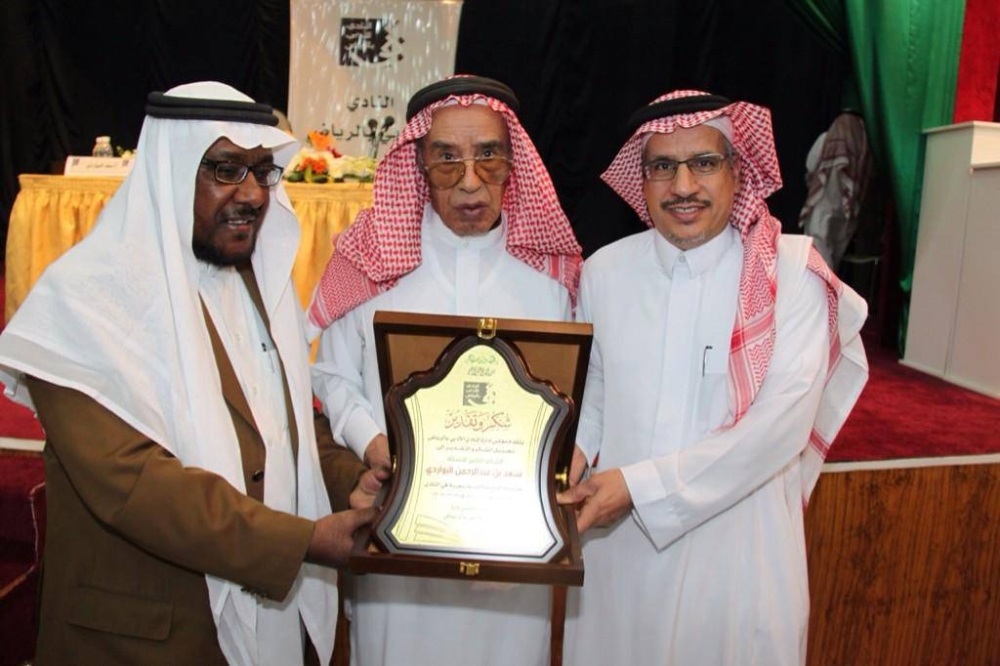
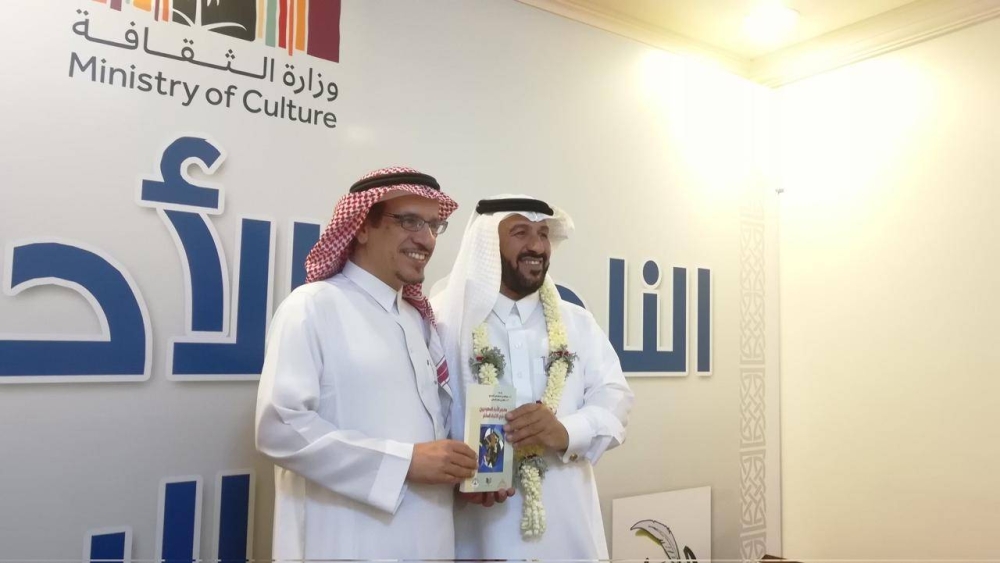
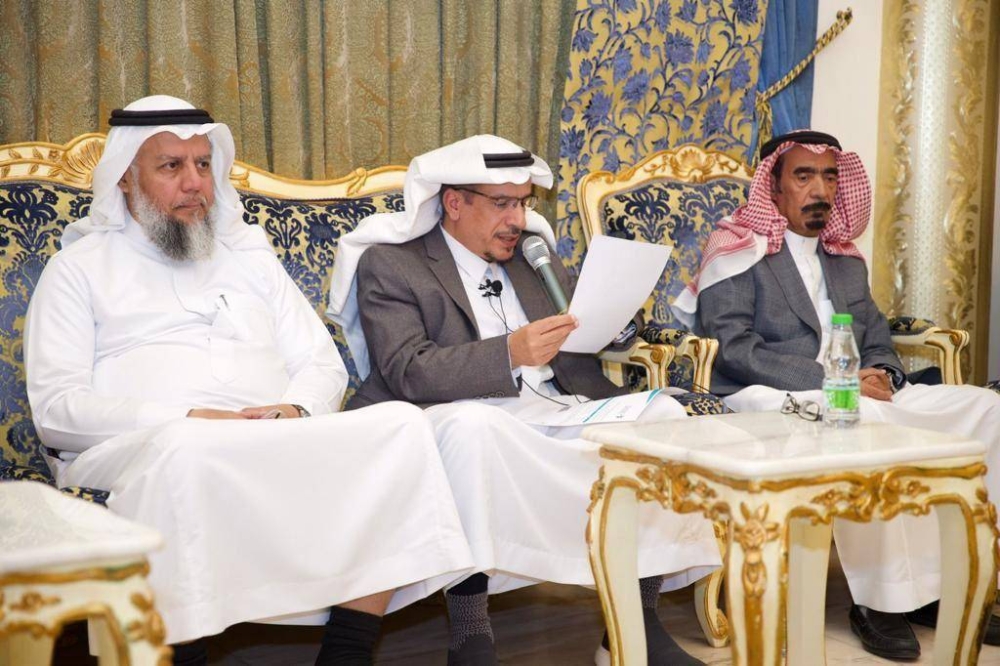
إذا ذُكرت آثار حسين سرحان النثرية، أو السيرة الذاتية في الأدب السعودي، أو النقد الأدبي في المملكة العربية السعودية، أو دليل الرسائل الجامعية في الأدب والنقد في المملكة العربية السعودية في الداخل والخارج، أو مؤتمرات الأدباء السعوديين، ذُكر ضيفنا الدكتور عبدالله الحيدري.
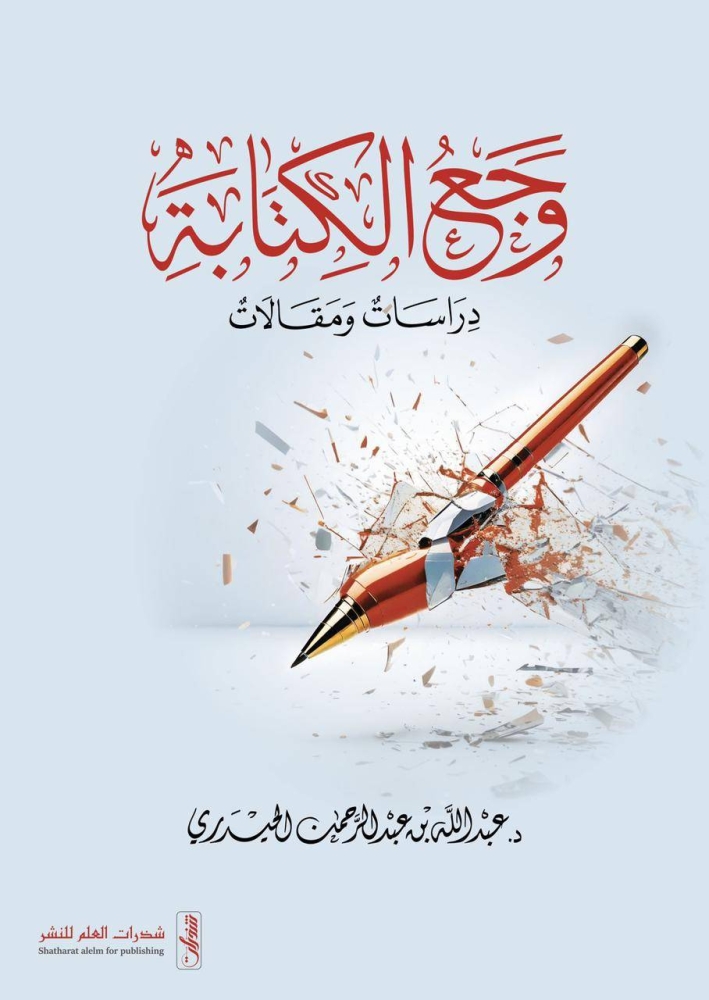
الحيدري المولود في محافظة ثادق في منطقة الرياض، والحاصل على جائزة ومنحة الملك سلمان (دارة الملك عبدالعزيز) عن بحثه «علي جواد الطاهر وجهوده في التأريخ للأدب في المملكة»، والمؤلف لما يزيد على 23 كتاباً مطبوعاً في الثقافة والأدب، كان أوّلها كتاب «أطياف شعبية» في عام 1413هـ وليس آخرها «وجع الكتابة.. دراسات ومقالات» في عام 1446هـ.
في هذا الحوار أخذنا الحديث مع الدكتور الحيدري إلى بدايات اهتمامه بالكتابة والنقد، والأسماء التي كان لها دور في مسيرته هذه، إضافة إلى عمله في العديد من المؤسسات الثقافية، وقراءته لحركة الثقافة في السعودية.. فإلى نصّ الحوار:
• كيف تشكّل وعيك الثقافي ابتداءً؟
•• تشكّل أول ما تشكّل في المنزل حينما كنت أشارك ابن العم حمد الحيدري القراءة في مكتبته الصغيرة، وحينما كنا نتناقش في بعض المسائل النحوية ونحن نذاكر مقرر النحو في شرح ابن عقيل، وحينما كنا نذهب للمكتبات نبحث عن بعض الكتب الجديدة مثل: كتب عبدالكريم الجهيمان، وكتب عبدالله بن خميس وغيرهما، وكنت وقتها في المتوسطة وأوائل الثانوية، وابن العم يكبرني بأربع سنوات.
• متى شعرت أنّك معنيٌّ بالكتابة والنقد؟
•• حين التحقت بالصحافة محرراً في الصفحات الثقافية عام 1991 في جريدة «المسائية»، وحين سجّلت رسالتي في الماجستير دارساً للسيرة الذاتية في الأدب السعودي عام 1993، وحين سجّلت رسالتي في الدكتوراه عام 1997 التي جمعت فيها أعمال حسين سرحان النثرية ودرستها، وقبل الماجستير وبعدها كانت لي عدة مشاركات في الأندية الأدبية وملتقياتها وشاركت بعدة بحوث، كما نشرت عدة مقالات وبحوث في الصحافة السعودية، واخترت منها ما يصلح للجمع، ونشرتها في كتابي الجديد «وجع الكتابة.. دراسات ومقالات» الصادر هذا العام (2025) في الرياض.
• أسماء كان لها دور كبير في مسيرتك الأدبيّة والعلميّة.
•• ثمة أسماء أدين لها بالفضل بعد الله في دعم مسيرتي، وفي المقدمة الدكتور إبراهيم الفوزان -رحمه الله- الذي أشرف على رسالتي في الماجستير والدكتوراه، والدكتور محمد الربيّع الذي شجعني على الالتحاق بالنادي الأدبي بالرياض وفي لجانه وفي دارة الملك عبدالعزيز، والأستاذ سعيد الصويّغ الذي أسهم في دعم مسيرتي الصحفية والإشراف على الصفحات الثقافية في جريدة «المسائية»، وهناك الأستاذ محمد بن عثمان المنصور في إذاعة الرياض، وهناك الزميل الدكتور عبدالله بن سليم الرشيد الذي استفدت منه الكثير بحكم الزمالة في كلية اللغة العربية نحو 20 عاماً، والدكتور عبدالله الوشمي في أثناء مزاملتي له في النادي الأدبي بالرياض.
• كيف ترى النقد الأدبي في المشهد الثقافي السعودي اليوم؟
•• أنا باحث ولست ناقداً، وإنْ كنت مارست النقد الأكاديمي في رسالتي الماجستير والدكتوراه وفي بحوث الترقية، ولكن لا أرى أن هذه الأعمال كلها تدفع بي إلى أن أكون ناقداً. النقد حرفة تحتاج إلى متابعة ممتازة للنصوص وعمل مقاربات لها وقراءات تُنشر في وسائل الإعلام، ثم تُجمع في كتب فتنفع المبدعين، وأرى حالياً وجود فجوة كبيرة بين المبدعين والنقاد، إذ لا نكاد نرى متابعة جادة لكل ما يصدر من أعمال إبداعية أو نصوص تنشر هنا وهناك، وشجعت وسائل التواصل على النشر دون فحص وتقويم أولي كما كان يحصل في وسائل الإعلام التقليدية وخصوصاً الصحف والمجلات، ومال عدد من المتذوقين للنصوص وبعض النقاد والأساتذة الجامعيين إلى المجاملة حين يستخدمون علامة الإعجاب أو إعادة التغريدة في «إكس» أو «فيسبوك»، كما أن المحفزات المادية والمعنوية السابقة من الصحف والمجلات للنقاد وطلب مقالات نقدية توقفت أو كادت، ويكفي أن نعرف مثلاً أن معظم مقالات علي الطنطاوي أو العقاد أو طه حسين، أو حسين سرحان أو عبدالفتاح أبومدين كُتبت بطلب من الصحافة أو الإذاعة، ثم جُمعت في كتب.
• عملت في مؤسسات ثقافية مختلفة وما زلت تعمل في بعضها، كيف تقيّم دور هذه المؤسسات في حراكنا الثقافي؟
•• نعم عملت في النادي الأدبي بالرياض، وفي جمعية الأدب العربي في مكة المكرمة، وتعاونت مع نادي جدة ونادي الباحة عضواً في لجان علمية، والآن تشهد الأندية الأدبية مرحلة تحوّل إلى جمعيات، ونتفاءل خيراً بعمل مؤسسي يكمل عمل الأندية ويشرك الشباب ويتفاعل مع المتغيرات، وآمل التوفيق لجميع الزملاء العاملين حالياً في الحقل الثقافي. وشخصياً لم أتوقف عن العمل الثقافي بعد خروجي من النادي الأدبي بالرياض عام 1438هـ/ 2017 بل اكتسبت عضويات عديدة؛ فأنا حالياً عضو مجلس إدارة جمعية العناية بالمكتبات الخاصة، وعضو مجلس إدارة الجمعية العلمية السعودية للغة العربية، وعضو المجلس الاستشاري في قيصرية الكتاب، وعضو الهيئة الاستشارية لمجلس أوراف الأدبي.
• أنت متتبّع لحركة الثقافة في المملكة ودول الخليج، كيف تنظر لحال المنتديات الأدبية والملتقيات الثقافية اليوم مقارنة بالماضي؟
•• لدي حنين للماضي حينما كنا نسعد بدورات المهرجان الوطني للتراث والثقافة كل عام، وعندما كانت تعقد ملتقيات الأندية الأدبية في كل المناطق، وبعدها دورات سوق عكاظ، وفي الخليج ثمة ملتقيات مهمة بدأت تتراجع. وعموماً أنا متفائل بوجود وزارة الثقافة بهيئاتها المختلفة، وهي تنهض حالياً بأعمال مؤسسية نوعية، ورأينا بواكير هذه الأعمال في الشريك الأدبي، وفي جمعية الأدب المهنية وفي ملتقيات الأدباء التي عُقدت في أبها والطائف وحائل، ويُنتظر أن تُعقد في مدن أخرى بحول الله. كما أن واقع الصالونات الثقافية حالياً في ازدهار وهناك أحياناً نقل مباشر للفعاليات.
• هناك جدل كبير في أوساط الأدباء والمثقفين حول الجوائز الأدبية، هل أنت مع الجوائز؟ وهل ترى أن هذه الجوائز تحسن اختيار الأعمال الفائزة؟
•• ظهرت لدينا في المملكة عدة جوائز كان لها أثر وتأثير وتحفيز للأدباء والباحثين والمبدعين وبعضها تُخصص في أفضل الكتب الصادرة، ولكن من عيوبها التعثر والتوقف بعد سنوات محدودة بسبب توقف الدعم لها، ولم نرَ جائزة منتظمة مثل جائزة الملك فيصل، ومن المفرح تبنّي وزارة الثقافة لعدد من الجوائز، وهي جوائز ينتظر لها الانتظام والاستمرارية لوجود المظلة الرسمية لها والدعم، وأطالب بالمزيد من الجوائز التي تغطي حقول المعرفة كافة وتنصف الباحثين في جميع المجالات، وأن يظفر الشباب بعدد منها، كما أطالب بمزيد من التحري والرويّة في اختيار المحكّمين المنصفين، وأتمنى أن تحصل أعمال الناقد المميز حسين بافقيه على جائزة محلية تنصف عمله المتواصل في خدمة الأدب والثقافة في المملكة.
• الرسائل الجامعية في حقول الأدب اليوم كثيرة ومتعددة، وهناك من يرى أنها ضعيفة إذا قورنت بالقليل المميّز في أوقات سابقة، كيف ينظر الدكتور عبدالله الحيدري لمثل هذا الرأي؟
•• رصدت ما يزيد على ألف رسالة جامعية في الماجستير والدكتوراه درست الأدب السعودي والأدباء السعوديين، ولكنني لا أزعم أنني اطلعت عليها كلها، صحيح أنني قرأت عدداً منها أثناء إعدادي للماجستير والدكتوراه، ثم أثناء إشرافي على بعض منها أو مناقشتها، ولكن من الصعب الحكم عليها، مع أنني أميل إلى أن الرسائل القديمة أقوى وأكثر رصانة علمية بدليل أن بعضها تحوّل إلى مراجع يكثر ورودها في معظم الدراسات والبحوث التي أُنجزت بعدها، ومن الأمثلة: أعمال محمد الشامخ، وأعمال محمد بن سعد بن حسين، وأعمال عبدالله أبو داهش، ورسالة محمد العوين في الماجستير عن المقالة، ورسالة سحمي الهاجري عن القصة القصيرة، ورسالة سلطان القحطاني عن الرواية السعودية، ورسالة عبدالله حامد عن أدب الرحلة، وغيرها من الرسائل، وهناك رسائل ممتازة وهي التي درست الشعر في بعض مناطق المملكة، ومن أهمها: رسالة خالد الحليبي عن الشعر في الأحساء، ورسالة حسن النعمي عن الشعر في جازان، ورسالة خالد الحافي عن الشعر في الرياض، ورسالة أحمد التيهاني عن الشعر في عسير. أما الرسائل الحديثة فهي تتفاوت في مستواها، وأعترف بوجود ضعف في بعضها، وهي مسألة نسبية إذ هناك فوارق كبيرة بين الأجيال السابقة وبين الأجيال الحالية في التحصيل العلمي والصبر والتحمل والطموح. ومما يؤخذ على الرسائل الحديثة التكرار في بعضها، ويكفي أن نعرف أن 50 باحثاً وباحثة تصدوا لدراسة أدب غازي القصيبي، في حين لم نجد رسالة تدرس شعر عبدالله جبر، أو شعر إبراهيم العواجي، وأرى لتلافي التكرار والازدواجية الاستعانة بقاعدة المعلومات المهمة التي نهض بها كرسي الأدب السعودي عن الرسائل الجامعية في الأدب السعودي، ومن المهم الاطلاع عليها قبل تسجيل أي موضوع.
• هل أنت مع النقد المسالم والناقد الوديع؟
•• أنا مع الفصل بين النص وصاحبه، وأرى أن يتجه الناقد بكل شجاعة لتقويم النص وبيان محاسنه وعيوبه، في حين يجب أن يكون مسالماً ووديعاً مع صاحب النص احتراماً وتوقيراً.
• ما أبرز التحديات اليوم التي تواجه الأستاذ الجامعي والناقد أيضاً؟
•• استخدام الذكاء الاصطناعي في إعداد البحوث الموجزة ذات الصفحات القليلة، أو في الماجستير والدكتوراه، والحمد لله أنني تقاعدت قبل انتشار استخدامه. أما الناقد فقد فَقَد المحفّزات التي كانت تمنح للكتّاب والنقاد في الماضي، إذ كانت هناك محفزات معنوية ومادية لم تعد موجودة حالياً في صحافة اليوم، ومن هنا فهناك حالة ركود في النقد على مستوى العالم العربي، مع وفرة الإنتاج الإبداعي وانتظام صدوره تقريباً. وهناك أسماء مهمة في الساحة تملك أدوات الناقد المتمكن، وأتمنى أن تُستقطب من خلال الصحف والمجلات، وأخص الدكتور ظافر بن غرمان العَمري، والدكتور سامي العجلان، والدكتور سعود اليوسف.
• كتاب تعود إليه دائماً؟ ولماذا؟
•• الكتاب هو «قاموس الأدب والأدباء في المملكة العربية السعودية» الصادر عن دارة الملك عبدالعزيز عام 1435هـ/ 2014 في ثلاثة مجلدات؛ إذ هو مرجع مهم ورصين لا يستغني عنه متخصص في الأدب السعودي، وهذا هو سبب تكرار عودتي له واستعانتي به في معظم بحوثي المحكّمة ومقالاتي، بل وبعض تغريداتي، وأتمنى أن تُعاد طباعته بعد تحديث معلوماته وإضافة تراجم جديدة له.
• نصيحة -بعد كلّ هذه السنوات في الكتابة والبحث والإعلام- للجيل الجديد من الكتّاب والنقاد والإعلاميين.
•• الجيل الجديد فُتحت له نوافذ لم يعرفها جيلي، ولديهم مهارات في البحث لا نملكها، ولذلك فقد أكون أنا بحاجة إلى خبراتهم وتجاربهم!
وكنت ألحّ على طلابي في مقرر «البحث» عندما كنت أدرّس طلبة الدكتوراه بالاهتمام بالكتب (الببلوغرافية) التي تُكشّف المجلات والصحف القديمة فهي مفاتيح العلوم للوصول إلى المعلومات بسرعة فائقة، والآن مع الذكاء الاصطناعي ربما تغيّرت الموازين!
قال إنّ الصحافة الثقافية لفتت انتباهه للكتابة والنقد
الحيدري لـ «عكاظ»: لدينا ضعف وتكرار في الرسائل الجامعية الحديثة!
4 يوليو 2025 - 05:58
|
آخر تحديث 4 يوليو 2025 - 05:58


تابع قناة عكاظ على الواتساب
حاوره: علي فايع (أبها)alma33e@
If the literary works of Hussein Sarhan, or the autobiography in Saudi literature, or literary criticism in the Kingdom of Saudi Arabia, or the guide to university theses in literature and criticism in Saudi Arabia, both domestically and abroad, or the conferences of Saudi writers are mentioned, our guest Dr. Abdullah Al-Haidari is mentioned.
Al-Haidari, born in the Thadiq governorate in the Riyadh region, and the recipient of the King Salman Award and Grant (King Abdulaziz Foundation) for his research "Ali Jawad Al-Tahir and His Efforts in Documenting Literature in the Kingdom," is the author of more than 23 published books in culture and literature, the first of which was "Popular Spectra" in 1413 AH and the latest being "The Pain of Writing... Studies and Articles" in 1446 AH.
In this dialogue, we discussed with Dr. Al-Haidari the beginnings of his interest in writing and criticism, the names that played a role in his journey, in addition to his work in various cultural institutions, and his reading of the cultural movement in Saudi Arabia... Here is the text of the dialogue:
• How did your cultural awareness begin to form?
•• It first formed at home when I used to share reading with my cousin Hamad Al-Haidari in his small library, and when we would discuss some grammatical issues while studying the grammar syllabus in Ibn Aqil's explanation, and when we would go to libraries searching for new books like those of Abdul Karim Al-Jahimān, and Abdullah bin Khamis, among others. At that time, I was in middle school and the early years of high school, and my cousin is four years older than me.
• When did you feel that you were concerned with writing and criticism?
•• When I joined the press as an editor in the cultural pages in 1991 at "Al-Masaa'iya" newspaper, and when I registered my master's thesis studying the autobiography in Saudi literature in 1993, and when I registered my doctoral thesis in 1997, which compiled the prose works of Hussein Sarhan and studied them. Before and after my master's, I had several participations in literary clubs and their gatherings and presented several research papers, as well as published several articles and research in Saudi press, selecting from them what was suitable for compilation, which I published in my new book "The Pain of Writing... Studies and Articles," released this year (2025) in Riyadh.
• Names that played a significant role in your literary and academic journey.
•• There are names I owe a debt of gratitude to, after God, for supporting my journey, foremost among them is Dr. Ibrahim Al-Fawzan - may he rest in peace - who supervised my master's and doctoral theses, and Dr. Mohammed Al-Rubai who encouraged me to join the literary club in Riyadh and its committees and at the King Abdulaziz Foundation, and Mr. Saeed Al-Suwaigh who contributed to supporting my journalistic journey and supervising the cultural pages at "Al-Masaa'iya" newspaper. There is also Mr. Mohammed bin Othman Al-Mansour at Riyadh Radio, and my colleague Dr. Abdullah bin Saleem Al-Rasheed from whom I benefited greatly due to our 20-year fellowship at the College of Arabic Language, and Dr. Abdullah Al-Washmi during my time with him at the literary club in Riyadh.
• How do you see literary criticism in the Saudi cultural scene today?
•• I am a researcher, not a critic, although I practiced academic criticism in my master's and doctoral theses and in promotion research. However, I do not see that all this work pushes me to be a critic. Criticism is a craft that requires excellent follow-up of texts, making comparisons, and readings published in the media, which are then compiled into books that benefit creators. Currently, I see a significant gap between creators and critics, as we hardly see serious follow-up of all the creative works or texts published here and there. Social media has encouraged publishing without initial examination and evaluation as was done in traditional media, especially newspapers and magazines. Some connoisseurs of texts, along with some critics and university professors, tend to flatter when they use the like button or retweet on "X" or "Facebook." Moreover, the previous material and moral incentives from newspapers and magazines for critics and requests for critical articles have ceased or nearly ceased. It suffices to know, for example, that most of the articles by Ali Al-Tantawi, Al-Aqqad, Taha Hussein, Hussein Sarhan, or Abdul Fattah Abu Madin were written at the request of the press or radio, and then compiled into books.
• You have worked in various cultural institutions and still work in some of them. How do you evaluate the role of these institutions in our cultural movement?
•• Yes, I have worked at the literary club in Riyadh, and in the Association of Arabic Literature in Mecca, and I collaborated with the Jeddah Club and the Al-Baha Club as a member of scientific committees. Currently, literary clubs are witnessing a transformation into associations, and we are optimistic about institutional work that complements the work of clubs, engages youth, and interacts with changes. I hope for success for all my colleagues currently working in the cultural field. Personally, I did not stop my cultural work after leaving the literary club in Riyadh in 1438 AH/2017; rather, I gained numerous memberships. I am currently a board member of the Association for the Care of Private Libraries, a board member of the Saudi Scientific Association for the Arabic Language, a member of the advisory council at the Book Bazaar, and a member of the advisory board for the Orav Literary Council.
• You are a follower of the cultural movement in the Kingdom and the Gulf countries. How do you view the state of literary forums and cultural gatherings today compared to the past?
•• I have a nostalgia for the past when we used to enjoy the National Festival for Heritage and Culture every year, and when literary club gatherings were held in all regions, followed by the Souk Okaz sessions. In the Gulf, there are important gatherings that have started to decline. Overall, I am optimistic about the presence of the Ministry of Culture with its various bodies, which is currently undertaking quality institutional work. We have seen the beginnings of this work in the literary partner, in the Professional Literature Association, and in the gatherings of writers held in Abha, Taif, and Hail, and it is expected that they will be held in other cities, God willing. The reality of cultural salons is currently flourishing, and there are sometimes live broadcasts of events.
• There is significant debate among writers and intellectuals regarding literary awards. Are you in favor of awards? Do you think these awards improve the selection of winning works?
•• Several awards have emerged in the Kingdom that have had an impact and influence, motivating writers, researchers, and creators, some of which are dedicated to the best books published. However, one of their drawbacks is the stumbling and cessation after a limited number of years due to the lack of support for them. We have not seen a consistent award like the King Faisal Prize. It is encouraging that the Ministry of Culture has adopted several awards, which are expected to be regular and continuous due to the official umbrella and support. I call for more awards covering all fields of knowledge and justly recognizing researchers in all areas, and for young people to win a number of them. I also call for more scrutiny and deliberation in selecting fair judges, and I hope that the distinguished critic Hussein Bafoqi will receive a local award that recognizes his continuous work in serving literature and culture in the Kingdom.
• University theses in the fields of literature today are numerous and varied. Some believe they are weak compared to the few distinguished ones in previous times. How does Dr. Abdullah Al-Haidari view such an opinion?
•• I have documented more than a thousand university theses in master's and doctoral programs that studied Saudi literature and Saudi writers, but I do not claim to have reviewed them all. It is true that I read several of them while preparing for my master's and doctoral studies, and then while supervising some of them or discussing them, but it is difficult to judge them. Although I tend to believe that older theses are stronger and more scientifically rigorous, as evidenced by the fact that some of them have become references frequently cited in most studies and research conducted afterward. Examples include the works of Mohammed Al-Shamikh, the works of Mohammed bin Saad bin Hussein, the works of Abdullah Abu Dahesh, Mohammed Al-Owain's thesis on the article, Sihami Al-Hajri's thesis on the short story, Sultan Al-Qahtani's thesis on Saudi novels, Abdullah Hamid's thesis on travel literature, and others. There are excellent theses that studied poetry in some regions of the Kingdom, among the most important being Khalid Al-Hulaibi's thesis on poetry in Al-Ahsa, Hassan Al-Nami's thesis on poetry in Jazan, Khalid Al-Hafi's thesis on poetry in Riyadh, and Ahmed Al-Tihani's thesis on poetry in Asir. As for modern theses, they vary in quality, and I admit there is weakness in some of them. This is a relative matter, as there are significant differences between previous generations and current generations in terms of academic achievement, patience, endurance, and ambition. One of the criticisms of modern theses is the repetition in some of them; it suffices to know that 50 researchers tackled the study of Ghazi Al-Qusaibi's literature, while we did not find a thesis studying the poetry of Abdullah Jabr or Ibrahim Al-Awaji. I believe to avoid repetition and redundancy, it is important to utilize the significant database established by the Saudi Literature Chair regarding university theses in Saudi literature, and it is essential to review it before registering any topic.
• Are you in favor of peaceful criticism and a gentle critic?
•• I am in favor of separating the text from its author, and I believe that the critic should courageously evaluate the text and point out its merits and flaws, while being peaceful and gentle with the author out of respect and reverence.
• What are the most prominent challenges today facing university professors and critics as well?
•• The use of artificial intelligence in preparing concise research of a few pages, whether in master's or doctoral studies, and thank God I retired before its widespread use. As for the critic, they have lost the incentives that were granted to writers and critics in the past, as there were moral and material incentives that no longer exist in today's press. Hence, there is a stagnation in criticism at the level of the Arab world, despite the abundance of creative production and its regular issuance. There are important names in the field that possess the tools of a capable critic, and I hope they are attracted through newspapers and magazines, especially Dr. Dhafir bin Ghrman Al-Amri, Dr. Sami Al-Ajlan, and Dr. Saud Al-Yusuf.
• A book you always return to? And why?
•• The book is "Dictionary of Literature and Writers in the Kingdom of Saudi Arabia," published by the King Abdulaziz Foundation in 1435 AH/2014 in three volumes; it is an important and solid reference that no specialist in Saudi literature can do without. This is why I repeatedly return to it and rely on it in most of my peer-reviewed research and articles, as well as some of my tweets. I hope it will be reprinted after updating its information and adding new biographies.
• A piece of advice—after all these years in writing, research, and media—for the new generation of writers, critics, and media professionals.
•• The new generation has been opened to windows that my generation did not know, and they possess research skills that we do not have, so I might need their experiences and insights!
I used to urge my students in the "Research" course when I taught doctoral students to pay attention to bibliographic books that reveal old magazines and newspapers, as they are keys to knowledge for accessing information at a rapid pace. Now, with artificial intelligence, perhaps the scales have changed!
Al-Haidari, born in the Thadiq governorate in the Riyadh region, and the recipient of the King Salman Award and Grant (King Abdulaziz Foundation) for his research "Ali Jawad Al-Tahir and His Efforts in Documenting Literature in the Kingdom," is the author of more than 23 published books in culture and literature, the first of which was "Popular Spectra" in 1413 AH and the latest being "The Pain of Writing... Studies and Articles" in 1446 AH.
In this dialogue, we discussed with Dr. Al-Haidari the beginnings of his interest in writing and criticism, the names that played a role in his journey, in addition to his work in various cultural institutions, and his reading of the cultural movement in Saudi Arabia... Here is the text of the dialogue:
• How did your cultural awareness begin to form?
•• It first formed at home when I used to share reading with my cousin Hamad Al-Haidari in his small library, and when we would discuss some grammatical issues while studying the grammar syllabus in Ibn Aqil's explanation, and when we would go to libraries searching for new books like those of Abdul Karim Al-Jahimān, and Abdullah bin Khamis, among others. At that time, I was in middle school and the early years of high school, and my cousin is four years older than me.
• When did you feel that you were concerned with writing and criticism?
•• When I joined the press as an editor in the cultural pages in 1991 at "Al-Masaa'iya" newspaper, and when I registered my master's thesis studying the autobiography in Saudi literature in 1993, and when I registered my doctoral thesis in 1997, which compiled the prose works of Hussein Sarhan and studied them. Before and after my master's, I had several participations in literary clubs and their gatherings and presented several research papers, as well as published several articles and research in Saudi press, selecting from them what was suitable for compilation, which I published in my new book "The Pain of Writing... Studies and Articles," released this year (2025) in Riyadh.
• Names that played a significant role in your literary and academic journey.
•• There are names I owe a debt of gratitude to, after God, for supporting my journey, foremost among them is Dr. Ibrahim Al-Fawzan - may he rest in peace - who supervised my master's and doctoral theses, and Dr. Mohammed Al-Rubai who encouraged me to join the literary club in Riyadh and its committees and at the King Abdulaziz Foundation, and Mr. Saeed Al-Suwaigh who contributed to supporting my journalistic journey and supervising the cultural pages at "Al-Masaa'iya" newspaper. There is also Mr. Mohammed bin Othman Al-Mansour at Riyadh Radio, and my colleague Dr. Abdullah bin Saleem Al-Rasheed from whom I benefited greatly due to our 20-year fellowship at the College of Arabic Language, and Dr. Abdullah Al-Washmi during my time with him at the literary club in Riyadh.
• How do you see literary criticism in the Saudi cultural scene today?
•• I am a researcher, not a critic, although I practiced academic criticism in my master's and doctoral theses and in promotion research. However, I do not see that all this work pushes me to be a critic. Criticism is a craft that requires excellent follow-up of texts, making comparisons, and readings published in the media, which are then compiled into books that benefit creators. Currently, I see a significant gap between creators and critics, as we hardly see serious follow-up of all the creative works or texts published here and there. Social media has encouraged publishing without initial examination and evaluation as was done in traditional media, especially newspapers and magazines. Some connoisseurs of texts, along with some critics and university professors, tend to flatter when they use the like button or retweet on "X" or "Facebook." Moreover, the previous material and moral incentives from newspapers and magazines for critics and requests for critical articles have ceased or nearly ceased. It suffices to know, for example, that most of the articles by Ali Al-Tantawi, Al-Aqqad, Taha Hussein, Hussein Sarhan, or Abdul Fattah Abu Madin were written at the request of the press or radio, and then compiled into books.
• You have worked in various cultural institutions and still work in some of them. How do you evaluate the role of these institutions in our cultural movement?
•• Yes, I have worked at the literary club in Riyadh, and in the Association of Arabic Literature in Mecca, and I collaborated with the Jeddah Club and the Al-Baha Club as a member of scientific committees. Currently, literary clubs are witnessing a transformation into associations, and we are optimistic about institutional work that complements the work of clubs, engages youth, and interacts with changes. I hope for success for all my colleagues currently working in the cultural field. Personally, I did not stop my cultural work after leaving the literary club in Riyadh in 1438 AH/2017; rather, I gained numerous memberships. I am currently a board member of the Association for the Care of Private Libraries, a board member of the Saudi Scientific Association for the Arabic Language, a member of the advisory council at the Book Bazaar, and a member of the advisory board for the Orav Literary Council.
• You are a follower of the cultural movement in the Kingdom and the Gulf countries. How do you view the state of literary forums and cultural gatherings today compared to the past?
•• I have a nostalgia for the past when we used to enjoy the National Festival for Heritage and Culture every year, and when literary club gatherings were held in all regions, followed by the Souk Okaz sessions. In the Gulf, there are important gatherings that have started to decline. Overall, I am optimistic about the presence of the Ministry of Culture with its various bodies, which is currently undertaking quality institutional work. We have seen the beginnings of this work in the literary partner, in the Professional Literature Association, and in the gatherings of writers held in Abha, Taif, and Hail, and it is expected that they will be held in other cities, God willing. The reality of cultural salons is currently flourishing, and there are sometimes live broadcasts of events.
• There is significant debate among writers and intellectuals regarding literary awards. Are you in favor of awards? Do you think these awards improve the selection of winning works?
•• Several awards have emerged in the Kingdom that have had an impact and influence, motivating writers, researchers, and creators, some of which are dedicated to the best books published. However, one of their drawbacks is the stumbling and cessation after a limited number of years due to the lack of support for them. We have not seen a consistent award like the King Faisal Prize. It is encouraging that the Ministry of Culture has adopted several awards, which are expected to be regular and continuous due to the official umbrella and support. I call for more awards covering all fields of knowledge and justly recognizing researchers in all areas, and for young people to win a number of them. I also call for more scrutiny and deliberation in selecting fair judges, and I hope that the distinguished critic Hussein Bafoqi will receive a local award that recognizes his continuous work in serving literature and culture in the Kingdom.
• University theses in the fields of literature today are numerous and varied. Some believe they are weak compared to the few distinguished ones in previous times. How does Dr. Abdullah Al-Haidari view such an opinion?
•• I have documented more than a thousand university theses in master's and doctoral programs that studied Saudi literature and Saudi writers, but I do not claim to have reviewed them all. It is true that I read several of them while preparing for my master's and doctoral studies, and then while supervising some of them or discussing them, but it is difficult to judge them. Although I tend to believe that older theses are stronger and more scientifically rigorous, as evidenced by the fact that some of them have become references frequently cited in most studies and research conducted afterward. Examples include the works of Mohammed Al-Shamikh, the works of Mohammed bin Saad bin Hussein, the works of Abdullah Abu Dahesh, Mohammed Al-Owain's thesis on the article, Sihami Al-Hajri's thesis on the short story, Sultan Al-Qahtani's thesis on Saudi novels, Abdullah Hamid's thesis on travel literature, and others. There are excellent theses that studied poetry in some regions of the Kingdom, among the most important being Khalid Al-Hulaibi's thesis on poetry in Al-Ahsa, Hassan Al-Nami's thesis on poetry in Jazan, Khalid Al-Hafi's thesis on poetry in Riyadh, and Ahmed Al-Tihani's thesis on poetry in Asir. As for modern theses, they vary in quality, and I admit there is weakness in some of them. This is a relative matter, as there are significant differences between previous generations and current generations in terms of academic achievement, patience, endurance, and ambition. One of the criticisms of modern theses is the repetition in some of them; it suffices to know that 50 researchers tackled the study of Ghazi Al-Qusaibi's literature, while we did not find a thesis studying the poetry of Abdullah Jabr or Ibrahim Al-Awaji. I believe to avoid repetition and redundancy, it is important to utilize the significant database established by the Saudi Literature Chair regarding university theses in Saudi literature, and it is essential to review it before registering any topic.
• Are you in favor of peaceful criticism and a gentle critic?
•• I am in favor of separating the text from its author, and I believe that the critic should courageously evaluate the text and point out its merits and flaws, while being peaceful and gentle with the author out of respect and reverence.
• What are the most prominent challenges today facing university professors and critics as well?
•• The use of artificial intelligence in preparing concise research of a few pages, whether in master's or doctoral studies, and thank God I retired before its widespread use. As for the critic, they have lost the incentives that were granted to writers and critics in the past, as there were moral and material incentives that no longer exist in today's press. Hence, there is a stagnation in criticism at the level of the Arab world, despite the abundance of creative production and its regular issuance. There are important names in the field that possess the tools of a capable critic, and I hope they are attracted through newspapers and magazines, especially Dr. Dhafir bin Ghrman Al-Amri, Dr. Sami Al-Ajlan, and Dr. Saud Al-Yusuf.
• A book you always return to? And why?
•• The book is "Dictionary of Literature and Writers in the Kingdom of Saudi Arabia," published by the King Abdulaziz Foundation in 1435 AH/2014 in three volumes; it is an important and solid reference that no specialist in Saudi literature can do without. This is why I repeatedly return to it and rely on it in most of my peer-reviewed research and articles, as well as some of my tweets. I hope it will be reprinted after updating its information and adding new biographies.
• A piece of advice—after all these years in writing, research, and media—for the new generation of writers, critics, and media professionals.
•• The new generation has been opened to windows that my generation did not know, and they possess research skills that we do not have, so I might need their experiences and insights!
I used to urge my students in the "Research" course when I taught doctoral students to pay attention to bibliographic books that reveal old magazines and newspapers, as they are keys to knowledge for accessing information at a rapid pace. Now, with artificial intelligence, perhaps the scales have changed!


