في وقت أصبحت فيه الرسائل المجهولة والروابط المشبوهة جزءاً من المشهد الرقمي اليومي، يواجه مستخدمو الإنترنت تحدياً متزايداً يتمثل في التمييز بين المحتوى الحقيقي ومحاولات الاحتيال التي أصبحت أكثر تطوراً وإقناعاً من أي وقت مضى. وفي خطوة تهدف إلى تعزيز الوعي الرقمي ومساعدة الأفراد على حماية أنفسهم، أطلقت شركة Meta بالتعاون مع الهيئة العامة لتنظيم الإعلام مبادرة «شيك» تحمل رسالة بسيطة ومباشرة: شيّك قبل تتفاعل.
وتهدف المبادرة إلى رفع الوعي بأساليب الاحتيال الإلكتروني المنتشرة، وتشجيع أفراد المجتمع على التوقف للحظة قبل النقر على رابط أو مشاركة رسالة أو تقديم معلومات شخصية، خصوصاً في ظل تنامي أساليب التحايل التي تستغل ثقة المستخدمين أو تدفعهم للتصرف بسرعة دون التحقق من صحة المحتوى. وتسعى الحملة إلى الوصول إلى مختلف فئات المجتمع السعودي من خلال محتوى توعوي مبسط يقدمه عدد من صناع المحتوى المحليين، بهدف نشر ثقافة التحقق الرقمي بأسلوب قريب من الجمهور وسهل الفهم.
اليوم، لم تعد محاولات الاحتيال تقتصر على رسائل مجهولة المصدر أو عروض تبدو غير منطقية. بل أصبحت أكثر احترافية وقد تصل للمستخدم على شكل رسالة تبدو وكأنها من جهة معروفة، أو رابط يدّعي تقديم خدمة أو جائزة أو فرصة استثمارية. وفي كثير من الأحيان، يعتمد المحتالون على عامل الاستعجال لدفع المستخدمين إلى اتخاذ قرار سريع قبل التفكير أو التحقق.
ومن هنا تأتي فكرة مبادرة «شيك»، التي تدعو المستخدمين إلى تبني عادة بسيطة قد تصنع فارقاً كبيراً: التريث والتحقق قبل التفاعل مع أي محتوى مشبوه. ويأتي ذلك في وقت تتجه فيه العديد من المبادرات حول العالم إلى الاستفادة من أدوات الذكاء الاصطناعي لجعل الحماية الرقمية أقرب إلى المستخدمين وأكثر سهولة في الاستخدام ضمن حياتهم اليومية.
وبالتوازي مع جهود التوعية، تشجع الحملة المستخدمين على اتباع عدد من الممارسات التي يمكن أن تساعد في الحد من مخاطر الاحتيال الإلكتروني، من أبرزها:
• توخي الحذر من الرسائل العاجلة التي تعد بجوائز أو هدايا أو عوائد مالية مرتفعة.
• التحقق من الروابط والعروض شخصياً قبل النقر عليها أو مشاركة أي معلومات شخصية.
• تفعيل خاصية المصادقة الثنائية ومراجعة إعدادات أمن الحسابات بشكل منتظم.
• الإبلاغ عن الحسابات أو الرسائل أو الإعلانات المشبوهة مباشرة من داخل التطبيق.
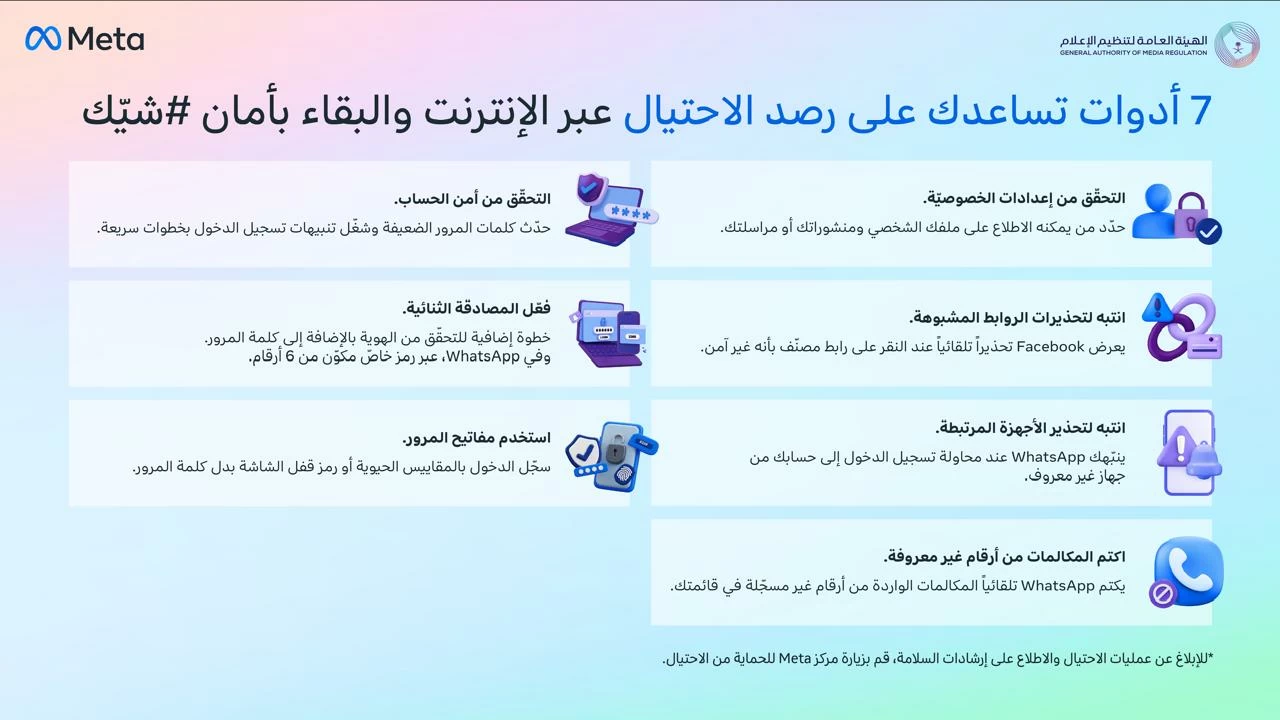
كما تسلط المبادرة الضوء على مجموعة من الأدوات المتاحة من Meta للمستخدمين لتعزيز سلامة حساباتهم، مثل التحقق من أمن الحساب، والمصادقة الثنائية، ومفاتيح المرور، والتحقق من إعدادات الخصوصية، إضافة إلى التحذيرات من الروابط المشبوهة والتنبيهات المرتبطة بمحاولات الوصول غير المعروفة للحسابات.
ويرى مختصون في السلامة الرقمية أن الوعي يبقى أحد أهم خطوط الدفاع في مواجهة الاحتيال الإلكتروني، خصوصاً مع الأساليب المتغيرة التي يستخدمها المحتالون لاستهداف الأفراد عبر أكثر من منصة في الوقت نفسه. وفي ظل الاعتماد المتزايد على الخدمات الرقمية والتواصل عبر الإنترنت، تأتي مبادرة «شيك» لتؤكد أهمية بناء سلوك رقمي واعٍ يقوم على التحقق قبل التفاعل، وهي خطوة بسيطة في ظاهرها، لكنها قد تكون كفيلة بتجنب الكثير من محاولات الاحتيال قبل وقوعها.
At a time when anonymous messages and suspicious links have become part of the daily digital landscape, internet users face an increasing challenge in distinguishing between genuine content and fraud attempts that have become more sophisticated and convincing than ever. In a move aimed at enhancing digital awareness and helping individuals protect themselves, Meta, in collaboration with the General Authority for Media Regulation, launched the "Check" initiative, which carries a simple and direct message: Check before you interact.
The initiative aims to raise awareness of prevalent online fraud tactics and encourage community members to pause for a moment before clicking on a link, sharing a message, or providing personal information, especially in light of the growing fraudulent methods that exploit users' trust or push them to act quickly without verifying the content's authenticity. The campaign seeks to reach various segments of Saudi society through simplified awareness content presented by a number of local content creators, with the goal of spreading a culture of digital verification in a way that is relatable and easy to understand for the audience.
Today, fraud attempts are no longer limited to anonymous messages or offers that seem illogical. They have become more professional and may reach users in the form of a message that appears to be from a known entity, or a link claiming to offer a service, prize, or investment opportunity. Often, fraudsters rely on a sense of urgency to push users into making quick decisions before thinking or verifying.
This is where the idea of the "Check" initiative comes in, encouraging users to adopt a simple habit that can make a significant difference: to pause and verify before interacting with any suspicious content. This comes at a time when many initiatives around the world are leveraging artificial intelligence tools to make digital protection closer to users and easier to integrate into their daily lives.
Alongside awareness efforts, the campaign encourages users to follow a number of practices that can help reduce the risks of online fraud, including:
• Being cautious of urgent messages promising prizes, gifts, or high financial returns.
• Personally verifying links and offers before clicking on them or sharing any personal information.
• Enabling two-factor authentication and regularly reviewing account security settings.
• Reporting suspicious accounts, messages, or advertisements directly from within the app.
The initiative also highlights a range of tools available from Meta for users to enhance their account safety, such as account security checks, two-factor authentication, password keys, and privacy settings verification, in addition to warnings about suspicious links and alerts related to unknown access attempts to accounts.
Digital safety specialists believe that awareness remains one of the most important lines of defense against online fraud, especially with the changing methods used by fraudsters to target individuals across multiple platforms simultaneously. In light of the increasing reliance on digital services and online communication, the "Check" initiative emphasizes the importance of building a conscious digital behavior based on verification before interaction, which is a seemingly simple step but can be crucial in avoiding many fraud attempts before they occur.