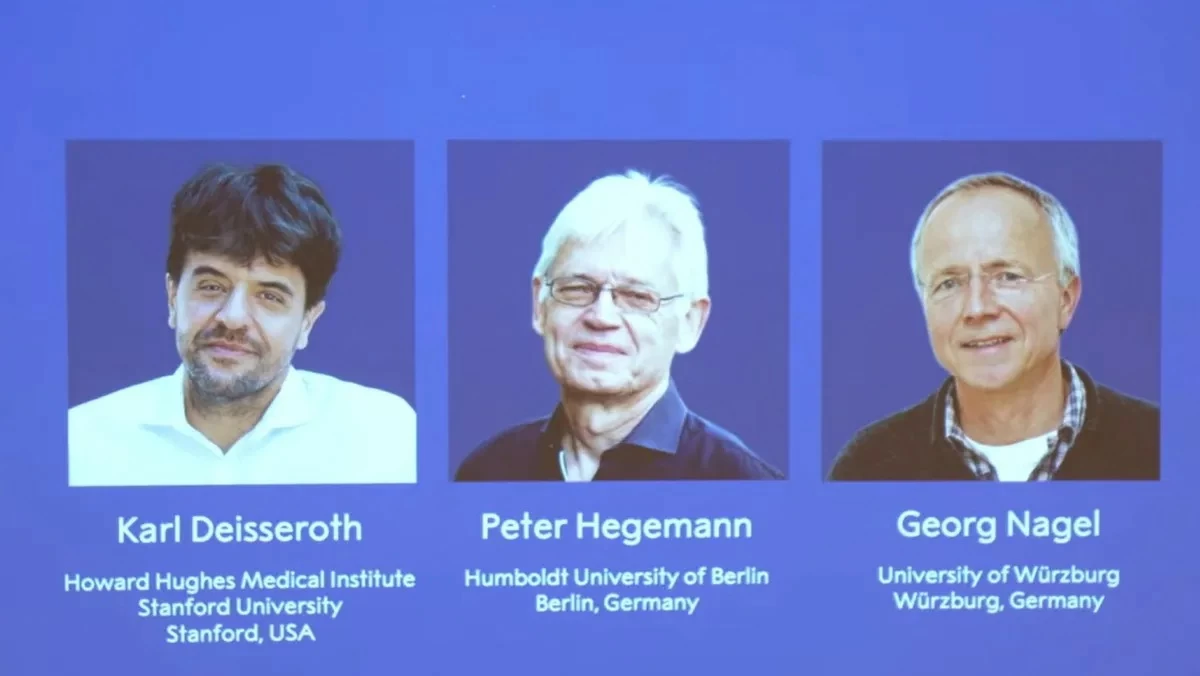
أعلنت الجمعية النوبلية التابعة لمعهد كارولينسكا في السويد، اليوم (الإثنين)، منح جائزة نوبل في علم وظائف الأعضاء أو الطب لعام 2026 إلى الأمريكي كارل ديسيروث والألمانيين بيتر هيغمان وغيورغ ناغل، تقديرًا لاكتشافاتهم المتعلقة بالقنوات الأيونية الحساسة للضوء وتطوير تقنية «علم البصريات الوراثي» أو Optogenetics، التي أسهمت في تغيير طريقة دراسة وظائف الدماغ.
وقالت الجمعية إن العلماء الثلاثة حصلوا على الجائزة عن «اكتشافاتهم المتعلقة بالقنوات الأيونية التي تُفتح بالضوء وعلم البصريات الوراثي».
وتبلغ قيمة الجائزة 12 مليون كرونة سويدية، أي نحو 1.2 مليون دولار، يتقاسمها العلماء الثلاثة.
تقنية تتيح التحكم في الخلايا العصبية بالضوء
وقال توماس بيرلمان، الأمين العام للجمعية النوبلية في معهد كارولينسكا، إن علم البصريات الوراثي يجعل من الممكن تشغيل نشاط خلايا عصبية بعينها أو إيقافه داخل دماغ حي.
وأضاف أن هذه التقنية تُستخدم حاليًا في مختبرات حول العالم للمساعدة في كشف أسرار الدماغ وفهم الطريقة التي تعمل بها شبكاته العصبية.
وتقوم التقنية على إدخال بروتينات حساسة للضوء إلى خلايا محددة، بما يسمح للباحثين بالتحكم في نشاطها باستخدام الضوء، وهو ما يوفر مستوى من الدقة لا تتيحه الطرق التقليدية لدراسة الجهاز العصبي.
من الطحالب إلى الخلايا العصبية
تعود جذور الاكتشاف إلى أوائل تسعينيات القرن الماضي، عندما كان بيتر هيغمان يدرس كيفية استجابة طحلب Chlamydomonas للضوء خلال أجزاء صغيرة جدًا من الثانية.
وافترض هيغمان أن بروتينًا واحدًا ربما يكون مسؤولًا عن التقاط الضوء والعمل كقناة تسمح بمرور الأيونات عبر غشاء الخلية.
واختبر غيورغ ناغل هذه الفكرة من خلال إدخال جينات من الطحلب إلى بويضات الضفادع، ليكتشف بروتين Channelrhodopsin-2، وهو قناة أيونية تفتح عند تعرضها للضوء.
وفي عام 2003، نشر هيغمان وناغل نتائج أظهرت إمكانية إدخال هذا البروتين إلى خلايا بشرية وخلايا هامستر، بما يسمح بإحداث نبضات كهربائية فيها باستخدام الضوء.
وبعد عامين، في 2005، أثبت كارل ديسيروث، الذي كان يعمل في جامعة ستانفورد، إمكانية استخدام التقنية في الخلايا العصبية لدى الفئران. وفي العام التالي أُطلق على هذا النهج اسم علم البصريات الوراثي.
آمال في علاج العمى وتحسين زراعة القوقعة
ولم تعد تقنية علم البصريات الوراثي مقتصرة على الأبحاث المخبرية، إذ تُجرى حاليًا تجارب سريرية تستهدف استعادة قدر من الرؤية لدى أشخاص فقدوا بصرهم بسبب مرض التهاب الشبكية الصباغي.
وتعتمد هذه الأبحاث على إدخال بروتين حساس للضوء إلى خلايا في شبكية العين، بهدف إعادة قدرتها على الاستجابة للضوء.
كما يأمل الباحثون في إمكانية استخدام المبادئ ذاتها لتطوير زراعة القوقعة، من خلال تحقيق تحفيز أكثر دقة للعصب السمعي مقارنة بالأجهزة الحالية التي تعتمد على التحفيز الكهربائي.
العلماء الثلاثة فوجئوا بالجائزة
وقال بيرلمان إنه تحدث إلى العلماء الثلاثة صباح إعلان الجائزة، مشيرًا إلى أنهم عبروا عن سعادتهم ودهشتهم بالحصول عليها معًا.
وبحسب بيرلمان، أكد العلماء الثلاثة أنهم يشعرون بسعادة خاصة لتقاسم الجائزة مع زميليهما، ووصف كل منهم الآخرين بأنهم أصدقاء.
بداية موسم جوائز نوبل
وتفتتح جائزة نوبل في علم وظائف الأعضاء أو الطب تقليديًا موسم الإعلان عن جوائز نوبل، تليها جوائز الفيزياء والكيمياء والأدب والسلام والاقتصاد خلال الأيام التالية.
ومنذ إنشاء جوائز نوبل عام 1901، كُرّم عدد من أبرز الاكتشافات العلمية والطبية في التاريخ، من بينها اكتشاف البنسلين الذي مُنحت عنه الجائزة لألكسندر فليمنغ عام 1945، واكتشاف فصائل الدم البشرية الذي نال عنه كارل لاندشتاينر الجائزة عام 1930.
وفي العام الماضي، فاز الأمريكيان ماري برانكوف وفريد رامسديل والياباني شيمون ساكاغوتشي بجائزة نوبل للطب عن أبحاث ساعدت في فهم الآليات التي تمنع الجهاز المناعي من مهاجمة خلايا الجسم السليمة، وما قد تتيحه هذه المعرفة من فرص لعلاج أمراض، من بينها السرطان.
ويختار الفائزين لجان علمية متخصصة تعينها المؤسسات المسؤولة عن منح الجوائز.
احتفالات نوبل تتوج في ديسمبر
وتُمنح معظم جوائز نوبل في العاصمة السويدية ستوكهولم، بينما تُمنح جائزة نوبل للسلام في العاصمة النرويجية أوسلو.
وتبلغ احتفالات نوبل ذروتها في 10 ديسمبر، ذكرى وفاة مؤسس الجوائز ألفريد نوبل، حيث يتسلم الفائزون جوائزهم خلال مراسم رسمية بحضور العائلتين الملكيتين في السويد والنرويج، قبل إقامة مآدب احتفالية تكريمًا للفائزين.
ويعكس فوز ديسيروث وهيغمان وناغل أهمية أبحاث التحكم في النشاط العصبي بالضوء، التي انتقلت خلال عقود من دراسة استجابة طحالب للضوء إلى تقنية تُستخدم لفهم الدماغ واستكشاف تطبيقات علاجية محتملة في أمراض عصبية وبصرية.
The Nobel Assembly at the Karolinska Institute in Sweden announced today (Monday) the awarding of the Nobel Prize in Physiology or Medicine for 2026 to American Karl Deisseroth and Germans Peter Hegemann and Georg Nagel, in recognition of their discoveries related to light-sensitive ion channels and the development of the technique known as "optogenetics," which has contributed to changing the way brain functions are studied.
The assembly stated that the three scientists received the prize for "their discoveries related to light-activated ion channels and optogenetics."
The prize is valued at 12 million Swedish kronor, approximately 1.2 million dollars, which will be shared among the three scientists.
A technique that allows control of nerve cells with light
Thomas Perlman, the secretary general of the Nobel Assembly at the Karolinska Institute, stated that optogenetics makes it possible to activate or deactivate the activity of specific nerve cells within a living brain.
He added that this technique is currently being used in laboratories around the world to help uncover the secrets of the brain and understand how its neural networks operate.
The technique involves introducing light-sensitive proteins into specific cells, allowing researchers to control their activity using light, providing a level of precision not achievable with traditional methods of studying the nervous system.
From algae to nerve cells
The roots of the discovery date back to the early 1990s when Peter Hegemann was studying how the Chlamydomonas algae respond to light in very small fractions of a second.
Hegemann hypothesized that a single protein might be responsible for capturing light and acting as a channel that allows ions to pass through the cell membrane.
Georg Nagel tested this idea by introducing genes from the algae into frog eggs, discovering the protein Channelrhodopsin-2, which is an ion channel that opens when exposed to light.
In 2003, Hegemann and Nagel published results showing the possibility of introducing this protein into human and hamster cells, enabling the generation of electrical pulses in them using light.
Two years later, in 2005, Karl Deisseroth, who was working at Stanford University, demonstrated the potential of using the technique in the nerve cells of mice. The following year, this approach was named optogenetics.
Hopes for treating blindness and improving cochlear implants
Optogenetics is no longer limited to laboratory research, as clinical trials are currently underway aimed at restoring some vision to individuals who have lost their sight due to retinitis pigmentosa.
This research relies on introducing a light-sensitive protein into cells in the retina, with the goal of restoring their ability to respond to light.
Researchers also hope to apply the same principles to develop cochlear implants, achieving more precise stimulation of the auditory nerve compared to current devices that rely on electrical stimulation.
The three scientists were surprised by the award
Perlman stated that he spoke to the three scientists on the morning of the award announcement, noting that they expressed their happiness and astonishment at receiving it together.
According to Perlman, the three scientists confirmed that they feel particularly happy to share the prize with their colleagues, describing each other as friends.
Beginning of the Nobel Prize season
The Nobel Prize in Physiology or Medicine traditionally opens the season for announcing Nobel Prizes, followed by the prizes in physics, chemistry, literature, peace, and economics in the following days.
Since the establishment of the Nobel Prizes in 1901, several of the most significant scientific and medical discoveries in history have been honored, including the discovery of penicillin for which Alexander Fleming received the prize in 1945, and the discovery of human blood groups for which Karl Landsteiner was awarded the prize in 1930.
Last year, Americans Mary Brankov and Fred Ramsdell, along with Japanese Shimon Sakaguchi, won the Nobel Prize in Medicine for research that helped understand the mechanisms preventing the immune system from attacking healthy body cells, and the potential opportunities this knowledge could provide for treating diseases, including cancer.
The winners are chosen by specialized scientific committees appointed by the institutions responsible for awarding the prizes.
Nobel celebrations culminate in December
Most Nobel Prizes are awarded in the Swedish capital, Stockholm, while the Nobel Peace Prize is awarded in the Norwegian capital, Oslo.
The Nobel celebrations peak on December 10, the anniversary of the death of the prizes' founder, Alfred Nobel, where the winners receive their awards during an official ceremony attended by the royal families of Sweden and Norway, followed by festive banquets honoring the winners.
The victory of Deisseroth, Hegemann, and Nagel reflects the importance of research in controlling neural activity with light, which has evolved over decades from studying the light response of algae to a technique used to understand the brain and explore potential therapeutic applications in neurological and visual diseases.