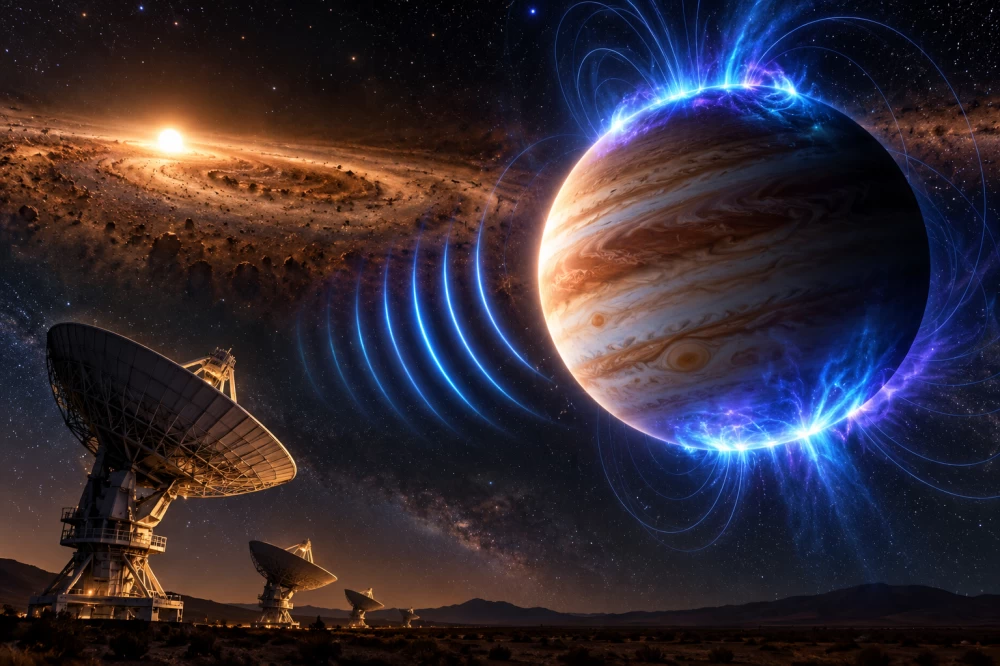
تمكن فريق من علماء الفلك من رصد انبعاثات راديوية صادرة مباشرة من كوكب خارج المجموعة الشمسية للمرة الأولى، في اكتشاف قد يفتح نافذة جديدة أمام دراسة المجالات المغناطيسية للكواكب البعيدة وتركيبتها الداخلية.
وأوضح الباحثون أن الإشارات مصدرها الكوكب العملاق «بيتا بيكتوريس b» (Beta Pictoris b)، الذي يدور حول نجم يبعد نحو 63 سنة ضوئية عن الأرض، وهو عملاق غازي شاب تبلغ كتلته نحو 12 ضعف كتلة المشتري.
واستخدم الفريق مصفوفة التلسكوبات الراديوية MeerKAT في جنوب أفريقيا، حيث رصد دفعات راديوية سريعة ومتكررة وشديدة الاستقطاب الدائري، إلى جانب انبعاثات مستمرة، ضمن نطاق ترددي يتراوح بين 0.85 و3.5 غيغاهرتز. وتمكن الباحثون من تحديد موقع الإشارات وربطها بالكوكب نفسه بدلاً من نجمه المضيف.
ويرجح العلماء أن هذه الانبعاثات ناتجة عن ظاهرة طبيعية مرتبطة بالشفق القطبي والمجال المغناطيسي للكوكب، على نحو يشبه الآلية المسؤولة عن بعض الانبعاثات الراديوية المرتبطة بالشفق في كواكب المجموعة الشمسية، وليست إشارات صادرة عن حياة ذكية.
وبحسب الدراسة، تشير خصائص الانبعاثات إلى أن شدة المجال المغناطيسي في منطقة توليد الإشارات تبلغ ما لا يقل عن 1.25 كيلوغاوس (1250 غاوس)، وهو ما يمثل، وفق الباحثين، أول قياس مباشر من هذا النوع لقوة المجال المغناطيسي لكوكب خارج المجموعة الشمسية.
وتكتسب النتيجة أهمية خاصة لأن المجالات المغناطيسية تؤثر في تفاعل الكواكب مع الرياح النجمية وفقدان أغلفتها الجوية، كما تحمل معلومات عن العمليات التي تجري في باطنها. وقد تتيح الملاحظات الراديوية مستقبلاً وسيلة جديدة لدراسة خصائص الكواكب البعيدة التي يصعب الوصول إليها باستخدام طرق الرصد التقليدية.
ويقع نظام بيتا بيكتوريس على مسافة تقارب 63 سنة ضوئية، ويُعد نظاماً فلكياً حديث العمر نسبياً، إذ يقدر عمره بنحو 23 مليون سنة، مقارنة بنحو 4.5 مليار سنة للمجموعة الشمسية.
ونُشرت نتائج البحث في 15 سبتمبر 2026 على منصة arXiv العلمية، ولا تزال الدراسة في مرحلة ما قبل مراجعة الأقران، ما يعني أن النتائج تحتاج إلى التحقق العلمي المستقل والمزيد من عمليات الرصد لتأكيدها.
A team of astronomers has managed to detect radio emissions coming directly from an exoplanet for the first time, in a discovery that could open a new window for studying the magnetic fields of distant planets and their internal structure.
The researchers explained that the signals originate from the giant planet "Beta Pictoris b," which orbits a star located about 63 light-years from Earth, and is a young gas giant with a mass approximately 12 times that of Jupiter.
The team used the MeerKAT radio telescope array in South Africa, where they observed rapid, repetitive, and highly circularly polarized radio bursts, along with continuous emissions, within a frequency range of 0.85 to 3.5 gigahertz. The researchers were able to pinpoint the location of the signals and link them to the planet itself rather than its host star.
Scientists believe that these emissions are the result of a natural phenomenon associated with auroras and the planet's magnetic field, similar to the mechanism responsible for some radio emissions linked to auroras on planets in the solar system, and not signals from intelligent life.
According to the study, the characteristics of the emissions suggest that the magnetic field strength in the signal generation area is at least 1.25 kilogauss (1250 gauss), which represents, according to the researchers, the first direct measurement of this kind of magnetic field strength for an exoplanet.
The result is particularly significant because magnetic fields influence the interaction of planets with stellar winds and the loss of their atmospheres, and they carry information about the processes occurring within them. Future radio observations may provide a new means to study the characteristics of distant planets that are difficult to reach using traditional observation methods.
The Beta Pictoris system is located about 63 light-years away and is considered a relatively young astronomical system, with an estimated age of about 23 million years, compared to about 4.5 billion years for the solar system.
The research results were published on September 15, 2026, on the scientific platform arXiv, and the study is still in the pre-peer review stage, meaning that the results require independent scientific verification and further observations to confirm them.