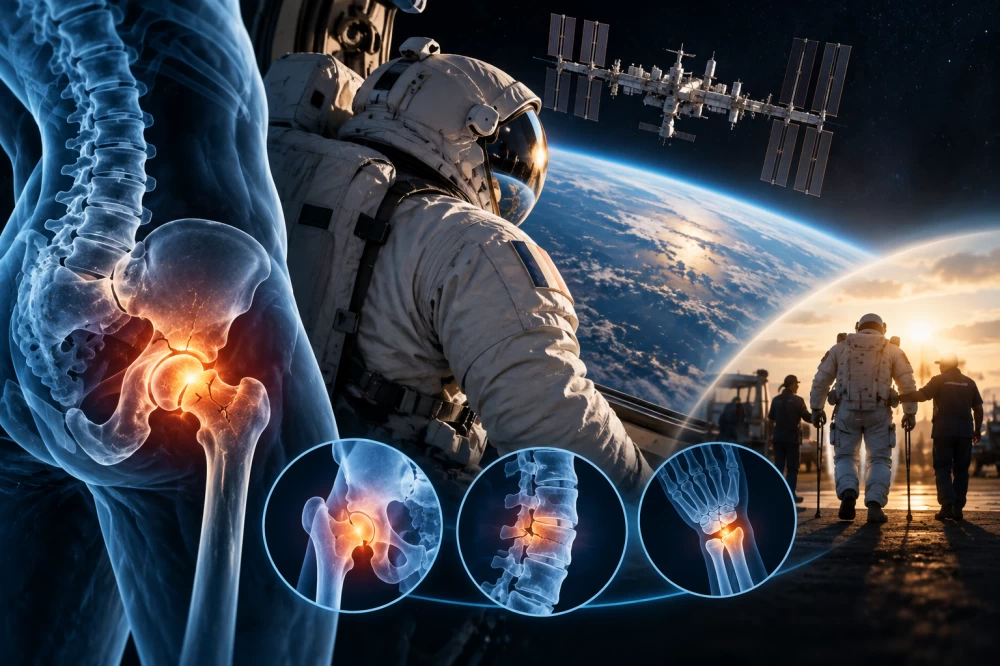
كشفت دراسة طبية تابعت الحالة الصحية لمئات رواد الفضاء عن تسجيل إصابات بكسور خلال السنوات الخمس التالية لعودتهم إلى الأرض، في نتائج تسلط الضوء على التأثيرات طويلة الأمد التي قد تتركها بيئة انعدام الجاذبية تقريباً على صحة العظام.
242 رائد فضاء تحت المتابعة
واعتمد الباحثون على قاعدة بيانات «المراقبة الصحية مدى الحياة لرواد الفضاء» التابعة لوكالة الفضاء الأمريكية «ناسا»، وشملت الدراسة 242 رائد فضاء توفرت عنهم بيانات طبية لمدة خمس سنوات على الأقل بعد عودتهم من رحلاتهم الفضائية.
7 حالات كسور خلال 5 سنوات
وأظهرت النتائج إصابة 7 رواد فضاء، بما يعادل 2.9% من المشاركين، بكسور خلال السنوات الخمس التالية للرحلة، فيما وقعت ست من الإصابات السبع خلال أول عامين بعد العودة إلى الأرض.
وكان من بين الحالات المسجلة ثلاثة كسور في الورك أو العمود الفقري، وهي مناطق ترتبط قوة عظامها بصورة وثيقة بكثافة المعادن في العظام.
كيف تؤثر الجاذبية الصغرى في العظام؟
وتثير النتائج اهتمام الباحثين بسبب التأثير المعروف للجاذبية الصغرى في الهيكل العظمي؛ إذ يمكن أن تؤدي الإقامة في الفضاء إلى فقدان كثافة المعادن في العظام وتراجع قوتها نتيجة انخفاض الأحمال الميكانيكية التي يتعرض لها الجسم مقارنة بالحياة على سطح الأرض.
وتشير «ناسا» إلى أن التعرض للجاذبية المتغيرة يمكن أن يحدث تغيرات في الهيكل العظمي ويضعف قوة العظام أثناء الرحلات الفضائية وبعدها، ما قد يزيد مخاطر الكسور، خصوصاً مع المهمات الطويلة.
الباحثون يحذرون من استنتاج علاقة سببية
لكن الباحثين شددوا على أن نتائج الدراسة لا تثبت أن الرحلات الفضائية كانت السبب المباشر في الكسور؛ إذ لم يجد التحليل ارتباطاً ذا دلالة إحصائية بين حدوث الكسور وكل من مدة الرحلة أو عمر رائد الفضاء أو المدة المنقضية منذ عودته إلى الأرض.
المهمات الطويلة تثير تساؤلات جديدة
وتكتسب المسألة أهمية أكبر مع اتجاه وكالات الفضاء نحو مهمات أطول إلى القمر والمريخ، إذ تتطلب الرحلات الممتدة تطوير وسائل أكثر فاعلية للحفاظ على صحة العظام، تشمل التمارين الرياضية والتغذية المناسبة، وربما التدخلات الدوائية عند الحاجة.
وفي دراسة منفصلة أحدث نُشرت مطلع أكتوبر، وجد باحثون أن معدل كسور الورك بعد العودة إلى الأرض كان أعلى عقب الرحلات الفضائية التي تجاوزت مدتها 90 يوماً مقارنة بالفترات التالية للرحلات الأقصر أو لدى غير رواد الفضاء، ما دفع الباحثين إلى الدعوة لمزيد من الدراسات حول الآثار الهيكلية طويلة الأمد للرحلات الفضائية.
A medical study that monitored the health status of hundreds of astronauts revealed that fractures were recorded in the five years following their return to Earth, highlighting the long-term effects that a microgravity environment may have on bone health.
242 Astronauts Under Observation
The researchers relied on the "Lifetime Health Monitoring of Astronauts" database from the American space agency NASA, and the study included 242 astronauts for whom medical data was available for at least five years after their return from space missions.
7 Fracture Cases Over 5 Years
The results showed that 7 astronauts, equivalent to 2.9% of the participants, suffered fractures during the five years following their flight, with six of the seven injuries occurring within the first two years after returning to Earth.
Among the recorded cases were three fractures in the hip or spine, areas whose bone strength is closely related to bone mineral density.
How Does Microgravity Affect Bones?
The results are of interest to researchers due to the known effects of microgravity on the skeletal system; living in space can lead to a loss of bone mineral density and a decrease in strength due to the reduced mechanical loads that the body experiences compared to life on the Earth's surface.
NASA points out that exposure to changing gravity can cause changes in the skeleton and weaken bone strength during and after space missions, which may increase the risk of fractures, especially during long missions.
Researchers Warn Against Inferring Causality
However, the researchers emphasized that the study's results do not prove that space missions were the direct cause of the fractures; the analysis found no statistically significant correlation between the occurrence of fractures and either the duration of the flight, the astronaut's age, or the time elapsed since returning to Earth.
Long Missions Raise New Questions
The issue gains greater importance as space agencies move towards longer missions to the Moon and Mars, as extended journeys require the development of more effective means to maintain bone health, including exercise, proper nutrition, and possibly pharmaceutical interventions when necessary.
In a separate recent study published in early October, researchers found that the rate of hip fractures after returning to Earth was higher following space missions lasting more than 90 days compared to the periods following shorter missions or among non-astronauts, prompting researchers to call for more studies on the long-term structural effects of space travel.