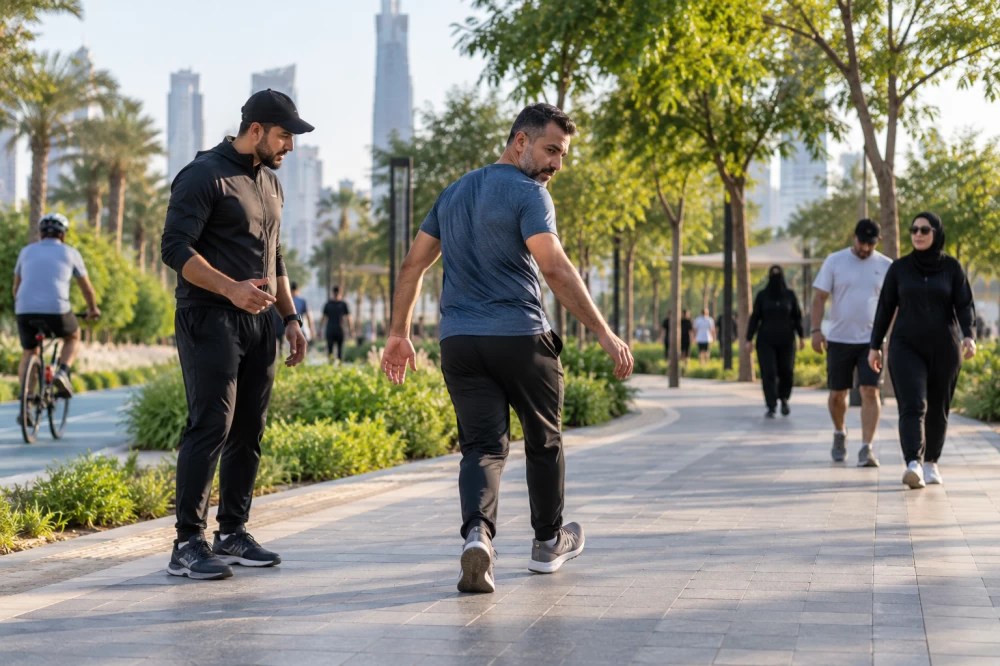
يدخل المشي إلى الخلف تدريجياً ضمن التمارين التي تستقطب اهتمام الباحثين والمتخصصين في التأهيل، إذ تفرض الحركة العكسية على الجسم طريقة مختلفة في تشغيل العضلات والمحافظة على التوازن وتنسيق الخطوات، مقارنة بالمشي المعتاد إلى الأمام.
وتشير مراجعات علمية تناولت التدريب على المشي للخلف إلى تحسن بعض مؤشرات التوازن والقدرة على الحركة لدى مجموعات خضعت لهذا النوع من التدريب، فيما أظهرت دراسات أخرى نتائج مرتبطة بقوة عضلات الأطراف السفلية وطريقة المشي، خصوصاً عند إدخاله ضمن برامج تأهيل منظمة.
وتكمن خصوصية الحركة في أن الشخص لا يعتمد على الرؤية المباشرة لمسار خطواته، ما يزيد الحاجة إلى التحكم العصبي والعضلي والانتباه لوضعية الجسم. لكن ذلك يجعل السلامة شرطاً أساسياً، خصوصاً لدى كبار السن أو الأشخاص الذين يعانون اضطرابات التوازن.
وينصح المتخصصون بأن تبدأ التجربة ببطء ولمسافات قصيرة، وفي مكان مستوٍ وخالٍ من العوائق، مع وجود نقطة دعم عند الحاجة.
المشي للخلف ليس بديلاً عن النشاط المعتاد، لكنه يقدم طريقة مختلفة لتحريك الجسم وتدريب مهارات قد لا تستخدم بالكثافة نفسها أثناء المشي اليومي.
Walking backward is gradually becoming part of the exercises that attract the attention of researchers and specialists in rehabilitation, as the reverse movement imposes a different way of activating the muscles, maintaining balance, and coordinating steps, compared to the usual forward walking.
Scientific reviews addressing backward walking training indicate improvements in some balance indicators and mobility among groups subjected to this type of training, while other studies have shown results related to the strength of the lower limb muscles and walking patterns, especially when incorporated into organized rehabilitation programs.
The uniqueness of this movement lies in the fact that the person does not rely on direct vision of their walking path, which increases the need for neural and muscular control and attention to body positioning. However, this makes safety a fundamental requirement, especially for the elderly or individuals who suffer from balance disorders.
Specialists recommend starting the experience slowly and over short distances, in a flat area free of obstacles, with a support point available if needed.
Walking backward is not a substitute for regular activity, but it offers a different way to move the body and train skills that may not be used as intensively during daily walking.