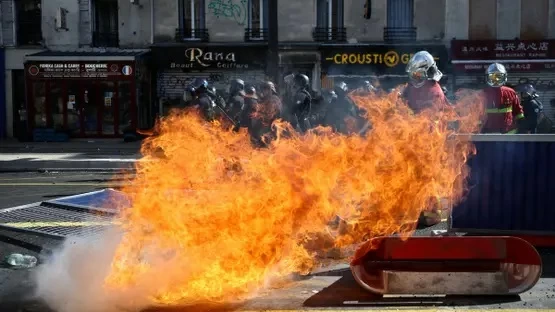
تحولت احتجاجات طلاب المدارس الثانوية في فرنسا إلى موجة اضطرابات واسعة، بعدما أشعل طلاب النيران خارج مدارسهم واشتبكوا مع الشرطة، احتجاجاً على نقص المعلمين وتردي البنية التحتية وظروف الدراسة، فيما امتدت التحركات إلى مئات المدارس في أنحاء البلاد.
وقالت مُدرسة تعمل في باريس لـ«عكاظ»، إن جزءاً من الاحتجاجات يتجاوز المطالب التعليمية إلى أعمال شغب، موضحة أن بعض الطلاب يشاركون في المظاهرات بهدف عدم دخول الفصول، فيما يعمد آخرون إلى جمع صناديق القمامة وإشعال النيران فيها، ما يؤدي إلى اشتباكات بين الطلاب والمدرسين.
وأضافت أن أعداد المشاركين في الاحتجاجات تتزايد، بالتزامن مع مطالب بتخفيف المناهج وزيادة الحصص وأعداد المعلمين وتقديم مزيد من المساعدات، وهي مطالب وصفتها بالمشروعة، لكنها شددت على أن «الشغب وتحطيم الممتلكات ليسا طريقاً مشروعاً».
وأشارت إلى أن وزير الداخلية أعلن التوجه لتحميل أولياء أمور الطلاب المشاركين في أعمال الشغب تكاليف الخسائر، مضيفةً أن غالبية المشاركين في هذه الأفعال، وفقاً لملاحظتها، من الطلاب المغتربين، بينما تمثل مشاركة الفرنسيين نسبة محدودة جداً.
وقالت وزارة التربية الفرنسية، اليوم (الجمعة)، إن 564مدرسة شهدت تحركات أو اضطرابات، فيما توقعت إغلاق نحو 400 مدرسة ثانوية من أصل 3700، وسط استمرار إغلاق مداخل المدارس وتعطيل الدراسة في عدد من المدن.
نقص المعلمين وفصول ساخنة
وبدأت الاحتجاجات في منطقة باريس قبل نحو عشرة أيام، قبل أن تنتشر سريعاً في أنحاء فرنسا. ويحتج الطلاب على طول ساعات الدراسة، واكتظاظ الفصول، ونقص المعلمين والموظفين، إضافة إلى سوء بعض المرافق وارتفاع درجات الحرارة داخل الفصول خلال موجات الحر. وفي باريس، تسببت حرائق في أضرار بمداخل مدرستي ليونارد دي فينشي وغاستون باشلار، فيما تدخلت فرق الإطفاء لإخماد النيران.
إصابات واعتقالات
وأعلن وزير التعليم إدوار جيفراي إصابة 170طالباً و65 من العاملين في المدارس، بينهم 40 مديراً، إضافة إلى تعرض أكثر من 100 مدرسة لأضرار وصفها بـ«الجسيمة».
وقال وزير العدل جيرالد دارمانان إن نحو 2000شخص أوقفوا لدى الشرطة منذ بداية الاحتجاجات، 90% منهم قاصرون، مطالباً بمحاسبة أولياء الأمور عن الأضرار التي يتسبب بها أبناؤهم وإلزامهم بتكاليف الإصلاح.
في المقابل، اتهم بعض طلاب عناصر الشرطة باستخدام القوة المفرطة، وقال بعض المشاركين إن قوات الأمن استخدمت الغاز المسيل للدموع خلال تفريق الاحتجاجات. كما أعربت منظمة العفو الدولية عن قلقها من مشاهد قالت إنها تظهر تعرض طلاب قاصرين لاعتداءات من قوات إنفاذ القانون.
الحكومة: الاحتجاجات خرجت عن مسارها
وقال جيفراي إن مطالب طلاب المدارس الثانوية «مشروعة» في أصلها، لكنه اتهم مجموعات عنيفة باختطاف الحركة الاحتجاجية، داعياً أولياء الأمور إلى منع أبنائهم من المشاركة في الاضطرابات.
وتزامنت الاحتجاجات مع تصاعد التوتر السياسي في فرنسا، قبل الانتخابات الرئاسية المقبلة، إذ اتهمت الحكومة حزب «فرنسا الأبية» اليساري الراديكالي باستغلال الحركة الطلابية، وهو ما نفاه الحزب، واعتبر القيادي فيه مانويل بومبار اتهامات الحكومة «نظرية مؤامرة».
وفي محاولة لاحتواء الأزمة، أعلن وزير التعليم عزمه الاجتماع مع نقابات التعليم وممثلي طلاب المدارس الثانوية، بحثاً عن مخرج عبر الحوار، فيما تستعد النقابات لتحركات جديدة مع استمرار التوتر في عدد من المدن الفرنسية.
The high school student protests in France have turned into a wave of widespread unrest, as students set fires outside their schools and clashed with police in protest against the lack of teachers, deteriorating infrastructure, and poor study conditions, with movements spreading to hundreds of schools across the country.
A teacher working in Paris told "Okaz" that part of the protests goes beyond educational demands to acts of vandalism, explaining that some students participate in the demonstrations to avoid attending classes, while others gather trash bins and set them on fire, leading to clashes between students and teachers.
She added that the number of participants in the protests is increasing, coinciding with demands to lighten the curriculum, increase class hours and the number of teachers, and provide more assistance, which she described as legitimate demands, but emphasized that "vandalism and property destruction are not a legitimate path."
She noted that the Minister of the Interior announced plans to hold the parents of students participating in the riots responsible for the costs of the damages, adding that the majority of those involved in these actions, according to her observations, are foreign students, while the participation of French students is very limited.
The French Ministry of Education stated today (Friday) that 564 schools have witnessed movements or disturbances, while it is expected that about 400 high schools out of 3,700 will close, amid ongoing closures of school entrances and disruption of studies in several cities.
Teacher Shortages and Hot Classrooms
The protests began in the Paris area about ten days ago before quickly spreading across France. Students are protesting the long hours of study, overcrowded classrooms, teacher and staff shortages, as well as the poor condition of some facilities and high temperatures inside classrooms during heat waves. In Paris, fires caused damage to the entrances of the Léonard de Vinci and Gaston Bachelard schools, prompting firefighting teams to intervene to extinguish the flames.
Injuries and Arrests
Education Minister Édouard Philippe announced that 170 students and 65 school staff members, including 40 principals, were injured, in addition to more than 100 schools suffering what he described as "significant" damage.
Justice Minister Gérald Darmanin stated that around 2,000 people have been arrested by the police since the beginning of the protests, 90% of whom are minors, calling for parents to be held accountable for the damages caused by their children and to be required to cover the repair costs.
In contrast, some students accused police officers of using excessive force, and some participants stated that security forces used tear gas during the dispersal of the protests. Amnesty International also expressed concern over footage it said showed minors being assaulted by law enforcement officers.
The Government: Protests Have Gone Off Track
Philippe stated that the demands of high school students are "legitimate" in their essence, but he accused violent groups of hijacking the protest movement, urging parents to prevent their children from participating in the unrest.
The protests coincided with rising political tensions in France ahead of the upcoming presidential elections, as the government accused the radical left party "La France Insoumise" of exploiting the student movement, which the party denied, with its leader Manuel Bompard describing the government's accusations as a "conspiracy theory."
In an attempt to contain the crisis, the Minister of Education announced his intention to meet with education unions and representatives of high school students in search of a resolution through dialogue, while the unions are preparing for new movements as tensions continue in several French cities.