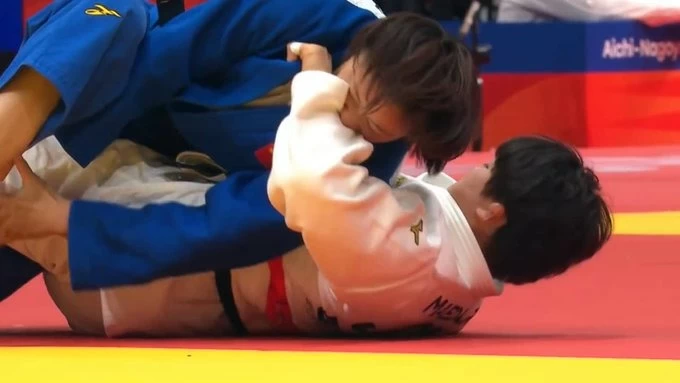
شهدت منافسات الجودو في دورة الألعاب الآسيوية بمدينة ناجويا اليابانية واقعة نادرة، بعدما استُبعدت الصينية تانغ جينغ من منافسات وزن 70 كغم إثر ثبوت عضّها منافستها اليابانية رين مايدا خلال نزال دور الثمانية.
وبدأت الواقعة خلال اشتباك أرضي بين اللاعبتين، عندما تعرضت مايدا للعض في ذراعها، قبل أن تتوقف المواجهة وتلفت اللاعبة اليابانية انتباه الحكم إلى الإصابة.
وأظهرت الإعادة التلفزيونية الواقعة، كما بدت آثار الأسنان واضحة على ذراع مايدا، ليقرر الحكام احتساب المخالفة ضد تانغ جينغ ومنح الفوز لمنافستها اليابانية.
وأبدت اللاعبة الصينية اعتراضًا على القرار في البداية، قبل أن تمتثل للحكم وتصافح مايدا وتغادر بساط المنافسة. ولم تدل تانغ بتصريحات للصحفيين عقب المواجهة.
وأثارت الواقعة دهشة الجهاز الفني الياباني، إذ قالت ماكي تسوكادا، مدربة منتخب اليابان للسيدات، إن الحادثة كانت غير مسبوقة بالنسبة لها، مشيرة إلى أن آثار الأسنان على ذراع مايدا كانت واضحة للغاية، وأن الإصابة بدت قريبة من النزف.
أما مايدا، فقالت إنها لم تكن تعرف كيف سيتعامل الحكم مع الواقعة عندما أبلغته بما حدث، موضحة أن الألم كان موجودًا في البداية، لكنها تمكنت من مواصلة المنافسة بعدما ساعدها اندفاع الأدرينالين خلال النزال.
وبعد تجاوز الواقعة، واصلت مايدا مشوارها في البطولة، وتمكنت من الوصول إلى النهائي، حيث تغلبت على الكازاخستانية أزهر أسخات لتحصد الميدالية الذهبية في وزن 70 كغم.
وأظهرت صور ومقاطع من المنافسات بقاء آثار الأسنان على ذراع مايدا بعد ساعات من انتهاء نزالها أمام تانغ، في واقعة أصبحت من أبرز اللقطات غير المعتادة في منافسات الجودو بدورة ألعاب ناجويا الآسيوية.
وتعد المخالفات السلوكية والبدنية من الحالات التي يمكن أن تؤثر مباشرة في نتيجة نزالات الجودو، خصوصًا عندما يتضمن التصرف انتهاكًا لقواعد المنافسة أو للروح الرياضية، وهو ما دفع الحكام إلى حسم المواجهة بعد مراجعة اللقطات المصورة.
ولم تتوقف تداعيات الواقعة عند صالة المنافسات، إذ أثارت الحادثة نقاشًا في الإعلام الصيني والياباني، مع وصف بعض وسائل الإعلام الصينية الواقعة بأنها حدثت «عن طريق الخطأ»، بينما أظهرت التغطيات اليابانية صدمة واضحة من تصرف نادر داخل منافسات الجودو.
The judo competitions at the Asian Games in Nagoya, Japan, witnessed a rare incident when Chinese athlete Tang Jing was disqualified from the 70 kg category after being found to have bitten her Japanese opponent, Rin Maida, during their quarterfinal match.
The incident began during a ground scramble between the two players when Maida was bitten on her arm, prompting the match to stop as the Japanese player drew the referee's attention to the injury.
Video replays showed the incident, with clear bite marks visible on Maida's arm, leading the judges to penalize Tang Jing and award the victory to her Japanese opponent.
The Chinese player initially protested the decision before complying with the referee, shaking hands with Maida, and leaving the competition mat. Tang did not make any statements to the media following the match.
The incident surprised the Japanese coaching staff, as Maki Tsukada, the coach of the Japanese women's team, stated that the incident was unprecedented for her, noting that the bite marks on Maida's arm were very clear and that the injury appeared close to bleeding.
As for Maida, she said she did not know how the referee would handle the situation when she informed him of what happened, explaining that the pain was present at first, but she was able to continue competing thanks to the adrenaline rush during the match.
After overcoming the incident, Maida continued her journey in the tournament, reaching the final where she defeated Kazakhstan's Azhar Askhat to win the gold medal in the 70 kg category.
Photos and clips from the competitions showed the bite marks remaining on Maida's arm hours after her match against Tang, in an incident that has become one of the most notable unusual moments in judo competitions at the Nagoya Asian Games.
Behavioral and physical violations are among the cases that can directly affect the outcome of judo matches, especially when the action involves a breach of competition rules or sportsmanship, which prompted the judges to resolve the match after reviewing the footage.
The repercussions of the incident did not stop at the competition hall, as the incident sparked discussions in both Chinese and Japanese media, with some Chinese outlets describing it as having occurred "by accident," while Japanese coverage showed clear shock at the rare behavior within judo competitions.