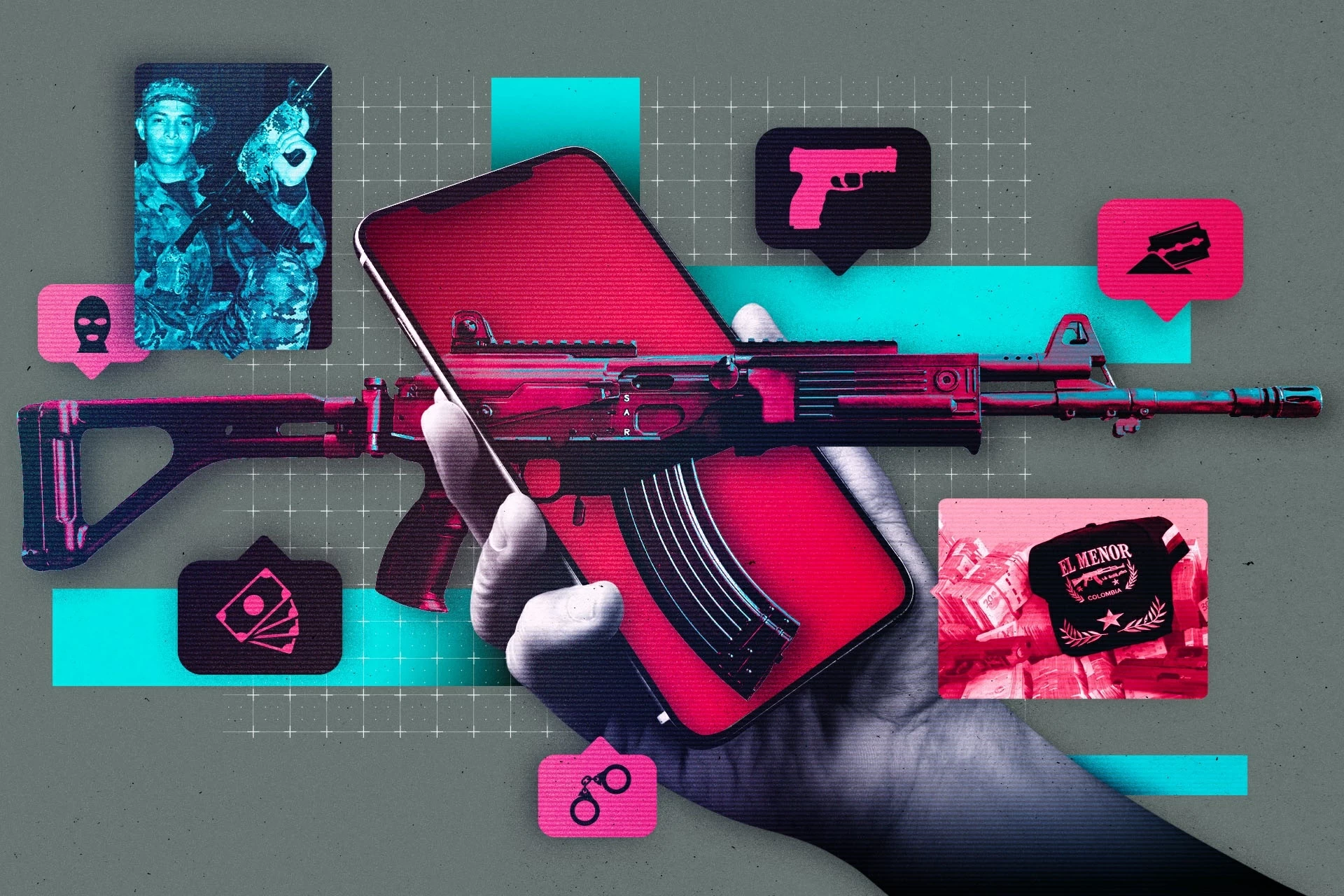
لم تكن قصة الكولومبي نعيم بيريز الملقب بـ«بينديتو مينور»، مجرد فصل تقليدي في تاريخ عصابات التهريب بأمريكا اللاتينية، بل كانت تجسيداً لجيل جديد نقل الجريمة المنظمة من أدغال سييرا نيفادا المظلمة إلى شاشات «تيك توك» و«إنستغرام».
بعمر الـ27، وبشعر مصفف وسيارة دفع رباعي، بنى بيريز إمبراطورية رقمية تضمنت أكثر من 20 حساباً يتابعها نحو 700 ألف شخص. لم يكتفِ بإدارة خطوط الكوكايين لصالح جماعة «قوات الدفاع الذاتي» المسلحة، بل تحول إلى «ناركو- مؤثر» ينشر مقاطع فيديو تحصد ملايين المشاهدات، يظهر فيها ممتطياً دراجاته السريعة، أو سابحاً بزيه العسكري حاملاً البنادق على أنغام الموسيقى الحماسية، رفقة صديقته الحسناء «بيبيسيتا» في استعادة عصرية لأسطورة «بوني وكلايد».
هذا الاستعراض علنيّ الملامح أثار حفيظة القادة العسكريين في منظمته الإجرامية ذاتها، إذ كشف أحد رؤسائه سابقاً أن بيريز كان يتصرف بجموح يصعب ضبطه، وينشر موقعه الميداني مباشرة عبر البث الحي دون أدنى اعتبار للمخاطر الأمنية، محولاً الفرار من السلطات إلى ما يشبه برامج «تلفزيون الواقع».
لكن نقطة التحول الحقيقية بدأت عندما قرر بيريز الصدام الرقمي المباشر مع الرئيس الكولومبي الجديد أبيلاردو دي لا إسبريلا، حين نشر فيديوهات تسخر من الرئيس وتتحداه بقمصان كُتب عليها «ضد أبيلاردو». وهو ما دفع الرئيس المعروف بلقب «النمر» لإعلان بيريز «هدفا عالي القيمة»، لتبدأ ملاحقة أمنية انتهت بمداهمة ليلية دراماتيكية قُتل فيها بيريز وصديقته داخل مقر إقامتهما في سبتمبر الحالي.
ورغم انتهاء المشهد الختامي بمقتله، لم تنتهِ الأسطورة الرقمية بعد، إذ ضجت منصات التواصل الاجتماعي بمشاهد جنازته الضخمة التي شلت حركة المرور في مدينة ريوهاتشا، وسط استمرار حسابه في بث منشورات مصممة بالذكاء الاصطناعي تُظهره وهو يوزع الأموال على الفقراء، ليترك خلفه ملفاً شائكاً حول كيفية تحول المنصات الرقمية إلى سلاح موجه في أيدي الجريمة المنظمة.
The story of the Colombian Naeem Perez, nicknamed "Bendito Minor," was not just a traditional chapter in the history of smuggling gangs in Latin America, but a manifestation of a new generation that has moved organized crime from the dark jungles of the Sierra Nevada to the screens of "TikTok" and "Instagram."
At the age of 27, with styled hair and an SUV, Perez built a digital empire that included more than 20 accounts followed by around 700,000 people. He did not only manage cocaine routes for the armed group "Self-Defense Forces," but transformed into a "narco-influencer" who shared videos that garnered millions of views, showcasing him riding his fast bikes or swimming in military attire while carrying rifles to the tunes of upbeat music, alongside his beautiful girlfriend "Pepesita" in a modern revival of the "Bonnie and Clyde" legend.
This overt display provoked the ire of military leaders within his own criminal organization, as one of his former bosses revealed that Perez was behaving recklessly and broadcasting his location live without any regard for security risks, turning his evasion from authorities into something resembling "reality TV" shows.
However, the real turning point began when Perez decided to engage in direct digital confrontation with the new Colombian president, Abelardo de la Espriella, by posting videos mocking the president and challenging him while wearing shirts that read "Against Abelardo." This prompted the president, known by the nickname "The Tiger," to declare Perez a "high-value target," leading to a security pursuit that culminated in a dramatic nighttime raid in which Perez and his girlfriend were killed inside their residence this September.
Despite the final scene ending with his death, the digital legend has not yet ended, as social media platforms erupted with scenes of his massive funeral that paralyzed traffic in the city of Riohacha, while his account continued to post AI-designed content showing him distributing money to the poor, leaving behind a thorny file on how digital platforms have become a weapon wielded by organized crime.