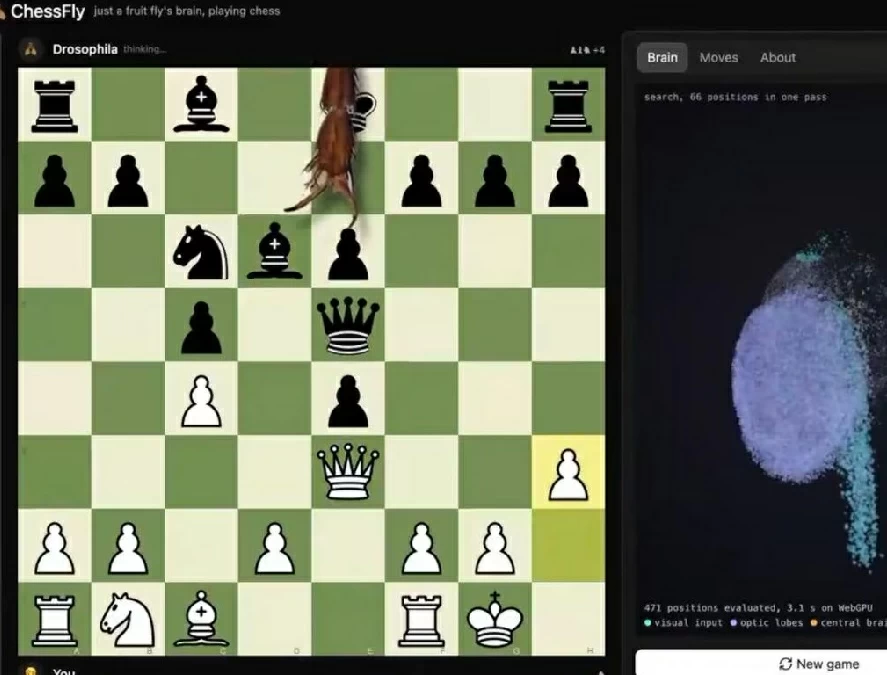
في تجربة علمية غير مسبوقة، تمكن نموذج محاكاة لدماغ ذبابة الفاكهة من التفوق على أحد أكثر نماذج الذكاء الاصطناعي تقدمًا في لعبة الشطرنج، محققًا الفوز خلال 11 نقلة فقط؛ وفق ما أورده تقرير أمريكي حديث.
وجاء الإنجاز بعد أن نجح فريق من الباحثين في رسم خريطة عصبية كاملة لدماغ الذبابة، تضم 166 ألف خلية عصبية وأكثر من 25 مليون وصلة، قبل إتاحة هذه البيانات للتحميل مطلع سبتمبر الجاري، ما فتح الباب أمام سلسلة من التجارب المثيرة.
واستغل مبرمجون هذه الخريطة العصبية في تطبيقات متنوعة؛ إذ استخدمتها طالبة من جامعة ستانفورد في لعبة قتالية، فتمكن النموذج العصبي من هزيمة اللاعب البشري في 12 جولة. فيما لجأ باحث آخر إلى توظيفه في برنامج لتداول العملات الرقمية عبر محفظة صغيرة، مع محاكاة تأثير (الدوبامين) كمكافأة عند تحقيق الأرباح.
كما جرى دمج الشبكة العصبية لذبابة الفاكهة داخل روبوتات منزلية وطائرات صغيرة، بحيث يتلقى النظام العصبي الإشارات من نموذج الذكاء الاصطناعي المدمج ويحللها لتحديد اتجاه الحركة، في خطوة تعكس مدى اتساع آفاق الدمج بين البيولوجيا والذكاء الاصطناعي.
In an unprecedented scientific experiment, a simulation model of a fruit fly brain managed to outperform one of the most advanced artificial intelligence models in chess, achieving victory in just 11 moves; according to a recent American report.
The achievement came after a team of researchers successfully mapped the complete neural circuitry of the fly's brain, which includes 166,000 neurons and over 25 million connections, before making this data available for download at the beginning of September, opening the door to a series of exciting experiments.
Programmers utilized this neural map in various applications; for instance, a student from Stanford University used it in a combat game, where the neural model was able to defeat a human player in 12 rounds. Meanwhile, another researcher employed it in a program for trading cryptocurrencies through a small wallet, simulating the effect of dopamine as a reward when profits were achieved.
The fruit fly's neural network was also integrated into home robots and small drones, allowing the nervous system to receive signals from the embedded artificial intelligence model and analyze them to determine movement direction, in a step that reflects the expanding horizons of integration between biology and artificial intelligence.